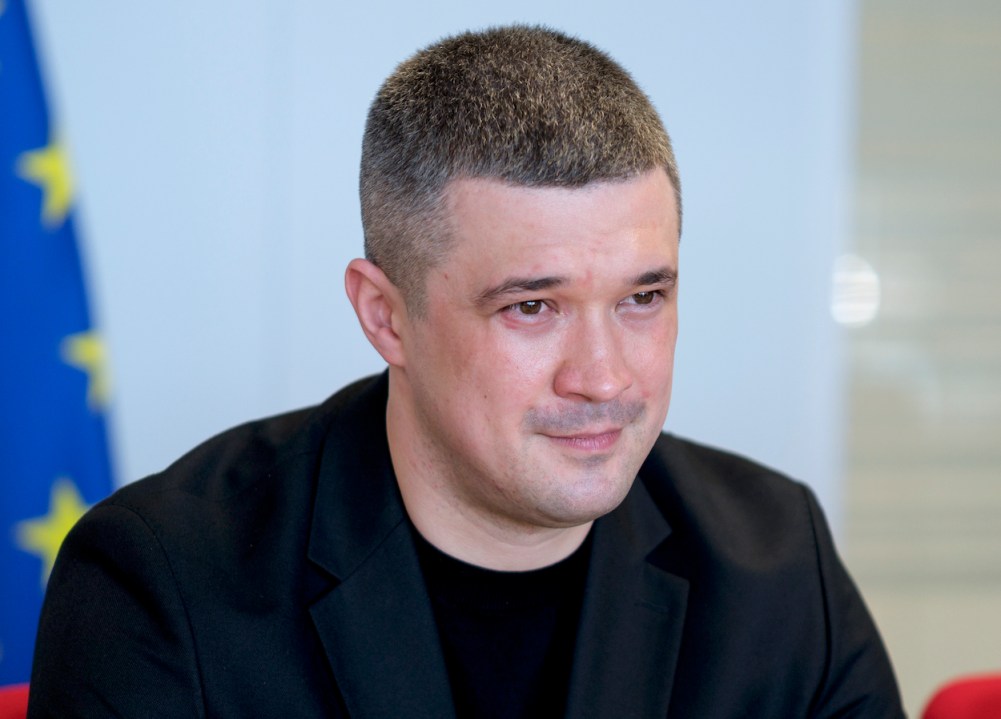
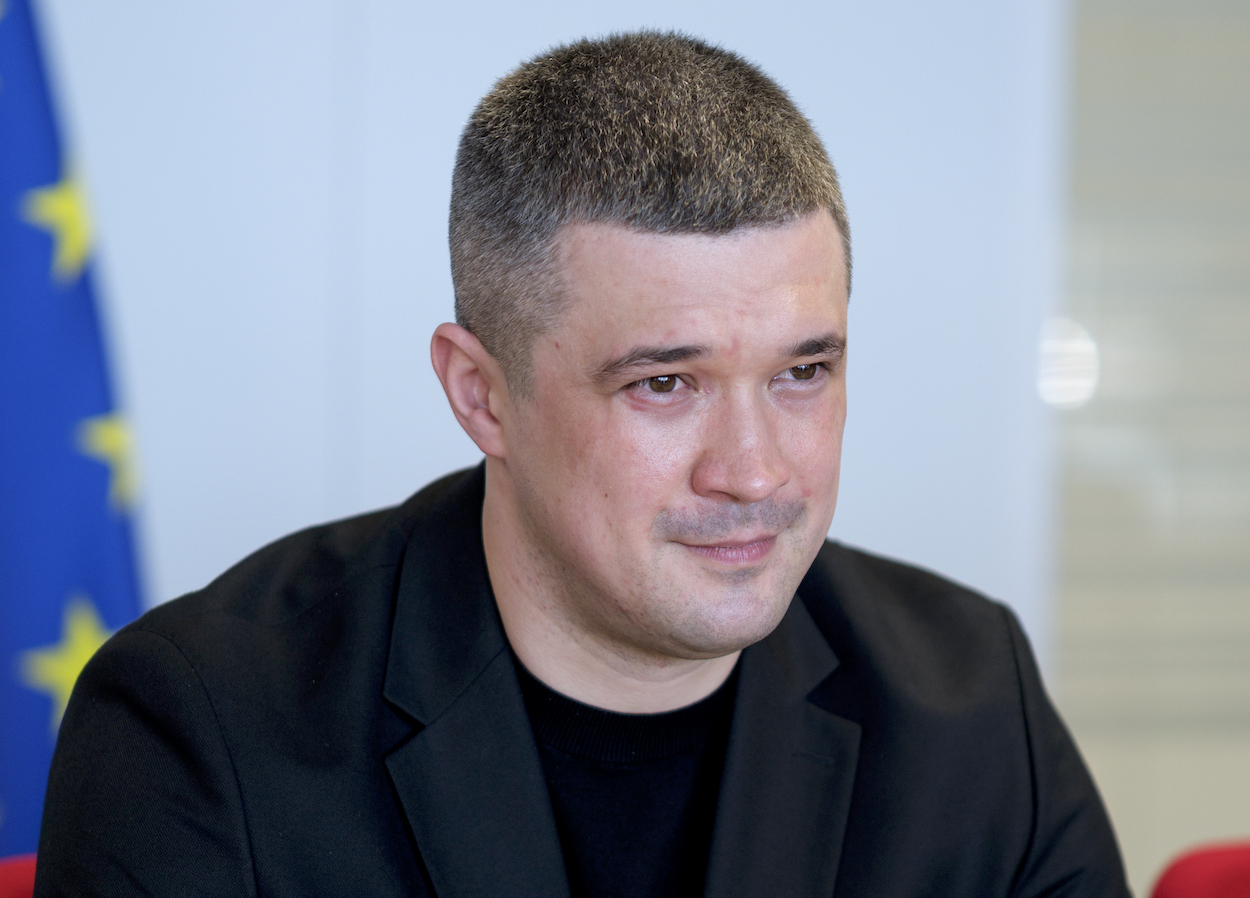
Volodymyr Zelensky must have felt a peculiar sense of déjà vu as thousands of Ukrainians chanted ‘Shame!’ beneath the windows of his office in central Kyiv yesterday. Exactly one year ago, they gathered to protest Zelensky’s attempt to strip Ukraine’s two key anti-corruption institutions of their independence, forcing him to back down. This time, Ukrainians rallied against their President’s decision to fire Defence Minister Mykhailo Fedorov, holding cardboard signs demanding that he be reinstated.
Fedorov, 35, is the only survivor from the President’s original team, having outlasted every other minister Zelensky appointed since taking office in 2019. Fedorov’s main job had been the digital transformation of the state, before the full-scale war in 2022 expanded his responsibilities to defence procurement. He was responsible for launching the ‘Army of Drones’ programme to encourage Ukrainian companies to make millions of drones and train thousands of operators, a move that changed the Russia-Ukraine war and all future ones forever.
His promotion to defence minister six months ago helped turn the tide of the war in Ukraine’s favour. From disabling Starlink satellites for Russian forces to opening a drone market and implementing AI, overhauling the corrupt procurement system and developing the production of medium-range strike drones that set Russian logistics on fire to isolate occupied Crimea, Fedorov proved to be the most effective defence minister Ukraine ever had.
But most importantly, Fedorov offered a vision for how to force Russia to end the war, something Zelensky and the army chief Oleksandr Syrsky have been unable to provide since the Russians pushed Ukrainian forces out of the Kursk region last March. Instead of wasting infantry lives for quick tactical gain, Fedorov’s team focused on middle- and long-range strikes targeting Russia’s logistics and oil refineries. To exhaust the enemy until it is incapable of continuing the war, Fedorov also set an ambitious goal to kill 50,000 Russian soldiers per month, a level that cannot be compensated for without Vladimir Putin announcing general mobilisation and risking the stability of his regime.
Zelensky’s attempts to justify ousting Fedorov with a ‘failure’ to solve the manpower crisis in six months shocked the nation and sparked mass demonstrations across the country. Even if Fedorov’s latest army reform had drawn criticism from the longest-serving soldiers for offering only partial demobilisation, the introduction of fixed-term contracts to replace indefinite service was already more than any of his predecessors delivered. With Fedorov gone, soldiers worry his reform and their long-awaited release will be left in limbo.
When the Ukrainian President got rid of a professional whose team and modern approach could win him the war, some saw it as an attempt to remove a potential rival who had earned the public trust and would stand a chance in a hypothetical election. After all, Fedorov’s sudden dismissal looked too similar to the fate of the former army chief, Valerii Zaluzhnyi, who was sent away to London as Ukraine’s ambassador two years ago for becoming too popular. Zaluzhnyi has led the polls ever since; Fedorov’s numbers will certainly skyrocket, courtesy of Zelensky himself. According to last month’s poll, 50 per cent of Ukrainians trusted him and 21 per cent did not, compared with 61 per cent and 34 per cent respectively for Zelensky.
When asked to explain the dismissal, Zelensky pointed to Fedorov’s conflict with General Syrsky over how to fight the war. ‘I would very much like there to be unity. The sides did not find it,’ Zelensky said. According to the President, the Defence Ministry and the army leadership were unable to cooperate without his personal involvement. When Fedorov and Syrsky could no longer be in the same room without Zelensky present, each asking the President to fire the other one, Zelensky sided with the General.
Fedorov confirmed the feud at an unprecedented press briefing yesterday morning, with many of Zelensky’s and opposition MPs also in the room. Instead of leaving quietly, Fedorov publicly called for Syrsky’s dismissal. Fedorov accused the general of authoritarian management, derailing mobilisation reforms, suppressing talent within the armed forces and tolerating abuse in units such as Skelia. Ukraine’s largest assault regiment, Skelia has been at the centre of a public backlash in recent weeks after an investigation revealed systematic abuse, violence and torture within the unit, leading to at least 26 non-combat deaths among recruits between late 2025 and spring 2026. Fedorov also made sure to mention the latest scandal: the former commander of the 155th ‘Anne of Kyiv’ Brigade was charged this week with organising the abduction and murder of two brothers in the Kyiv region after they refused to apologise to his wife for playing loud music and riding motorcycles.
Khmara’s appointment is widely perceived as Zelensky’s attempt to hide behind the back of a highly respected veteran
Impunity, disregard for human life and micromanagement are among the traits which have earned Syrsky a poor reputation among soldiers and fresh conscripts alike. He acquired the nickname ‘Butcher’ after the Battle of Bakhmut in 2023, and cemented it by continuing to send infantry waves into futile counter-offensives that kill Ukrainian soldiers en masse, little different from Russia’s own ‘meat grinder’ assaults. Fedorov insisted that Syrsky must be removed for Ukraine to succeed: ‘Syrsky is not prepared to look in the eye and talk about the problems. He is prepared to attend meetings, weave intrigues and think that someone is orchestrating campaigns against him… Instead of coming up with a way to defeat Russia asymmetrically, he came up with a way to divide the country.’
The general responded to Fedorov’s criticism by not-so-subtly recalling on social media how proud he was to have defended Kyiv in 2022, so that press briefings could now be held there at all. Syrsky thanked Ukraine’s now-former defence minister for his work and said he hoped Fedorov would ‘stay in team Ukraine’. Zelensky also appeared unmoved by the public backlash, acknowledging people’s right to protest. The President didn’t secure enough votes in parliament to replace Fedorov with then-interior minister Ihor Klymenko, who later withdrew his candidacy. The acting head of Ukraine’s security services, Yevhenii Khmara, took the position of acting defence minister instead.
Khmara’s appointment is widely perceived as Zelensky’s attempt to hide behind the back of a highly respected veteran to calm the raging crowds. Ukrainians appear unmoved, gathering for more protests tonight: if Fedorov has to go, they demand, then Syrsky must go with him.


Comments