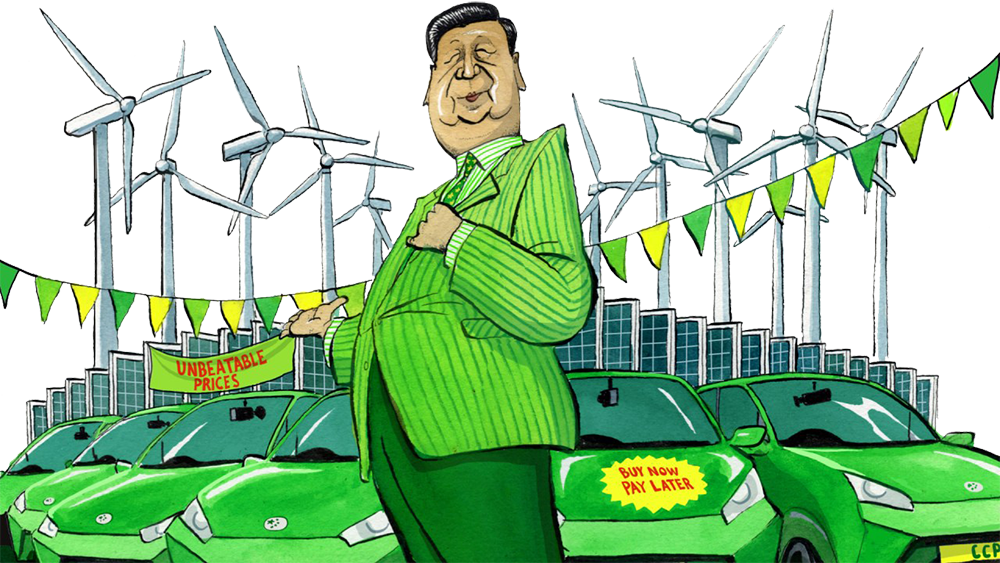
Forgive yet another reference to my recent car-swapping episode, but let me state emphatically that I was not tempted to follow 10,800 other British buyers last month in choosing a Jaecoo 7, the Chinese SUV hybrid that looks like Range Rover’s ugly sister. Led by cheap EVs, Chinese imports took 23 per cent of the UK new car market in September, while surveys say almost half of car buyers would now consider going for a Chinese, double the level of three years ago. That’s an extreme threat to the survival of our own auto industry, yet we still impose only a 10 per cent tariff on these invaders, apparently in the interest of building wider trade with them.
Just 5 per cent of British-made cars are sold to China (chiefly Jaguar Land Rover and luxury marques such as Rolls-Royce) while 56 per cent, plus huge numbers of Ford and BMW engines, are exported to Europe. You might think that makes it blindingly obvious the UK should negotiate to join the EU’s ‘Made in Europe’ scheme, formally called the Industrial Accelerator Act, which would require us to apply tariffs of up to 45 per cent on Chinese vehicles but would cement our position in complex EU supply chains. Such an alliance would be warmly favoured by European auto makers and might also, for example, allow manufacturing of the Mini Cooper EV to return from Jiangsu province to Cowley, where the plant designated for that project stands empty.

A No. 10 spokesman said last week that the government would ‘welcome the objective to have the UK included in the Industrial Accelerator Act’. Yet the Trade Secretary, Jonathan Reynolds, seems to be dragging his feet, denying that Britain is a back door to the EU for Chinese EVs and saying only that a decision on tariffs will be ‘based on the UK interest’.
Is he being bullied by Ed Miliband, who evidently believes it’s better to have more EVs on British roads wherever they come from? Do Reynolds and Andy Burnham fear the ‘Made in Europe’ label would look too blatant as a first move towards reversing Brexit? Or is the entire Burnham crew incapable of any initiative more controversial than banning loud music on public transport? In that spirit, next week’s Budget looks set to be another extended recital of tough decisions deferred. Meanwhile, the relentless Chinese advance means we’ll soon have no car industry left to defend.
France hots up
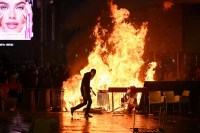
I grieve for France as a beautiful country intent on self-harm. All the more so because the discontents that animate the arsonists and looters are either beyond their government’s control or likely to be made worse by their actions. If fuel costs are a crucial issue, rioters should be torching the American embassy in protest at Donald Trump’s war on Iran. If schools are under-resourced, civil disorder that provokes a rise in government borrowing costs can only restrict the flow of funds towards everything the French state so lavishly provides.
There is, of course, one sure way to improve the mood of the citoyens: offer them feasts, preferably laid on by their local communes. But the recent untraced cyberattack that caused freezers in 700 French super-markets to heat up is the most worrying news of all; as conspiracy theories abound and food rots on the shelves, revolution may not be far behind.
Locomotive of the left
It’s a depressing thought that Great British Railways will next year become Britain’s third-largest public sector entity, behind the NHS and the armed forces – perhaps soon the second-largest as military manpower continues to shrink. When the Railways Bill passes into law, this corporate locomotive of the left will assume control of Network Rail and ten train companies whose franchises have already been reclaimed by the state. Four still in private hands – Avanti West Coast, CrossCountry, East Midlands and Great Western – will follow by the end of next year, while rampant rail unions relish the prospect of seeing ‘open access’ competitors such as Grand Central and Hull Trains killed off entirely.
You might think a monster like GBR needs a great British railwayman to run it – if only we had one, AI not yet being capable of reanimating the bronze statue of Sir Nigel Gresley in the concourse of King’s Cross. Downing Street’s actual pick for GBR chairman is Sir John Kingman, the ultimate safe-hands insider whom some of us first spotted as a Treasury press officer guarding Gordon Brown’s flank back at the turn of the century. Shrewd career moves since include a hand in Greater Manchester’s devolution deal before moving to the City to chair Legal & General and Barclays UK and bagging seats on the boards of the Royal Opera House and National Gallery.
Richard Tice of Reform UK calls this £250,000-a-year appointment ‘a civil service stitch-up’, missing the point that the zero-rail-experience appointee may be the only Establishment big-shot with Labour cred willing to take a no-win job under ever-changing, decision-ducking transport ministers. But Kingman is clever enough to learn which signal levers to pull – and considerably better networked than his own dysfunctional railway.
Ave Maria
It was at King’s Cross this week that I chatted to a Romanian train cleaner whom I often see shepherding stressed travellers towards the correct platforms. I’ll call her Maria. Once a teacher in her home country, she reached these shores in 2009, when a wave of Romanian and Bulgarian arrivals was provoking the hostility and fear that has since come to dominate the political climate.
Maria toils long shifts in the kind of work native Britons shun, pays tax, radiates cheerfulness and takes pride both in the cleanliness of her trains and the settled lives of her family here. We forget what a blessing immigration can be, for them and for us.





Comments