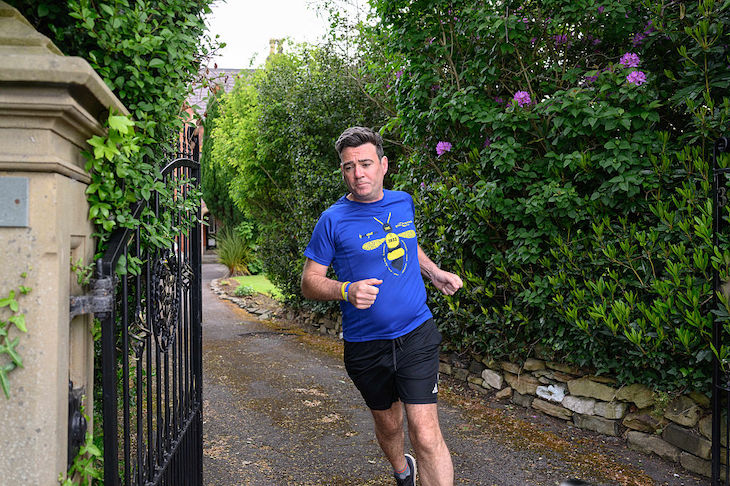
We saw rather more of Andy Burnham’s legs than most of us might have wished when he was photographed out jogging in Warrington last week. Clad in shorts that would not have looked out of place on Alan Partridge, paired with an Everton shirt, the Labour leadership hopeful cut a curious figure. The aesthetic may have been questionable, but the symbolism was plain enough: Andy Burnham was running.
Jogging projects precisely the qualities politicians are so eager to advertise: stamina, discipline, vigour, endurance
Not everyone was convinced. The Mail reported that, after setting off on his jog, Burnham returned home by car 45 minutes later. Was the whole performance staged? Burnham denied it, explaining that he often leaves his car at Newton station and runs there in the morning to collect it. He also reminded doubters that he has completed both the London and Boston marathons.
Burnham’s not the first politician to take up jogging. Since Tony Blair, most prime ministers and a soaring number of would-be PMs have been seen pounding the pavements. Some of them look dashing as they dash: Tony Blair, David Cameron and, of course, this magazine’s esteemed editor. Liz Truss stayed true to her Instagram vibe when she was snapped jogging on the iconic Brooklyn Bridge.
Others have been less fortunate. Ed Miliband looked as awkward and uncoordinated as ever; Matt Hancock leapt over a fence, ever the needy schoolboy trying to impress mum; and Boris Johnson took to the road wearing patterned Bermuda shorts, beanie hats and dress shoes, as if he’d smeared himself in superglue and performed naked cartwheels through an Oxfordshire charity store. Perhaps he had.
Although Theresa May famously confessed to running through fields of wheat as a child, I cannot recall ever seeing her out jogging. Instead, she donned a high-vis jacket to marshal at a running event in Maidenhead, handing out water and directing runners – naturally – to the right. I suppose she concluded that pointing the way for the masses looked more prime ministerial than panting around suburban streets with a flushed face.
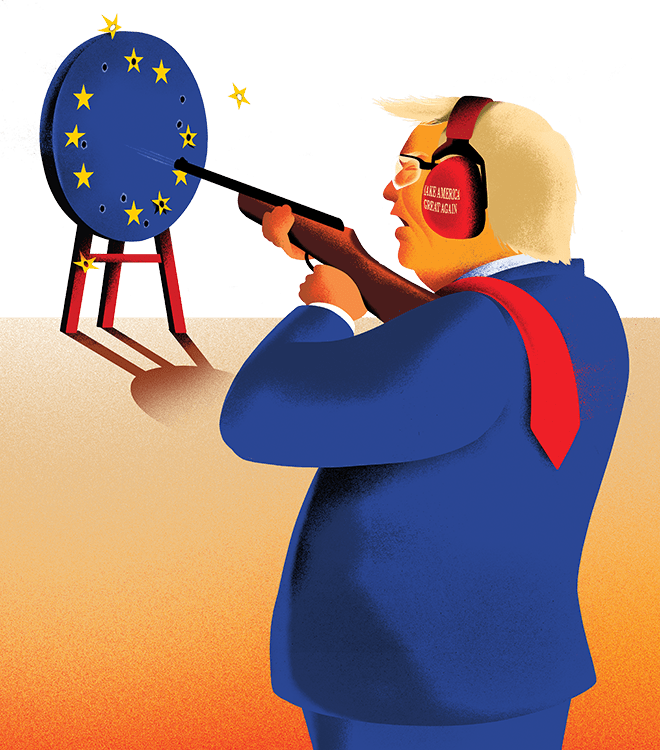
Still, one can understand the appeal. Jogging projects precisely the qualities politicians are so eager to advertise: stamina, discipline, vigour, endurance. It also serves the useful political purpose of making MPs appear less remote. Seeing politicians shuffling around local parks in damp trainers makes them seem, however briefly, more like ordinary citizens than members of a distant elite.
There’s also a practical appeal: politicians have stressful jobs with unpredictable schedules, so a quick jog is one of the few healthy routines that fits into their working weeks, wherever they are. Running requires no special skill or significant expense. Just pop on a pair of shoes and you’re away. It is the most democratic of sporty pastimes, so it’s fitting for a politician.
But perhaps more and more politicians are getting into running simply because they enjoy going for a run? When I first began running around the turn of the century, it was still a comparatively niche hobby, both among the public and politicians. I remember newspaper articles marvelling – with almost comic amazement – that Matthew Parris was both an MP and a marathon runner.
Today, however, our parks and pavements are crowded with joggers. A recent study found that more than 6.5 million people in England run regularly. Why should politics be immune from such trends? At this year’s London Marathon, Labour fielded ten runners, the Conservatives five and the Liberal Democrats three. And naturally we notice jogging politicians more now that every passer-by with an iPhone has become a potential paparazzo.
As I wrote in my book, Running: Cheaper Than Therapy, the emotional benefits of running matter far more than the physical ones. Study after study has shown that running reduces stress, anxiety and depression. It can even help counteract the decline in brain cells associated with ageing, while improving memory and concentration. Longer runs, in particular, induce a curious semi-hypnotic calm in which the mind finally escapes the constant noise of modern life.
Those benefits would appeal to anyone in a high-pressure profession, especially politics. So perhaps we should not sneer too readily at politicians for going out for a run. If we condemn them for partying, mock them for being overweight and ridicule them for trying to keep fit, then what is left for them?


Comments