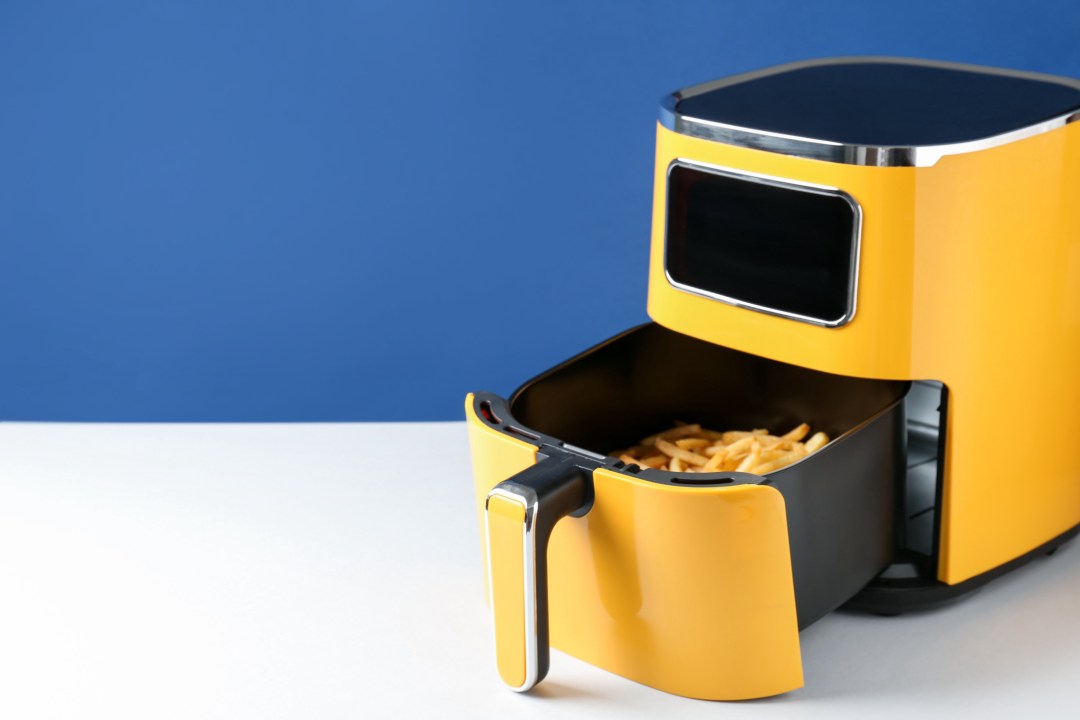
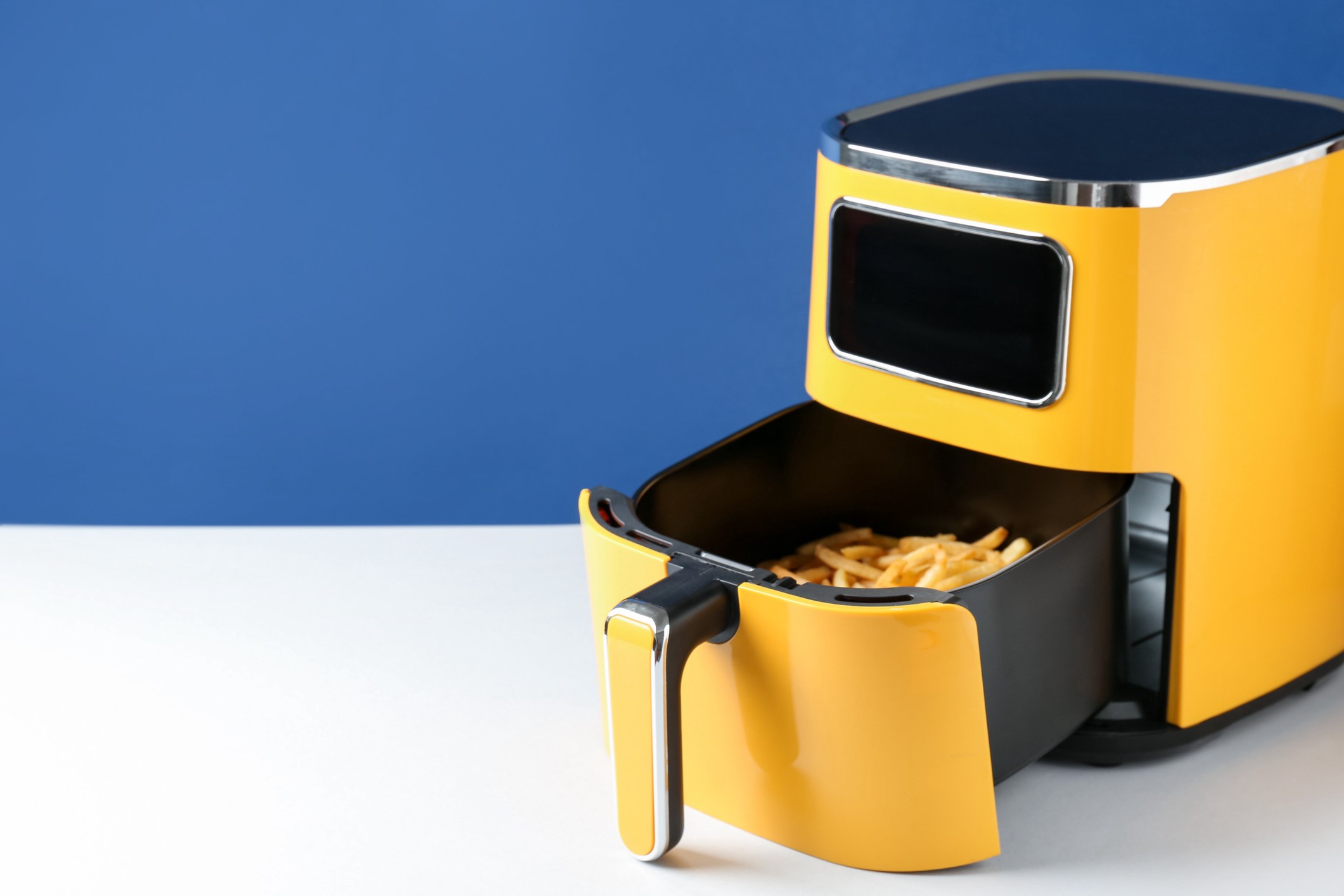
When air fryers first took off in the mid-2010s, it was a thrilling moment, presumably akin to when hamburgers and Coke arrived. Friends told of onion rings and fried chicken that were crispy but not dripping in fat. ‘Just stick it in the air fryer for 20 mins and boom!’ I heard tell of people making bagels with ‘fried’ dough in them. From meat to veg to carb to pastry, it seemed nothing couldn’t be improved in the jowls of an air fryer in record time with almost no washing-up.

I kept away, though. I was a purist, didn’t cook much and worried that the air fryer would effectively render my oven a pointless cavern in my kitchen. So I was gratified when, a few years later, I kept hearing that air fryers had just been a silly fad and were now piling up in recycling centres. Indeed, a 2025 survey of 4000 UK adults by Opinium Research claimed that 800,000 air fryers lay abandoned in cupboards, and that 1.5 million had been tossed in the bin.
But is that the whole truth? Culturally, the air fryer seems to be doing rather well still. They’re visible in many of the hundreds of food content accounts I follow on Instagram. And the same Opinium survey says there are still 20.9 million air fryers in UK households: two-thirds of adults have one at home, and 84 per cent use theirs at least once a week.
In the US, they are still being bought anew. Circana, an American market research company, says that 2025 kitchen electronics growth was led by air fryers (and espresso makers, ice shavers/snow cone makers and stand mixers). Its September 2026 forecast is that air fryer sales are forecast to grow 15.6 per cent this year.
Like us, Americans are hobbled by the cost of going out to eat, dependent on convenience (they invented convenience) but – unlike us – tend to have comparatively massive kitchens. And, as with their need for iced drinks, they also have certain textural standards of food, with a high premium placed on the crispy and crunchy. A machine rendering food with the texture of the deep-fried but without a tiny fraction of the oil is a machine perfectly made for Americans who, alongside their love of fat, are also very keen dieters.
In the UK, they’re not selling like hot cakes anymore because most people have one already. And those of us who don’t own one rather wish we did. I often eye the ones in the Robert Dyas window display near me. At £40 odd for a compact Tower one, or £25 for a Daewoo, it seems within reach. The only real issue is the narrowness of my kitchen counters and limited storage. Each gadget has to earn its keep. And these are ugly.
Still. When I see reels by food influencers unearthing baskets of perfect fries (potato, tofu, courgette, halloumi), or juicy salmon all perfectly dusted in spice, or glistening, neat trays of roast chicken and vegetables, nothing burned, no fumes, I get covetous. The TikTok account Air Fryer Girl Uk, which has 411k followers, gives recipes for the likes of air fryer double chocolate brioche pudding, smoky tomato salmon and chickpea traybake and onion bhajis. Tempting.
I worried that the air fryer would effectively render my oven a pointless cavern in my kitchen
American influencers are better at making the air fryer seem like an elite appliance – something that lightly turns the most humdrum kitchen intentions into health, beauty and deliciousness. San Francisco-based Nicole Keshishian Modic, who has 3.1m followers on Instagram, has recipes for air fryer cashew chicken thighs, salmon rice paper wraps and even salsa verde.
And there are innovations, led by the departure of worrisome non-stick coatings. Here the Ninja Crispi motors to the front: it is a more attractive glass affair, which cooks in glass containers (PFAS-free), and is powered by a removable ‘power pod’ that slots right into the containers so the whole gadget isn’t such an eyesore. It also has ‘max crisp’ and ‘recrisp’ settings. And steam is the next big thing. Philips’ new Airfryer 5000 Series has steam and steam fry cooking functions, plus a Steam Wash self-cleaning function. Chinese makers Dreame and Xiaomi are going full pelt with air-steam machines: the latter offers a sous vide function (when food is sealed and slowly and precisely cooked in hot water).
You can go fancy, but the class connotations of the air fryer remain. If the Aga is the ultimate kitchen status symbol – the posh are very analogue and have a lot of time – then the air fryer, with its cook-in-a-hurry gadgetry, could never be at home in an Aga-friendly, genteel-rustic kitchen, all tiles and fading rugs and Emma Bridgewater mugs. People who make slow-cooked stews in battered cast-iron casseroles are just never going to air fry. Like food critic Jay Rayner who, in 2022 called air fryers ‘dull, dry and very sad’. Nigella naturally turned her nose up at them, at first. ‘I don’t have an air fryer, nor have I ever seen one in action, though I must remedy that!’
But the air fryer is still a good festive present for the few of us who never had one. Even those with upper-middle class pretentions would probably love it. Nigella herself eventually came round, albeit gnomically: ‘I love my air fryer, but air fryer is such a stupid name as I want to fry in fat.’ Indeed, but it’s got to be better, if you can, to fry without fat.





Comments