
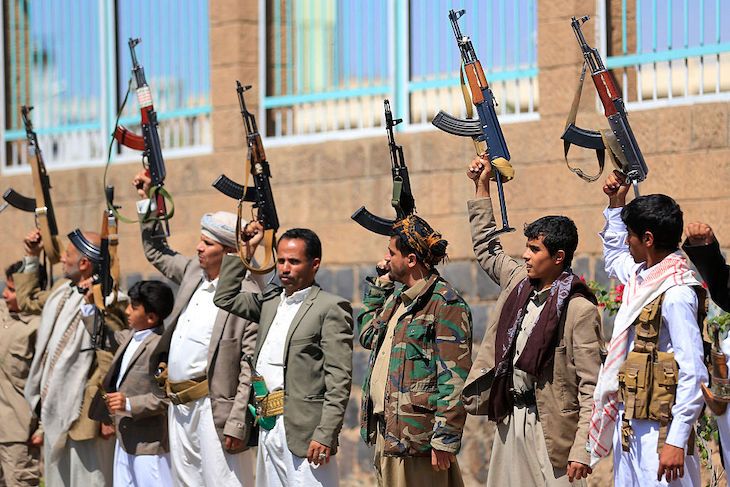
Donald Trump has opened up the prospect of America being drawn into a wider Middle East conflict, effectively a second front in the ongoing war with Iran. The US president said he is “going to look at” joining Saudi Arabia in the battle against the Iranian-backed Houthis in Yemen. It follows the Houthi missile attack on the King Khalid international airport in Riyadh which killed 12 people and injured 309 others. One of the 12 dead is known to be an American. There may be more US casualties among the severely injured. The attack on the airport has reignited fears of a wider regional escalation.
The Saudis, despite their enormous oil wealth, cannot fight, let alone win, their war against one militia force
“We may. We’re going to look at it,” Trump told reporters outside the White House when asked if the US would back Saudi Arabian strikes. “We just found out about the recent attack. So, we’ll make a decision. We move very quickly.”
In those brief words, Trump appeared to signal a major reversal in his stance on the conflict in Yemen. The US has had a unilateral ceasefire with the Houthis since 2025, and the pact was renewed just this summer. Trump has twice rejected Saudi appeals for help. The Saudi Crown Prince Mohammed bin Salman reportedly called Trump only last month to enlist American military support but to no avail.
There are plenty of good reasons why Trump, so far at least, has steered clear of US military involvement in Yemen. The conflict between the Saudis and Houthis dates back to 2014 when the Houthis seized Sanaa from the official Yemeni government. Six months later, in 2015, the Saudis intervened in the Yemeni civil war. That confrontation lasted seven years, only to end inconclusively. The Houthi attack on the airport in Riyadh, bringing the war into the heart of Saudi territory, is the latest most deadly escalation, and presents Trump with a huge dilemma.

Joining the fight against the Houthis would stretch military resources in the Middle East already depleted in the war against Iran. Does the US have the capacity to wage a sustained campaign against the Houthis? It would also complicate Washington’s calculations about how and when to resume military action against Tehran. Lastly, it would blow a hole in Trump’s political strategy of holding off on any fresh hostilities in the region until after the midterm elections next month.
What might change these calculations? Well, the most obvious one is that Saudi Arabia is a key ally, and turning down calls for help comes with a diplomatic price. The US reluctance to help will only prompt renewed questions from other Gulf nations about the reliability of US support.
There is also the obvious issue that the conflict with Iran, and the Saudi war against the Houthis, are not exactly unconnected. Tehran arms and supports the Houthis in their battle for control of Yemen. Every Houthi success boosts the Tehran regime.
Just as significant is the issue of freedom of navigation. The Houthis appear to have gained a foothold in the critical Bab el-Mandeb Strait, the narrow stretch of waterway that Saudi Arabia has been using to reroute millions of barrels of oil after Iran closed the Strait of Hormuz. The Houthis’ ability to threaten this vital oil chokepoint directly impacts the global economy, which in turn gives Iran more leverage in its negotiations with the United States. Can the United States afford to let the Houthis go unpunished?
Even so, there is no easy win here. Trump must know as much, hence his previous reluctance to wade in. US military strikes may deplete Houthi forces but will not be sufficient on their own. Even conventional forces might not be enough in such hazardous terrain, and no one seriously expects Trump to commit boots on the ground.
There are plenty of other ways to support Saudi Arabia rather than entering this conflict directly, including more intelligence sharing and the supply of weapons. What Trump’s Houthi dilemma reveals is that airy talk of security in the Gulf region being left to Saudi Arabia and its allies, Turkey and Pakistan, is a pipe dream.
The Saudis, despite their enormous oil wealth, cannot fight, let alone win, their war against one militia force. History offers no good lessons here. Both former US presidents Barack Obama and Joe Biden struggled to counter the Houthis for fear of prompting a much bigger regional war. It is a lesson that should not be lost on President Trump. This is a war he would be well advised to stay out of.





Comments