
The past two centuries have been the era of mass production, of people as well as things. To a degree unimaginable before the Industrial Revolution, all of life has become standardized. Politics is no exception. It has come to be characterized by one set of rules piled atop another, positive law on top of the Constitution, an ever-increasing body of regulations on top of the laws, all couched within quite formal rhetorical and moral norms.
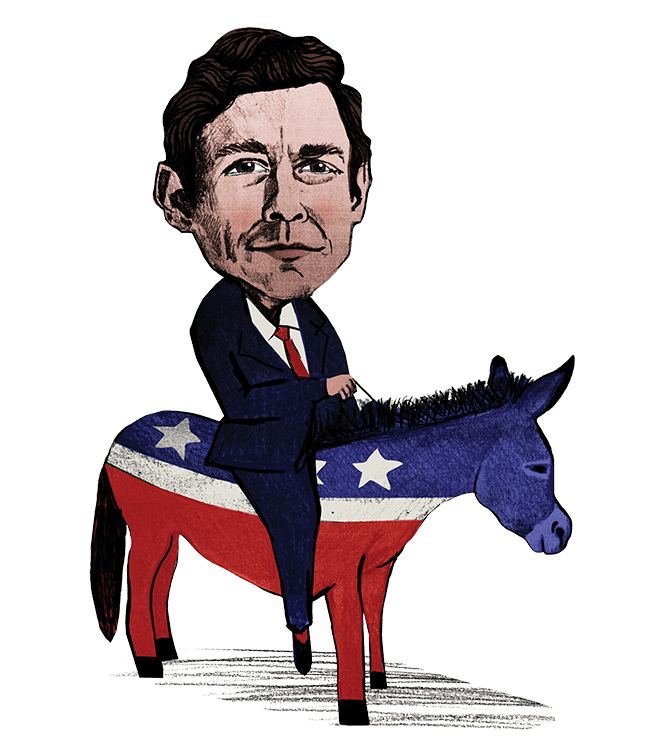
There are rules governing elections, rules governing how parties nominate candidates and playbook rules for conducting a winning campaign. The candidate is really just a product, as is the elected official. They’re products manufactured according to standardized procedures.
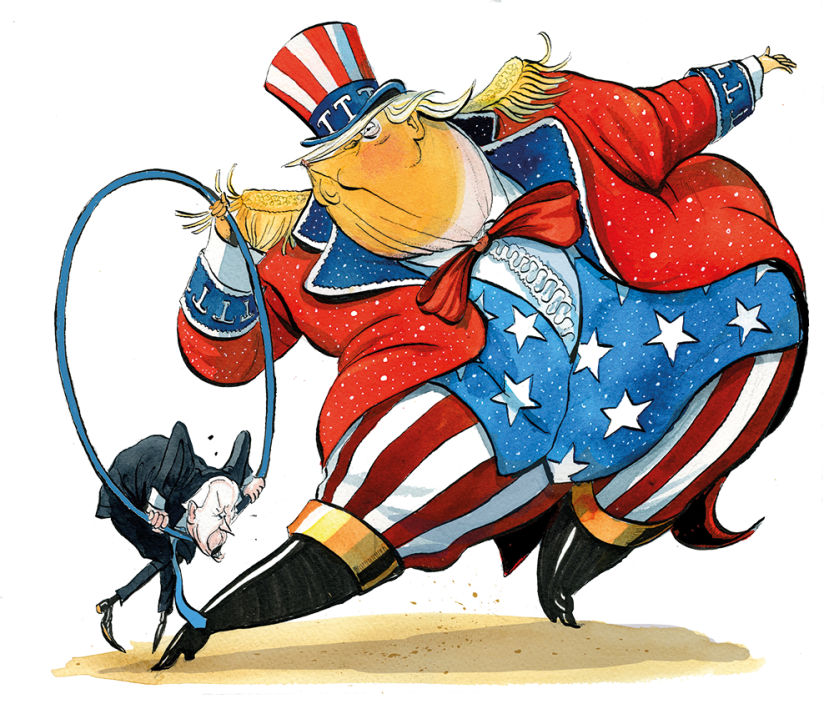
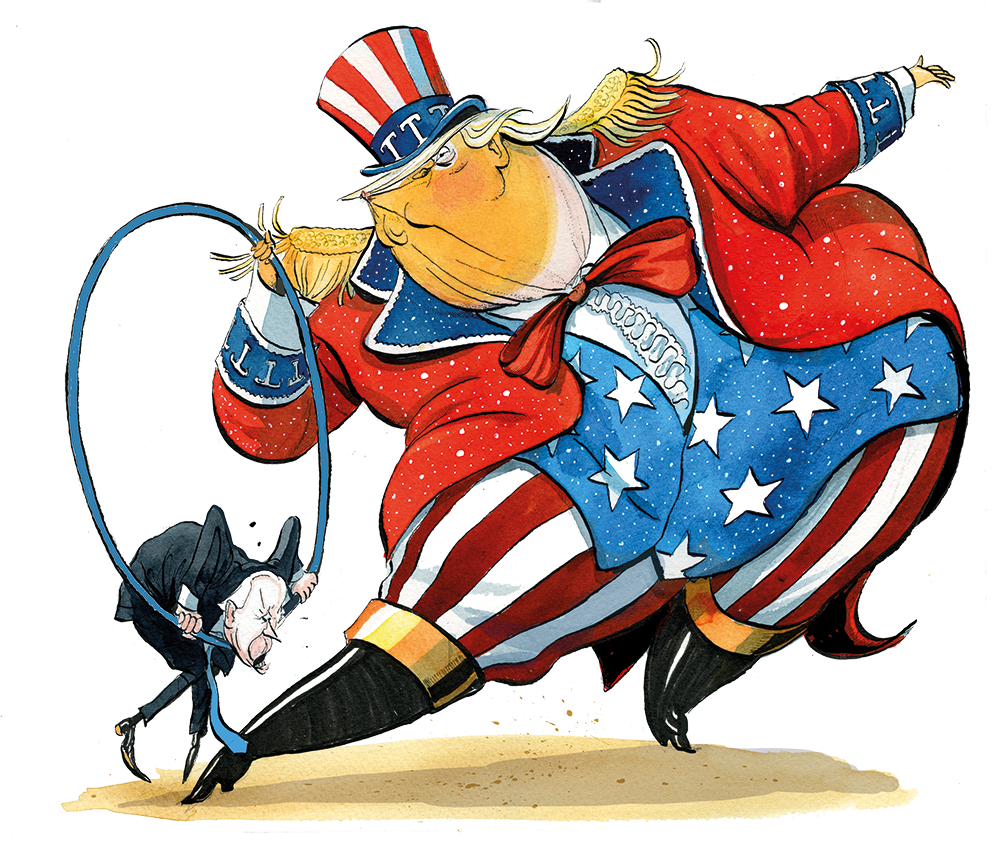
But Donald Trump isn’t. This enrages and frightens his critics. There is no norm he won’t violate, no procedure he isn’t prepared to ignore. He has an invincible belief in himself, over any rule. In the days of absolute monarchy, it was said that not even a king could bind a king: in principle, the monarch was not obliged to fulfill promises made by his predecessors, nor did he have to take account of any law he had formerly issued when promulgating a new one. A human being was above the machinery of law.
That had obvious drawbacks, but so does the opposite extreme – and before Trump, American politics had become inhuman. That inhumanity, celebrated as a virtue by its propagandists, was in the service of other impersonal systems which brought more wealth and power to certain private persons than to others. “Crony capitalism” was one phrase for this.
There was passion and irrationality in politics, to be sure, but even the passion was scripted and choreographed: there were few surprises to be found in even the most intense debates about abortion, racism, or war. The passions, though real enough in themselves, had become ritualistic in expression. Everyone knew the correct formula for making their case, whatever it might be.
Trump is no stranger to cliché, but his career as a whole over the past decade hasn’t followed anyone’s script, not even his own. He warned that other politicians were going to get America into a war with Iran – and then he got into a war, or two, with Iran. Even Trump cannot bind Trump. He is truly free.
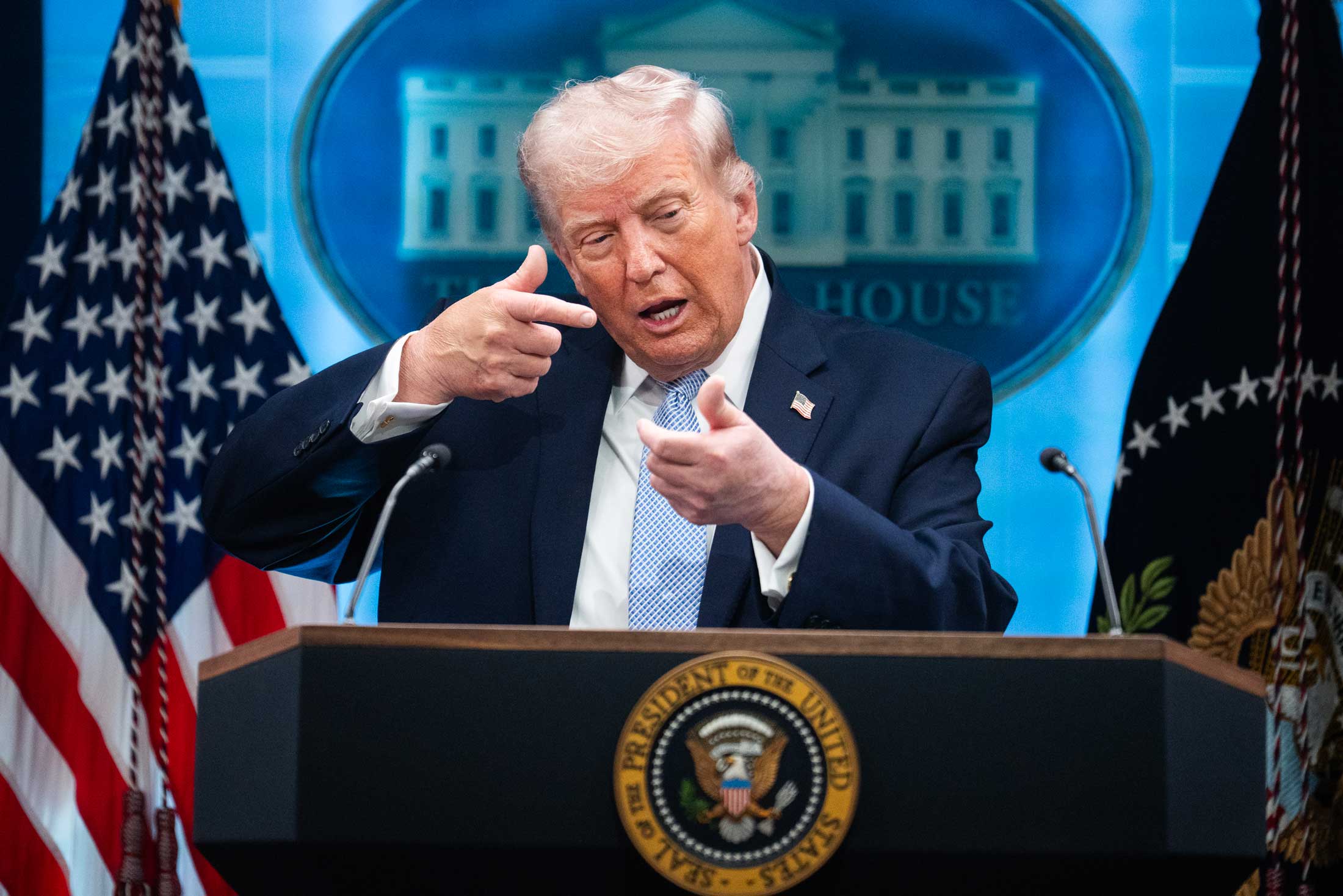
That infuriates many of his supporters, and former supporters, as well as his enemies. Freedom is the last thing they want in a leader: he’s meant to be a machine, an instrument, a means to an end. He’s meant to serve a principle, some abstract rule. Yet he doesn’t. Trump doesn’t just serve himself, however: he’s a transactional politician who at one time or another tries to give almost everyone in his coalition their top priority, no matter if those priorities conflict with one another. With few exceptions, Trump’s policies are more about relationships than designs.
All this has been the secret to Trump’s appeal since 2016. He’s a free man fighting the machinery that makes cogs out of the rest of us. People who benefit from being part of the machine – or who hope to benefit by changing the way the machine works – perceive Trump as a threat. People who don’t want to be incorporated into the machine see Trump as a hero, not necessarily because of what he promises or delivers, but because they feel in their guts that both the individual and humanity itself have been degraded by mass-produced politics.
Trump, with all his defects, is a reminder that politics involves flesh and blood, heart and soul. His battle with the machine god is noble, whatever one thinks of his character. This is one reason why many Christians who are troubled by his behavior continue to support him, and to support him ardently. They intuitively understand something that can only be judged madness by the criteria of the system. Trump is a glitch, not just another program.
Trump, with all his defects, isa reminder that politics involves flesh and blood, heart and soul
He’s therefore not exactly a model to follow – he’s an example of a man who doesn’t follow models. His singularity is itself a virtue, even if it may preclude others. It’s a virtue specifically in the context of a threat from uniformity. The uniform assumptions of pre-Trump politics had come to serve as procedural justifications for substantive policies that injured the American working class. Using procedure to fight procedure was costly and often counterproductive, with even victories bolstering the system as a whole – battles won at the cost of losing the war.
America doesn’t need a Bourbon king, much as the very thought of such a thing might help liberate the mind from Whiggish prejudices. Rule-breaking is certainly not good for its own sake – quite the opposite. But one President Trump can restore a measure of human spirit and spiritedness to an otherwise dry, despondent and mechanical politics. He shows there’s something unconquerable in us all. We need rules, but rules that serve the people’s good; when they cease to do that, one man has to step forward to remind us of just how free we are. We are not mass-produced widgets.
The decade of Trump has been a necessary corrective not only to decades of drift into globalism, but also to some 200 years of turning politics and society into a computer program to be executed.






Comments