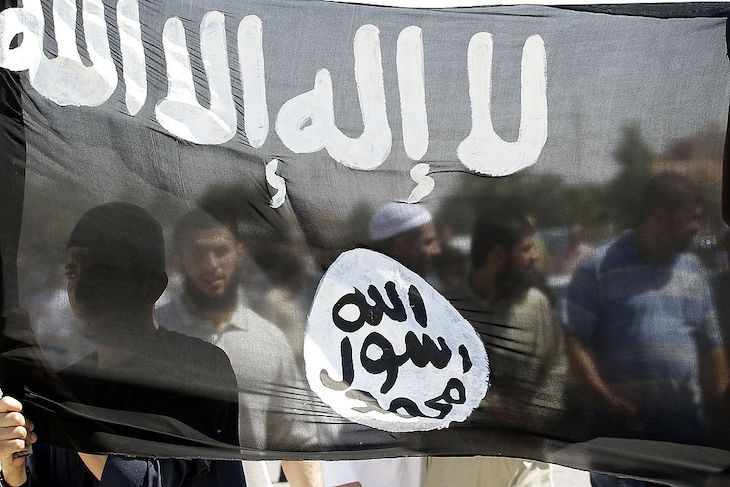
‘They haven’t gone away, you know.” Gerry Adams’s chilling words, uttered during the peace process, to remind everyone that the IRA still existed, would do as well for Al Qaeda, the architects of the 9/11 outrage, the 25th anniversary of which fell yesterday. Osama Bin Laden’s killing in May 2011 may have removed the titular head of Al Qaeda but, neither that well-deserved death, nor the subsequent splintering of Al Qaeda from Isis (Islamic State of Iraq and Syria) in 2014, has diminished either the virulence or potential danger that Al Qaeda presents.
Al Qaeda, which now has an undisturbed safe haven and allies, will pose again the sort of threat that 9/11 represents
Reliable reporting is that Al Qaeda is regrouping in Afghanistan, under the protection of the Taliban and, a new departure, the tutelage of the IRGC (Islamic Revolutionary Guard Corps). In essence, Afghanistan is becoming what it was before the 2001 invasion: a safe haven for Islamist extremists, of which Al Qaeda is one. The same reporting suggests up to five training camps have been created and, near Kandahar, the IRGC have been developing an underground complex, similar to those in Iran that have limited the effectiveness of Israeli and American air strikes. In other words, the Islamist terror networks have learnt from 25 years of Western counter-strikes, in Afghanistan, In Iraq, and more recently, in Lebanon and Iran, and are preparing.
Perhaps most striking is the co-operation between the Taliban and Iran and its, in effect, IRGC leadership. Prior to 2001, the Iranians and the Taliban were at each other’s throats because of the latter’s virulent anti-Shia attitude, most evident in their persecution of the Hazara and Tajik minorities. There are still disputes, water rights in their shared border areas in the West and South of Afghanistan, and illegal drugs, are particular problems, but the distinction that used to be drawn between Shia and Sunni Islamists is no longer so important. The influence of the IRGC is also palatable and Iran’s ambassador to Kabul, in 2022-24, Hassan Kazemi Qomi, was a former member of the Al Qods Force; the current dominance of the IRGC in Iran will be reflected in their embassies abroad.

While trying to disentangle the various Islamist groups can be a somewhat ‘spotterish’ activity, with distinct Pythonesque, “Fucking splitters…”, if rather more deadly, undertones, the survival and harbouring of Al Qaeda represents a ‘clear and present danger’. Both Isis and Al Qaeda draw from the same poisonous well: the writings of Sayyid Qutb, and the movement he inspired, the Muslim Brotherhood. Yet understanding their 2014 split is crucial.
Both groupings seek the establishment of states under Islamic Law, led by an Emir, who guides the faithful; Isis sought to establish this within the boundaries of current Middle Eastern countries, though their ambition was huge. Abu Bakr al-Baghdadi, who controlled large areas of Iraq and Syria between 2014-17, also declared a worldwide “caliphate” under his leadership.
Al Qaeda is different. Osama Bin Laden, in his writings, perhaps because of his wider exposure to the non-Muslim world and Saudi background, drew a distinction between the ‘near enemy’, what he saw as the ‘apostate’ Muslim regimes, that allowed Western troops on their lands and even negotiated with Israel, and the ‘far enemy’, the West and particularly the US. For him, and his successors, the ‘far enemy’ is the enemy to be defeated first; his argument, and geopolitical analysis, being that without that, those ‘apostate’ regimes will survive and, pejorative appellations aside, he was not wrong.
Practically speaking, Al Qaeda has also learnt from our response; rather like the IRA, which gave up its pretences to ‘brigades’ and ‘battalions’, after open confrontation with the British Army failed, Al Qaeda has long since abandoned a centralised command and control model. Bin Laden apparently stopped using phones in 1998, and even after he was forced-out of Afghanistan in 2001, it took ten years to kill him. In that time, he created AQ-affiliate organisations in Africa, and throughout the Middle East. Those affiliates continue to thrive: in Mali, JNIM (Jam’aat Nusrat Al Islam wal Muslimin) has blocked fuel supplies to the capital; in Somalia, Al Shabaab have reversed any progress that, painstakingly, the government made in a matter of months, AQIP (Al Qaeda in the Arabian Peninsula) have, according to a recent report from George Washington University’s Program on Extremism, “… rebuilt its finances and resumed English-language propaganda aimed at Western audiences.”
The model works, and co-operating with Iranian-inspired Islamist terror groups, as the new co-operation between the Taliban and the IRGC would allow, creates opportunities for further destabilisation, terror and chaos.
Parts of the West, and Britain particularly, have been reluctant to confront Islamist extremism; we found it easier to fight it at a distance, if at all. With the 2021 withdrawal from Afghanistan, and our ambivalence over support for the US and Israel in their endeavours to contain Iran and its proxies, we leave ourselves vulnerable.
The international Islamist ecosystem has evolved certainly but if we have learned – and I’m not sure we necessarily have – our opponents certainly have. We face the ongoing threat of hybrid, or ‘grey zone’ warfare from Russia, but I believe that Al Qaeda, which now has an undisturbed safe haven and allies, will pose again the sort of threat that 9/11 represents: it won’t be the same but we should prepare.





Comments