Odysseus had to withstand the wrath of Poseidon, avoid the call of the Sirens and vanquish the terrifying Cyclops to get back to Ithaca. But he didn’t have to negotiate the 19.20 train out of Waterloo. It’s worth it though. I am returning home to walk another section of the magnificent Thomas Hardy Way, a trailway around Dorset covering some of the most beautiful landscapes that England has to offer. Hardy himself described the Blackmore Vale in the north of the county as that ‘fertile and sheltered tract of country, in which the fields are never brown and the springs never dry’. Summer 2026 has rather tested that claim.
We stay in a small cabin that a friend has built near a secluded wood, miles away from anywhere. It’s charming and Enid Blyton-y, with a fire pit and even a tiny kitchen outbuilding. I’ve spent a lot of time thinking and writing about how we might solve our dysfunctional housing market, but maybe the answer lies in self-builds like his. I suggest as much to my friend as we watch an enormous orange moon emerge over the horizon. ‘Nonsense,’ he tells me, ‘the Planning Inspectorate would object to the fire pit alone.’
Hardy loved the countryside and worried about the desecration of its natural beauty and the conventions of those who lived there. Against those in the late Victorian period who believed that a more urban existence was becoming inescapable, he made the case for the enduring virtues of rural people. The loss of their way of life, he believed, was only inevitable in the same way that water inevitably flows uphill if forced by machinery.

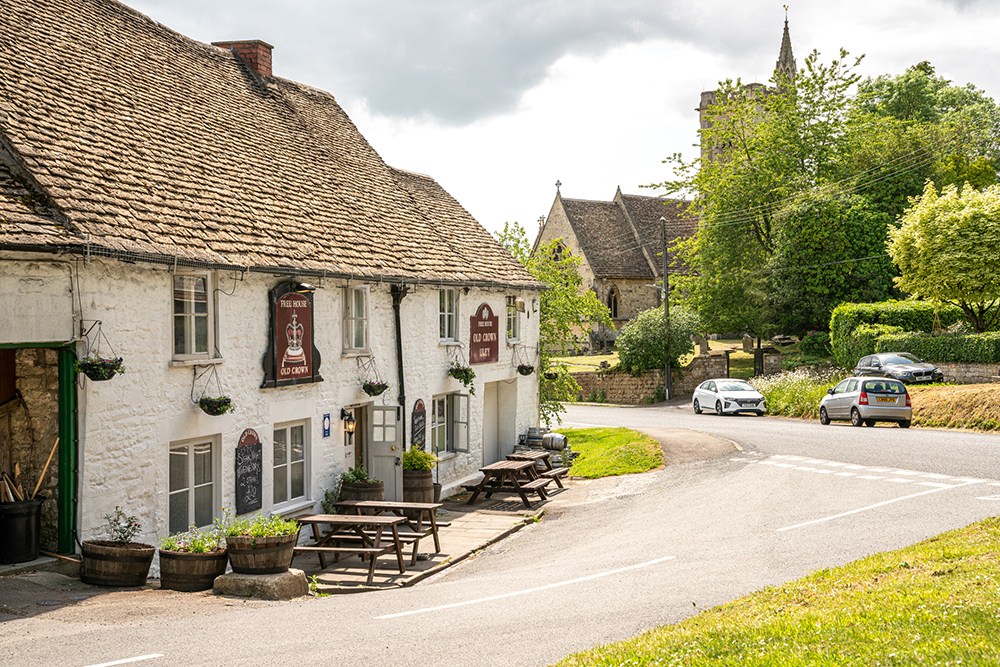
The ‘Vale of Blackmoor’ is also where I decided to base myself last year while writing my book, The Ownership Society. It was here, in the village of Marnhull – or ‘Marlott’ in Hardy’s fictional world – that I grew up. My decision may also have been influenced by the fact that Marnhull is home to the finest pub on Earth, The Crown Inn.
You can learn more about the mood of our nation at a busy pub like The Crown than from any pollster. Maybe that’s why the government seems intent on forcing them all to shut. In my conversations with fellow drinkers, there was a powerful sense that the countryside is besieged by a class of people that are at best indifferent to their way of life, and at worst hostile to it. A woman complains about ugly new housing estates resulting from ill-conceived housing targets; a local farmer criticises a family farm tax that will cripple many agricultural businesses; another laments the proposed ban on trail hunting. We are currently governed by people who see rural Britain as something to vandalise or extract from, but not to value.
As its county councillor, I was recently asked to open a history exhibition in the nearby town of Stalbridge. The exhibition concerns the remarkable story of how Lord Stalbridge, previously the town’s landlord, sold its dwellings and premises by individual lots after the Great War. Former tenants had the chance to become homeowners for the first time in their lives. And they became owners of their community in a more profound way too. Stalbridge developed a reputation as the ‘Home of the Friendlies’ because of its rich tradition of voluntary organisations. When in 1945, Oxford students – you know the type – came to the town with a megaphone to announce that residents would now be saved by the new welfare state, locals asked: ‘But what will happen to the Friendly Societies?’ Like the people of Stalbridge, we all need to think locally again. I don’t mean in the wishy-washy Lib Dem sense; I mean that we all need to look at the country’s problems as our own problems to solve, not somebody else’s.
I head to church, hungover – sitting in the same row I sat in when I was at the primary school next door. I look at the names carved into the back of the pews. How many would like to have remained here but could not, like water being forced uphill in Hardy’s words? I notice one elderly gentleman receiving the eucharist cup very gingerly. Perhaps I am not the only parishioner nursing a sore head.
Back to London, and to the Officer’s Mess at St James’s Palace for lunch. A good friend of mine who I commissioned with at Sandhurst is a junior officer with the Grenadier Guards and generously hosts us. The dining room has an embarrassment of historical riches – my favourite being a hoof from Marengo, Napoleon’s horse, recovered after the Battle of Waterloo in 1815 and converted into a snuff box. Alas, a fellow officer in the London Guards informs me that there are at least seven of these hooves in existence.
James Vitali’s The Ownership Society is out now.





Comments