Grade: A
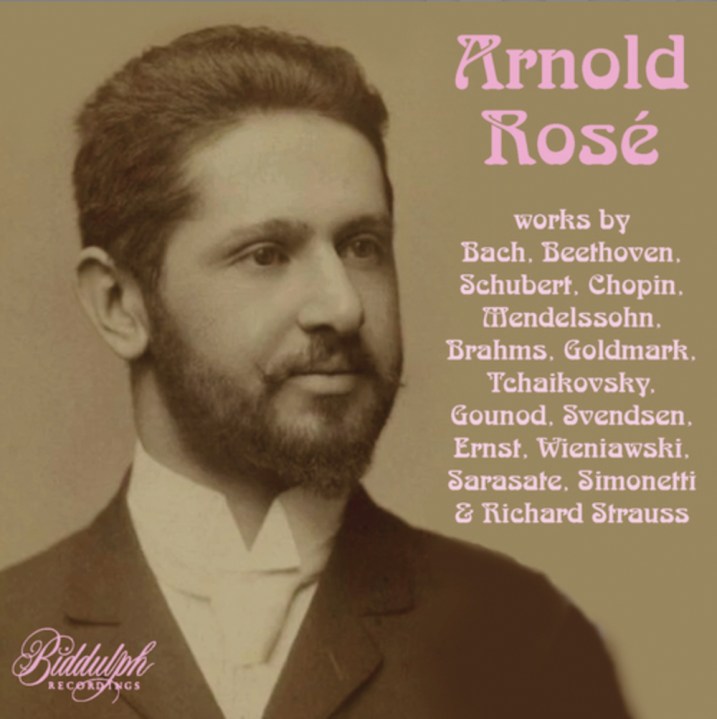
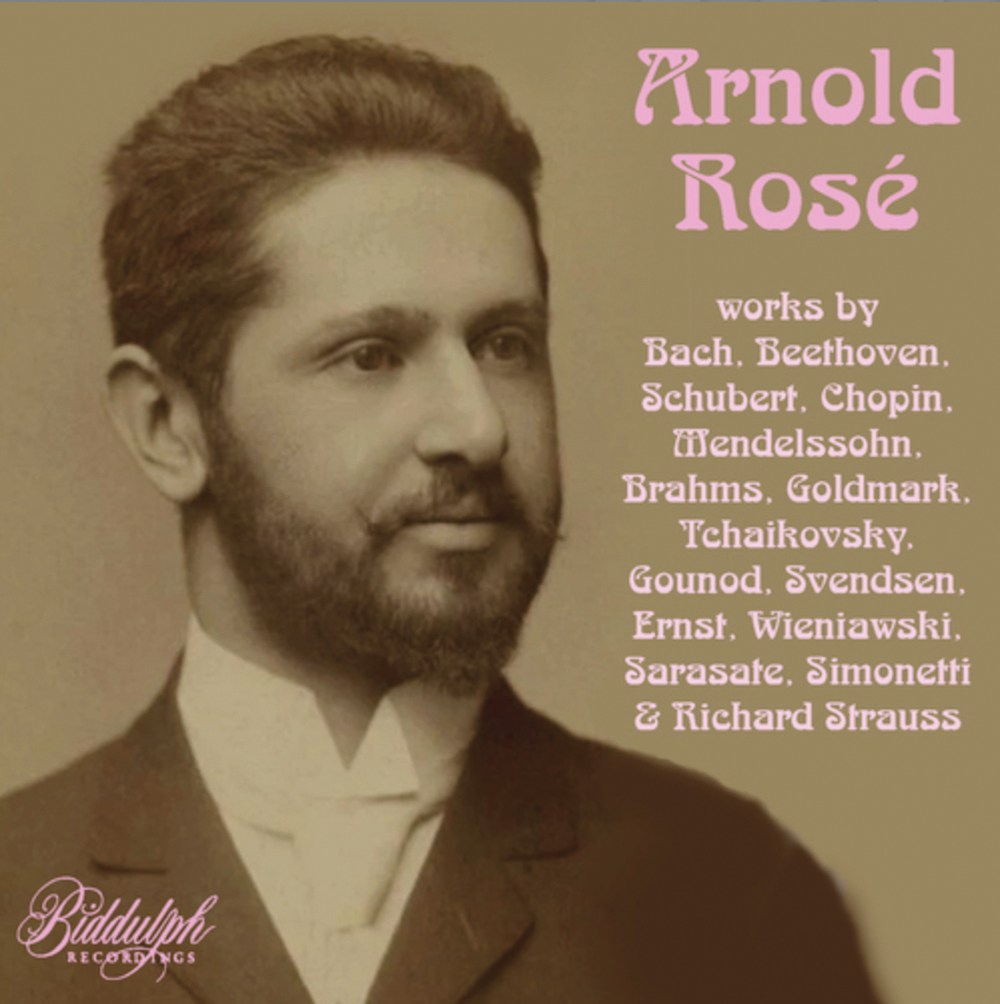
The Viennese violinist Arnold Rosé (1863-1946) held a musical civilisation together. Brother-in-law of Mahler, friend to Brahms and a legendary chamber musician, in 1884 he became leader of the Vienna Philharmonic – a post he held under Mahler and Richard Strauss until the Nazis drove him into exile in London in 1938. His daughter Alma conducted the women’s orchestra in Auschwitz; she didn’t survive. After the war, the Philharmonic apologised to Arnold for any misunderstanding, and offered him his old job back. He told them where to stick it.
Aren’t you curious to hear such a musician? Biddulph Recordings have removed as much crackle and pop as is humanly possible from a series of 78rpm recordings that Rosé made between 1902 and 1909: a mixture of lollipops by the likes of Sarasate and Wieniawski, and heavily condensed classics by Mendelssohn and Beethoven. There are brief glimpses of Rosé leading his quartet, and playing as first among equals with the VPO in Strauss’s Rosenkavalier Waltz. Occasionally you hear someone mutter the word ‘gramophone’.
But we’re not here for benchmark performances. We’re here to witness authentic 19th-century violin-playing: consistently sweet and firm, fluid without being gooey (don’t believe the myths about 19th-century vibrato) and phrased as instinctively as if it were human speech. There’s a throwaway skip and spring to a Brahms Hungarian Dance, given extra spice by the knowledge that Rosé almost certainly played it with Brahms himself. And a solitary movement of unaccompanied Bach from 1929 that carries an immense weight of dignity and sorrow, knowing (as we do, and Rosé didn’t) what was to come. Historic performances? This is history itself.



Comments