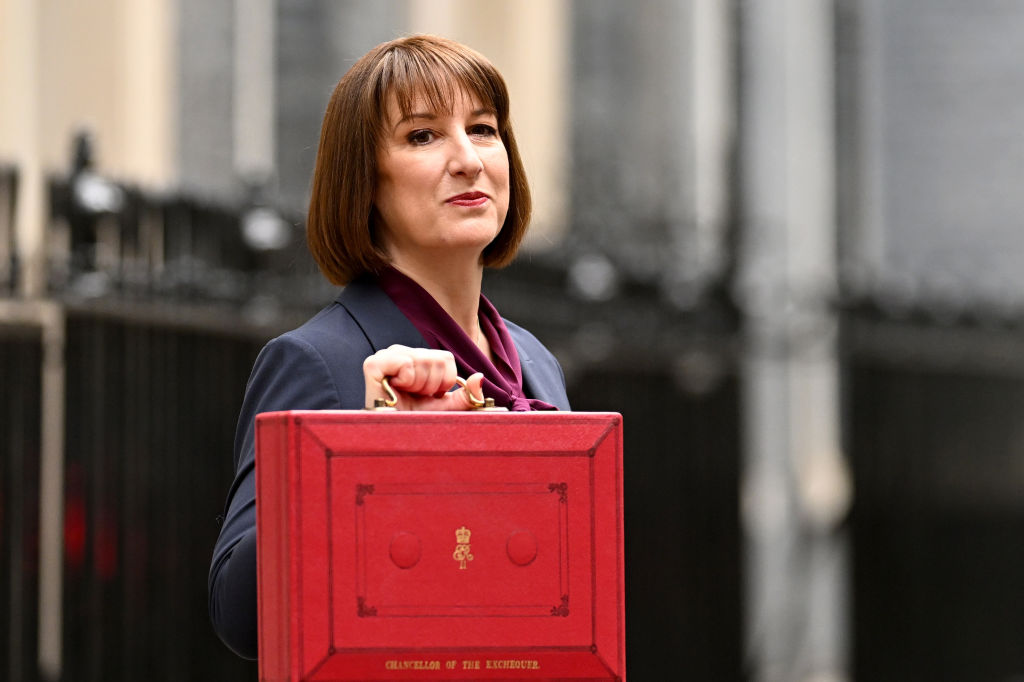
For almost two decades the productivity puzzle – the precipitous and ongoing drop in the growth of value that workers create – has had economists scratching their heads and chancellors tearing their hair out. It has meant permanent deficits, ballooning debt and falling budget headroom. Rachel Reeves said she would start to change that by fixing Britain’s economic foundations and getting the country growing again. But as the figures kept disappointing, the OBR reduced its expectation for the usual rate of productivity growth from 1.3 per cent to 1 per cent and Reeves lost her job before she could prove the doubters wrong.
Now the Guardian reports that productivity may have been growing faster than thought under Labour and suggests that Reeves has been unfairly maligned on account of ‘dodgy data’. It quotes a paper from the London School of Economics’ Centre for Economic Performance which calculates that productivity grew at an annualised rate of 1.6 per cent between the third quarter of 2024, shortly after Labour’s general election victory, and the first quarter of this year, against an average growth rate of just 0.3 per cent in the preceding decade. Using the traditional data sources, the rate of productivity growth under Reeves comes out at just 0.2 per cent a year. Today’s job figures suggest the gap between the estimates has grown even wider.
Productivity is calculated from estimates of total economic output divided by estimates of the number of workers, jobs, or hours worked. So, for the same amount of output, more work done means lower productivity. The estimates of workers usually come from the Office for National Statistics’ Labour Force Survey (LFS) – but that survey has been beset by problems, as The Spectator’s economics editor Michael Simmons has reported. Its response rate collapsed during the pandemic (and has only slowly recovered) while a recent ‘operational error’ led to the telephone interview operation being understaffed for six weeks. The problems are so bad that the LFS’s quality mark was withdrawn by the Office for Statistics Regulation and it will, eventually, be replaced by a transformed survey.
There is an alternative source of figures on how many people are working as employees and self-employed: HMRC’s tax records. Those figures (and various combinations of them) are published by the ONS or were combined by the report’s authors according to a Resolution Foundation recipe.
Some of these alternative counts of employment produce the more flattering productivity growth estimates – but the picture isn’t entirely rosy. HMRC’s figures say that 133,000 fewer people were on the payroll in the first quarter of 2026 than in the third quarter of 2024, while the ONS figures say there were 377,000 more.
They also raise the question of whether productivity improvement is based on workers producing more – or simply that the least productive jobs have been priced out of existence. The two industries with the biggest employee job losses since June 2024 are retail and wholesale, down 131,000 according to the latest figures, and food service and accommodation, down 93,000.
Retail and food service both have low average pay and were hit by hikes in the minimum wage and employers’ national insurance. One of the LSE authors, former Reeves advisor Professor John Van Reenen (another co-author, Dr Anna Valero, also advised her), says of the fall in low-paid jobs: ‘I don’t think that’s the main story: a chunk of this appears to be real… the best current guess does suggest we are getting more out of our workers than we used to.’
This is an attempt to write the economic history of Rachel Reeves’s time as chancellor. Rapid productivity growth would make for a flattering first draft. But losing more than 130,000 jobs rather than gaining twice that number would not, and Reeves can’t have it both ways.





Comments