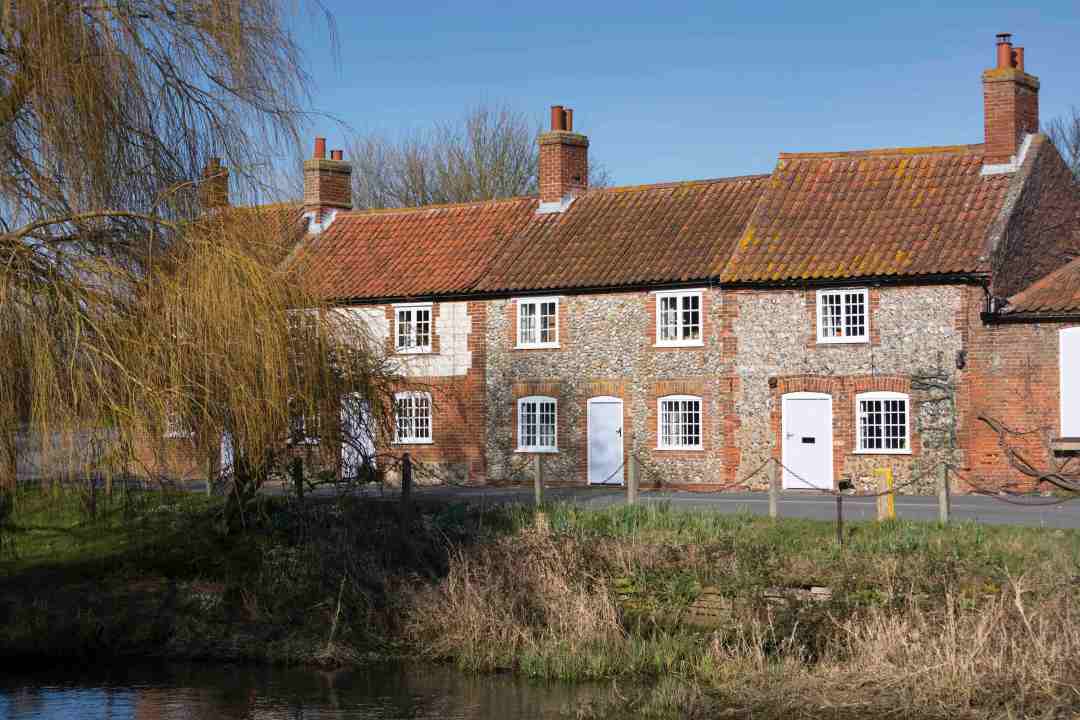
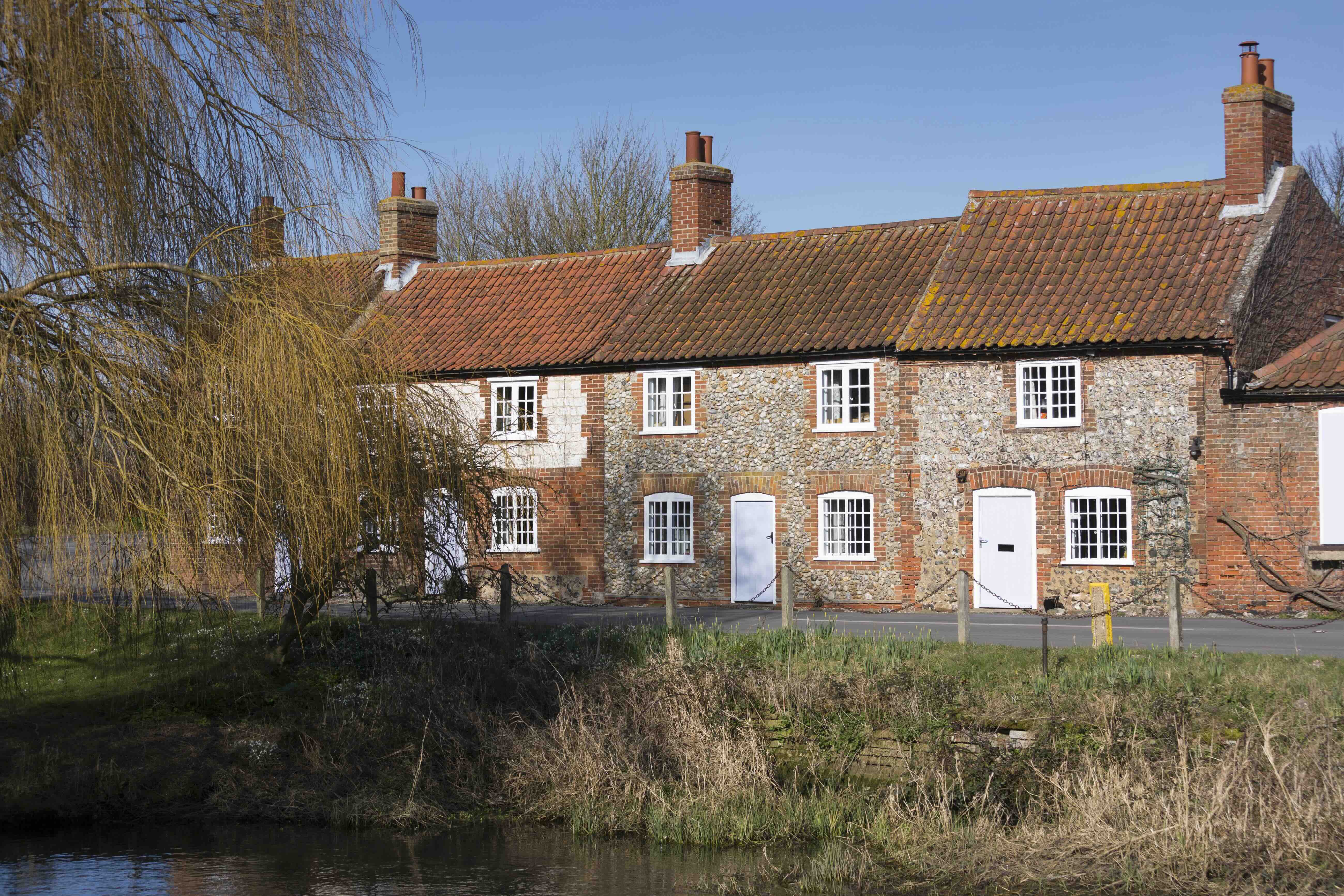
Last weekend I took a trip down memory lane. I visited the Norfolk village where, back in the 1980s, my husband and I bought a holiday cottage. We’d travel up there from London most weekends with our two young sons. That all ended with our divorce in 1992. Soon afterwards the cottage was sold, and I hadn’t been to the area since. Curious now to see whether the village had changed, I headed for the A11.

During the journey I reflected on those distant days. The cottage hadn’t been my idea. My husband was keen to have a rural bolt hole, but I’m a city person through and through, and always felt my real life was ‘on hold’ during those Norfolk weekends. I found the long drives there and back a real chore, and invariably we’d forget what we had left in Norfolk, what we needed to take, there was always something that wasn’t where it should be … yes, I know: First World problem.
The bigger problem was that we weren’t exactly welcome there. As second homeowners from London, we were blamed for pricing locals out of the market, and I felt guilty about that. But at least we gave work to some of the villagers! A cheerful woman called Queenie kept the cottage clean and tidy for us, and we hired the avuncular, retired Tom to take care of the garden. He regaled us with tales of his youth. One day he’d been a simple farmer, he told us, driving a tractor across a Norfolk field, then the war came and before long he was driving a tank in France. His sweet wife, Alice, served us tea in old-fashioned china cups and home-made cake.
Others were less kindly disposed towards us. You couldn’t miss their resentful looks. We were rank outsiders in that insular little village, as emphasised by a family we befriended – like us, a middle-class couple with young children. They had settled in the village 15 years earlier but remained total outsiders. ‘In order not to be considered an outsider,’ they explained, ‘you have to have five generations of your family buried in the village churchyard.’ What would these natives make of me, I wondered, if they knew I had been born in Budapest, grew up in New York, and was now a seasoned, unapologetic Londoner? I’d be like an alien from outer space.
Just how we were regarded was made clear one morning, when we woke up to find that the bushes lining our front garden had been torn up during the night and dumped on the lawn. Obviously a bit of vandalism by some of the village youths, who could be pretty rowdy, as we had observed. Tom came round to have a look. ‘I know who these kids are,’ he said, frowning. ‘Leave it to me. I’ll talk to their parents.’ And nothing like that ever happened again. If only there were more Toms in the world.
What would these natives make of me, I wondered, if they knew I had been born in Budapest, grew up in New York, and was now a seasoned, unapologetic Londoner?
The traditional grocery store up the road from our cottage was run by two men, the proverbial ‘only gays in the village’. They were an affable couple and for obvious reasons rather more tolerant of outsiders. There was a butcher’s shop too, but the butcher was a grumpy fellow and we were loathe to disturb him by entering his domain. And in pride of place, there was the brooding 16th century pub on the village green. If we ventured in there, the locals hunched over their pints would stop talking and eye us a tad warily as we made our way to the bar. It was like one of those scenes in a Hollywood movie, when that archetype, the stranger in town, enters a Wild West saloon. This was our Wild East (Anglia) …
But back to last weekend and my return to the village after 34 years. It appeared little changed. Well, there were a lot more cars parked around the green than there used to be. And the store run by the only gays in the village has been replaced by a shop run by the only Asians in the village. The butcher’s shop is now a bookshop, but it’s only open once a week, because how many books can you sell in a village of less than 1000 inhabitants? The little café is busy with day trippers and holidaymakers. Norfolk used to be a remote corner of England, stuck out on the edge, the quiet rural county without a motorway. But it’s been well and truly discovered. Today it can have traffic jams as bad as London’s, as I discovered to my frustration.
The ancient pub is much the same, except that, with so many strangers about, the natives have stopped taking notice of who’s walking in. I had booked into an upstairs room and was kept awake till the early hours by a group of noisy drinkers, most of whom, weirdly, had Cockney accents. But in the morning, as I was leaving, I got chatting to an elderly couple out walking their dog: locals born and bred, ancestors in the churchyard, etc. I recounted my memories of the place. I believe we were the only second-home owners back then; now the village has several, they told me. But it didn’t seem to worry them. Their children and grandchildren were still there; they hadn’t been priced out. And our old cottage was no mere weekend bolthole.
They said Tom had died long ago, but I was delighted to learn that Queenie was still around and going strong. ‘Please tell her I haven’t forgotten her,’ I said. As I got into my car they called out ‘See you next time!’ But somehow, a touch sadly, I doubted there would be one. A memory lane trip like this tends to be a one-off.




Comments