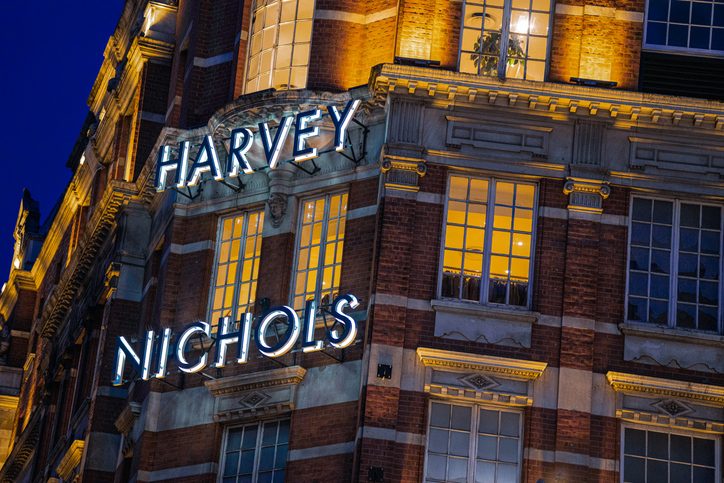
Harvey Nichols used to be one of the most glamorous department stores in the world. But now the business has gone up for sale – and it looks as if only the retailer Next and Frasers Group – owned by Mike Ashley of Sports Direct fame – are bidding on it. There is nothing wrong with either company. But the lack of interest in one of London’s most iconic retailers is a sad sign of the city’s economic decline.
In its heyday in the 1980s and 1990s, Harvey Nicks, as it was always known, was emblematic of the easy money, low-tax, globalised trading hub that London had become. Patronised by Princess Diana and popularised in the comedy series Absolutely Fabulous, it might have been a little brash. But it symbolised wealth and glamour. Under the ownership of the Hong Kong tycoon Sir Dickson Poon, it was one of the world’s swankest assets.
The big money has all been driven out of the capital
No more. After five years of losses, it is up for sale. We might expect the world’s luxury retailers, such as LMVH, to be fighting for ownership, along with a few Chinese billionaires, some Gulf royal families, and perhaps a tech giant or two. And yet, it turns out that with the deadline for bids approaching, only Next and Frasers have thrown their hats in the ring. No one else is interested.
Of course, that is not to disparage either company. Next is one of Britain’s best-managed companies, and Ashley is far smarter than his critics allow. If they buy it, either one may attempt to preserve its unique character. Indeed, the new prime minister Andy Burnham may well regard it as a victory for ‘ending forty years of neoliberalism’ if Harvey Nichols is turned into a shop that would look more at home on the high street in Wigan than Knightsbridge.
And yet it is hard not to see the total lack of interest from the world’s high-rollers and major corporations in buying the store as a reflection on London itself. The big money has all been driven out of the capital by the ending of non-dom status, the imposition of VAT on foreign tourists, and the punishing rises in business rates and employment taxes. Meanwhile, the over-regulation of the City means many of its most natural local customers are no longer able to afford its prices. ‘Centrist’ Conservatives and now a 1970s-loving Labour government have driven all that money out. There is no place left for the glamour of Harvey Nicks – and the British economy will be a lot poorer as a result.





Comments