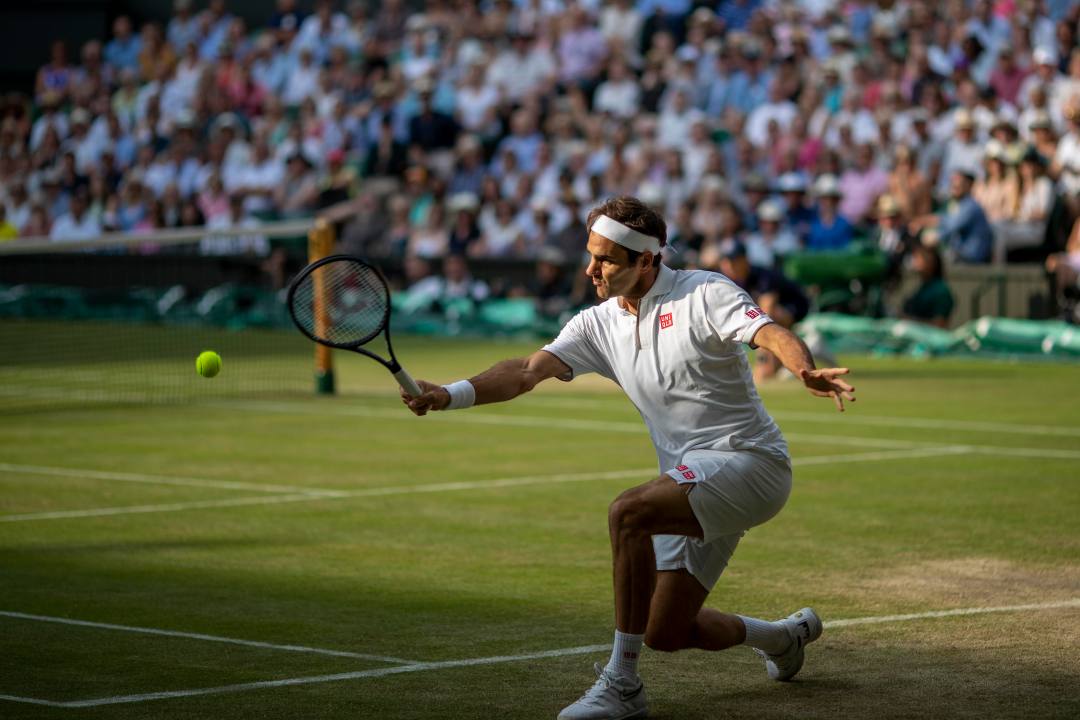
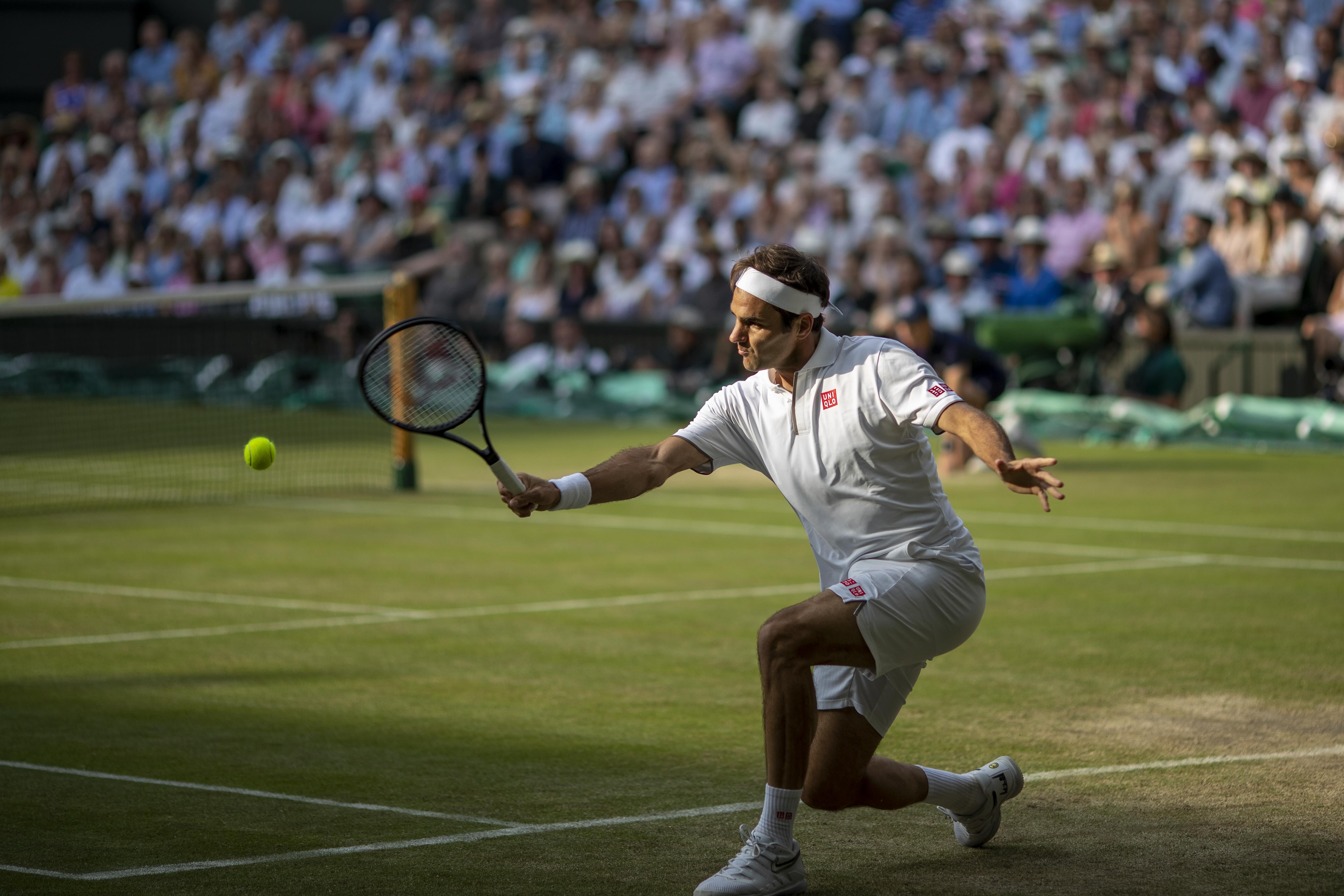
Epic figures leave epic gaps when they retire. The generations that follow are doomed to be compared to past heroes by nostalgic fans. So it is with Roger Federer. Novak Djokovic might be the GOAT (greatest of all time, to use the phrase du jour) in terms of sheer numerical achievement. But tennis is art, not science. Ballet, not bookkeeping. For the aesthetes among us who drink in the sight of on-court grace like champagne, Federer will always be number one.
To answer why, you don’t need words, though heaven knows enough have been written about the grace of Rog. (David Foster Wallace famously called watching the Swiss savant ‘a religious experience’). Click on any clip and watch Fed glide on the court, near-supernatural in his poise. He moves like Wodehouse’s hero-butler did in the Jeeves and Wooster novels. Always ‘shimmering’ in and out of view, exactly where he needed to be. Roger’s lantern jaw and piercing eyes certainly didn’t hurt.
Still, a note is needed on his backhand. That one-hander is still enough to turn any viewer Italian: Mamma mia indeed. Roger’s precise yet powerful shot, and how it ended with outspread arms, like a vicar saying ‘here endeth the lesson’, are the reason I practice the one-hander myself. This, despite the fact that it’s a dying art. Once, dozens of the top 100 male players used it. Now, it’s been near-eradicated by the reliably mundane double-fisted sledgehammer of the ‘2HBH’ (two-handed backhand).
But if Roger’s legacy was about mere style, it would have sputtered out already. We miss the Federer years not just because of him, but because of the era itself. And good times they were too — it all looks impossibly rose-tinted now. Roger’s highest peak (commonly agreed to be 2003-2009) was a simpler time. The game itself had space to shine, unencumbered by today’s mountains of onscreen data touting win predictors and serve speeds.
Nor were the pros hounded by cameras streaming their every move even in warm-up rooms (an Orwellian practice known as the ‘integrated world feed’). In the stands, fans got their kicks by chinning pintfuls of Pimm’s, not mediating the event with selfies. Rabid fandom did exist but had yet to seep into every digital forum. Tournaments today have lost that sanctuary, where you’re allowed to simply bask in athletic play and good sportsmanship. Matches grow rife with politics, as Ukrainian pros face Russians days after their hometown is bombed, or players (like the Paraguayan Adolfo Daniel Vallejo) complain that their match ‘needs to be refereed by a man. It’s very difficult for a woman to do it.’
Tennis needs a rich cast of characters, the jokers and the kings, to keep its colour
Yet with Roger, you were in safe hands. The game was the thing. He embodied that sense of court as stage thanks to his sublime control and movement, the kind that make grown men moan erotically, and their wives mutter ‘he never makes those sounds with me’. But I also miss him because — whisper it — he was so pleasantly dull. Oh, charming as hell, polite and erudite, but without an ounce of edge or scandal.
That lack of edge is why we’re unlikely to ever enjoy the comfort of a juicy Federer biopic. It’s hard to compete, drama-wise, against players who despised their sport but loved snorting crystal meth (Agassi). Or who can skewer umpires both for their calls and their fashion sense (Kyrgios, who once told an ump ‘Bro, you are taking the fucking piss mate. The ball was this far out, no joke. […] Your hat looks ridiculous, also.’)
This spectrum is all to the good — hear me out. Tennis needs a rich cast of characters, the jokers and the kings, to keep its colour. You want people to root against as much as to root for, after all. So when Federer played the volatile but supernaturally gifted Nick Kyrgios in 2019, and cleaned his clock for the seventh time, it was a particularly satisfying victory for decorum over punkish gall. Roger, one suspects, is what the founders had in mind when they decreed, all those years ago, that tennis was the sport of gentlemen.
But for all the talk of his mythic calm, the clockwork Swiss could be sweetly vulnerable. In 2009, after losing the Aussie Open final to Rafa Nadal, his stoic demeanour crumbled. ‘God, it’s killing me,’ he wept in front of an entire stadium. But ‘I don’t want to have the last word,’ he added. ‘So Rafa, congratulations. You played incredible. You deserve it, man.’ This, perhaps, is Roger at his most beautiful — a good man, even when he wasn’t the best player.
A confession: it feels a tad redundant to write this hagiography, one that merely adds to the endless toots of Federer praise. Sure, he could act the smarmy popinjay (remember when he strutted into Wimbledon in an all-white suit and military-collared jacket? He looked like a milkman on the razzle). But for the most part, loving Rog is like loving The Beatles — the predictable, unexciting choice. Other fans rib Fed-heads, snorting, ‘Really? But he’s so obvious…’ I suspect they find him unsatisfying because he made perfection look so damn easy: able to slice drop shots like cream from a bowl and quietly construct points with the patience of an engineer.
Watch him in action, and it’s like hearing ‘Hey Jude’ for the first time. Those operatic highs, built on such simple foundations. The warm flow of note melting into note that floods you with a satori-like awakening: ‘Ah! So this is music.’ Or in Roger’s case, ‘Ah! So that’s what a body is for. This is how humans can move.’ David Foster Wallace was right: a religious experience.

Comments