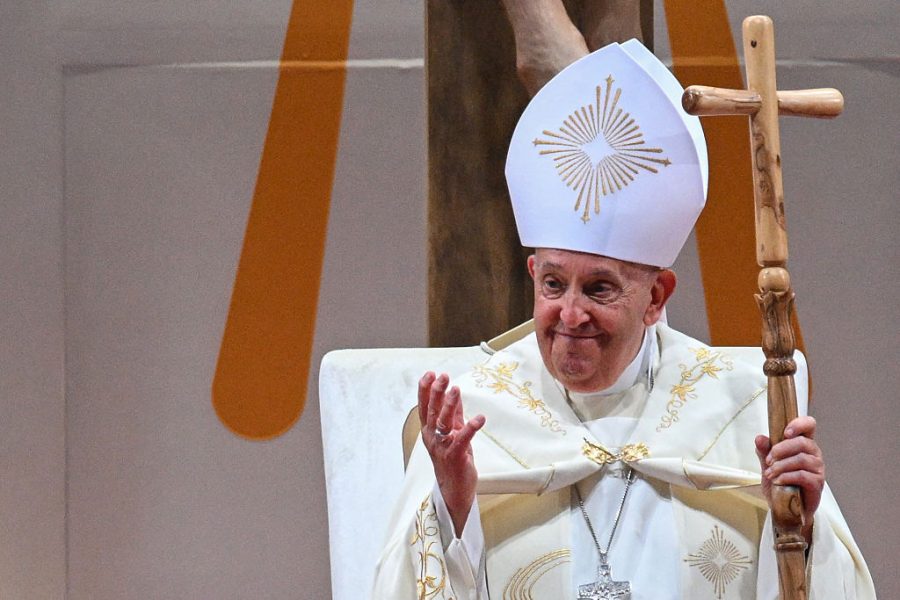
The anniversary of Pope Leo XIV’s election last month generated lots of thoughtful but inconclusive analysis from mainstream Catholic commentators – and, on social media, far more heat than light. Traditionalists in particular have turned on each other. Some think Leo is quietly reversing the mistakes of his predecessor, or at least planning to do so. Others describe him as ‘Francis II’ or ‘Bergoglio in nicer vestments’.
I believe that the former position is closer to the truth. For example, although Leo has appointed both liberal and conservative bishops and often pays tribute to his predecessor, he has not followed Francis’s example of catapulting controversial progressives into major dioceses; nor has he bestowed red hats on non-cardinalatial sees occupied by his ideological allies. What many Leonine appointees have in common is expertise in canon law, applied inconsistently or bypassed under Francis. This points to a fundamental difference in the two popes’ styles of government – one more apparent to sociologists than to Vatican-watchers. For a better understanding of the contrast between Francis and Leo, we should look beyond theological sources – to the writings of a sex-obsessed agnostic German social theorist who died from the Spanish flu in 1920.
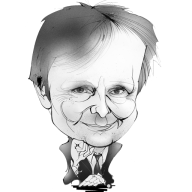
Max Weber was the most spectacular polymath in a society that treated intellectuals like princes. Although employed by the University of Heidelberg to teach political economy, he behaved as if he were a professor of everything. His 1,469-page Economy and Society is a panorama of human social relationships throughout history. The index alone reveals his insatiable curiosity. Alongside predictable entries for bureaucracy, capitalism, Marxism and so on, we find ‘Dalai Lama, selection of’, ‘India, stylisation of music’ and ‘Mongolia, caesaropapism’, plus so many references to sexual orgies that they’re broken down into sub-categories of ‘religion and’, ‘chastity versus orgy’, ‘dervish’, ‘in Greece’ and ‘soteriological’. Weber was fascinated by both eroticism and religious belief – despite (or as a result of) suffering from sexual impotence and losing his Protestant faith. He was also addicted to opiates, including heroin, and one wonders whether they stimulated his lateral thinking.
Like many Argentinians of his vintage, Jorge Bergoglio was influenced by Juan Perón
Weber treated intellectual boundary-jumping as an Olympic sport. When he was not gripped by depressive self-loathing, he would devour the literature on an arcane subject in a frenzy. His motive was to uncover patterns of social and institutional change that eluded scholars whose imaginations were constrained by specialisation. Today he is regarded as the founding father of sociology and celebrated for two big ideas. The first is the theory that the origins of modern corporate capitalism lie in the ‘Protestant ethic’ of Calvinism. The second is the notion of charismatic authority. For Weber, the great driving force of history was the tension between, on the one hand, traditional and legal-bureaucratic leadership and, on the other, the raw power of charisma, which created its own disruptive but creative version of authority, transforming Western society with its new ideas.
Every time we use the word ‘charisma’ in conversation, we are unwittingly paying tribute to Max Weber. Without him, it would never cross our lips. It is New Testament Greek, meaning something like ‘the gift of grace’ or ‘spiritual gift’. The earliest recorded appearance of the word is a passage in St. Paul’s First Letter to the Corinthians in which he advises new Christians to be cautious in their use of the more exotic ‘charismata’ (plural of charisma) such as healing and exorcism and to prioritise teaching and discernment. Thereafter, charisma as a specific concept disappeared. Translations of the New Testament abandoned this unique word – and, not coincidentally, the miracle-working powers attributed to charisma were appropriated by the Church.
The concept of charisma was redundant until 19th-century Protestant scholars rediscovered it. The anti-Catholic Rudolf Sohm, keen to discredit the concept of apostolic succession, proposed that charisma was the true source of leadership in the early Church. Weber picked up Sohm’s theory and secularised it. He wrote that charismatic Herrschaft – perhaps best translated as ‘domination’ but usually rendered as ‘authority’ – was a fundamental relationship in societies everywhere. In its purest form it was exercised by prophets and warriors whose followers recognised their powers as supernatural, or at least extraordinary. But charismatic authority could be withdrawn by their audiences if the leader failed to deliver miracles and victories.
Charisma was rarely pure. The new ideas generated by gurus and warrior-statesmen were ‘routinised’ (made part of everyday life) by the emerging legal and bureaucratic agents of government. Thus, the apocalyptic mission of Jesus gave us canon law and Gothic architecture; the regicide Oliver Cromwell laid the foundations of English constitutional monarchy; the Corsican adventurer Bonaparte, who killed off the Holy Roman Empire, commissioned the Code Napoleon, still the cornerstone of civil law in France.
Moreover, in practice, many leaders were only partly, temporarily, or dubiously charismatic. Weber applied the label to real-life figures in a slapdash manner, changing his opinion (for example, about Kaiser Wilhelm II, whom he initially revered and then decided was a fraud) or being unable to make up his mind (he couldn’t decide whether Joseph Smith, founder of the Mormons, was a charismatic prophet or a charlatan).
And yet, despite the messiness of Weber’s writings on charisma, both scholars and the general public have concluded that the concept has the ring of truth. The word is so ubiquitous today that it’s surprising to realise that it moved into popular discourse as recently as 1968, when Robert F. Kennedy’s presidential campaign and assassination sparked debates about ‘the Kennedy charisma’. It’s even more surprising to discover that, so far as we can tell, not one single person or group of people in history was described as charismatic until Weber wrote a letter to his student Dora Jellinek in 1910 describing the ‘charisma’ of the cult surrounding the half-mad symbolist poet Stefan George.
How does this relate to Popes Francis and Leo? In a recent episode of The Spectator’s Holy Smoke podcast, Ed Condon of The Pillar said that ‘Robert Prevost has disappeared into the role of pope in a way that Jorge Bergoglio never did.’ Pope Leo does indeed possess what has been described as a ‘quiet charisma’, but it is mostly what Weber rather confusingly called the ‘charisma of office’ – a sacredness attached to a position, transmitted through ritual, that exists independently of the person holding it. This isn’t to say that Leo’s popularity doesn’t draw on his unique personal charm, but it’s a quality that never undermines the dignity of the papacy.
Francis, on the other hand, charmed secular opinion by brushing aside convention. His very first act as pope was to reject one of the trappings of office, the red papal mozzetta. By the end of his first year, he had made clear his opposition to Catholics who value both ancient rubrics and the harder teachings of the magisterium: traditionalist Franciscans were banned from celebrating the Old Rite, Cardinal Raymond Burke was removed from the Congregation for Bishops, and the Pope encouraged Cardinal Walter Kasper to propose the admission of divorced-and-remarried Catholics to Holy Communion.
The theology of the Bergoglio pontificate has a curiously schizophrenic quality. Francis declared war on traditionalists by reversing Benedict XVI’s liberation of the Tridentine Mass, doing so while Benedict was still alive, causing him immense pain. Yet, in the end, he did not give liberals what they wanted. He played a strange game of encouraging campaigners for women’s ordination and LGBT rights and then leaving them standing at the altar when the moment for policy changes arrived. His record becomes less puzzling, however, if we make use of Weber’s categories and consider the analogous games played by charismatic leaders who have also acquired the institutional powers attached to traditional and legal-bureaucratic authority.
Charisma in itself is neither good nor bad. Weber was clear about that – though frustratingly unclear about how to employ his analytical tool. It is testimony to its usefulness that there’s a consensus about which political leaders since the beginning of the 20th century have exercised an unusual degree of charismatic authority. It includes (in order of date of birth) Theodore Roosevelt, Winston Churchill, Franklin Delano Roosevelt, Benito Mussolini, Adolf Hitler, Charles de Gaulle, Ronald Reagan, Nelson Mandela, Margaret Thatcher, and Donald Trump.
Although there is obviously no moral equivalence between these figures, what they have in common is that, unlike charismatic Marxists, they took possession of democratic governments whose constitutional machinery they were able to exploit or sabotage by appealing to their personality cults. (Often the experiment ended messily, but that is what Weber would have expected: the intrinsic fragility of charismatic authority is central to his thesis.)
Pope John Paul II – not a democratic ruler, but one who inherited a highly developed bureaucracy – seems to belong on this list of 20th-century figures. His force of personality magnified his charisma of office to the point where he brought about world-historical change. One could not say, to quote Condon, that he ‘disappeared into the role of pope’, as Benedict XVI did before abandoning it altogether. But nor did he seek to reinvent the office.
As a Polish bishop, Karol Wojtyla combined daring and diplomatic nuance; he knew how to manipulate the Communist authorities without endangering Catholics. During his pontificate he exploited his personal charisma – which waxed and waned over the years, as charisma always does – to reinforce orthodox teaching. Although his speeches were often directed at a secular audience, they weren’t delivered over the heads of his hierarchy. Indeed, he allowed the Curia too much freedom to regulate itself, with scandalous consequences that detract from, but do not destroy, his reputation as a hero of the 20th century.
The charisma of Pope Francis was very different. It bore some of the hallmarks of secular charismatic rule – without, however, producing any of the ‘big ideas’ associated with history’s most significant charismatic leaders. That is, unless one counts the notion – more of an impression than a formal principle – that previously magisterial Catholic teaching on difficult topics such as divorce and homosexuality was somehow negotiable.
Like many Argentinians of his vintage, Jorge Bergoglio was influenced by Juan Perón, who as president from 1946 to 1955 enjoyed fanatical working-class support. Perón was a supreme opportunist: he drew on elements of political Catholicism, Italian fascism, and Third World socialism. He embraced Argentina’s Jewish community while sheltering Nazi war criminals; he celebrated labour unions while torturing activists who organised anti-government strikes. In an article published in 2016, Samuel Gregg of the Acton Institute noted that ‘parallels exist between the styles of el conductor and Francis’. These included intentional imprecision of language, a tendency to caricature critics rather than engage with their arguments, and:
An attachment to el pueblo – something invested with almost mystical qualities by Perón and Francis, but which often morphs into populism.
In the years that followed, commentators often referred to Francis’s ‘Peronism’ to account for his willingness to contradict himself. One moment he was inviting the LGBT lobby to the Vatican; the next, he was using Roman slang to mock homosexuals. He compared abortionists to paid assassins; he also allowed pro-abortion Catholic politicians to receive Holy Communion and appointed ‘pro-choice’ academics to pontifical bodies. This modus operandi was Peronist, the argument went, because both pope and president cultivated an aura of unpredictability in order to wrong-foot anyone who thought they had a handle on them. Supposed enemies might be suddenly forgiven, sycophants thrown under the bus.
There was undoubtedly a specifically Peronist flavour to aspects of the Bergoglio pontificate. But Francis comes into even sharper focus if we take a broader view, drawing on Weber. As pope, his determination to weaken the authority of the Curia was far more consistent than his supposedly liberal agenda, which rarely amounted to more than provocative soundbites. Francis often behaved like the leader of a populist party who suddenly wields executive power; he or she paradoxically uses that legal-bureaucratic authority, as Weber would put it, to weaken the influence of the executives charged with implementing the leader’s policies.
During his pontificate, Francis issued 75 motu proprio – executive orders on his own authority that changed the rules governing financial administration, the creation of dicasteries, the administration of justice, responses to sex abuse allegations and the celebration of the liturgy. That works out as between six and eight per year; John Paul II and Benedict XVI, in comparison, issued between one and two motu proprio annually.
Whether Francis’s executive orders rooted out or entrenched Vatican corruption remains a matter of opinion, and we might conclude that at different times he did both. What is undeniable is that he centralised authority in his own person. We cannot say that he was merely exercising the divinely ordained papal ‘charisma of office’. Crucially, Francis also resembled charismatic politicians who surround themselves with a parallel or shadow government whose unofficial powers supersede those of legislators and office-holders.
Pope Francis’s decision to move out of the Apostolic Palace and into the Santa Marta Hostel next to St. Peter’s lay at the heart of his parallel jurisdiction. Here he met advisors who, whether senior executives or dissident lobbyists, were distinguished above all by their hostility to the Pope’s conservative enemies. The uneasy co-existence of unofficial and official jurisdictions is a familiar feature of charismatic government: both are controlled by the leader, who – since it is common for lieutenants to occupy positions in both structures – is the only person who understands how the system works.
One could, at the risk of provoking outrage, draw analogies between Francis’s extraordinary measures and Hitler’s improvised consolidation of power after taking office as German Chancellor in January 1933. But let us stay on safer ground and mention President Franklin Delano Roosevelt’s creation of dozens of new ‘alphabet agencies’ (WPA, CCC, PWA, NRA, TVA) via legislation and executive action. These operated with significant autonomy and emergency powers, often bypassing traditional departmental channels.
More recently, the British prime minister Tony Blair – attributed with quasi-charismatic powers by the media and the electorate until his military humiliation in Iraq – employed ‘special advisers’ who often played a larger role than ministers and mandarins in the formulation of policy. These administrative tactics, employed also in similar ways by Ronald Reagan, Margaret Thatcher, and Donald Trump, went hand in hand with a cult of personality that enabled the leader to speak to his or her supporters over the heads of executives who were left confused about the extent of their own authority.
Such confusion was endemic in the Roman Curia under Pope Francis. At times he behaved more like a dictator than a law-abiding head of state. His circle of advisers at Santa Marta may have resembled the ‘sofa government’ of populist prime ministers. But the ever-growing torrent of motu proprio, which had the effect of demoralising the Curia and many diocesan bishops, called to mind the methods of Juan Perón and other authoritarian figures.
Francis created structures whose precise remit was never spelled out. These included a new form of synod whose voting members included not only bishops but also lay members. Characteristically, though, Francis curtailed the democratic aspirations of participants by removing sensitive topics such as women’s ordination and same-sex blessings from the agenda. Likewise, it was never clear how much influence was wielded by the council of nine cardinals, known as the C9, established by Francis to reform the Holy See. Certainly, it was greater than that of the whole College of Cardinals, whose discussions at consistories were tightly controlled by the Pope. This was resented by cardinals who felt that their advisory role had been usurped by the secretive C9, which was chaired by a papal ally widely considered to be irredeemably corrupt, Cardinal Óscar Rodríguez Maradiaga of Honduras.
Francis was not the founder of a movement – unlike the saint after whom he took his name
Maradiaga, a former head of the Latin American bishops’ conference who served as archbishop of Tegucigalpa from 1993 until 2023, was accused by L’Espresso in 2017 of mismanaging millions of dollars of church funds and of personally accepting hundreds of thousands of dollars from a Catholic university in Honduras. He is on record as blaming the Jewish media for exaggerating sex abuse scandals, and questions remain about his relationship with his auxiliary bishop Juan José Pineda Fasquelle, who resigned in 2018 amid claims that he abused seminarians and channelled money to homosexual associates.
Under any other pope, Maradiaga would have been forced out of office. Francis did nothing to discipline or investigate him – and this is relevant because one of the hallmarks of certain charismatic leaders is indulgence towards lieutenants whose personal failings might appear incompatible with the leader’s reforming mission. A recurring motif in Martin Kitchen’s study of charisma in the Third Reich is Hitler’s willingness to tolerate the incompetence and corruption of favoured advisers such as Herman Goering while savagely punishing more conscientious subordinates.
Weber might have explained this paradox in terms of the importance of rewards – ‘spoils’ or ‘booty’ – in maintaining charismatic authority. A lieutenant’s historic role in winning power for the leader mattered more than commitment to a mission whose aims, given the quixotic temperament of so many warlords or prophets, were likely to change unpredictably. Oscar Maradiaga, Godfried Danneels (a retired Belgian archbishop caught trying to cover up incestuous child abuse), and the American arch-predator Theodore McCarrick were all discredited by the time of Francis’s election. But all three cardinals had lobbied for Bergoglio before the conclave and were rehabilitated; McCarrick was disowned only after he was charged with abusing a minor.
Many of Francis’s conservative critics were indignant that scandals that personally implicated the Pope, such as those surrounding the jailed sex abusers Fr. Julio Grassi and Bishop Gustavo Zanchetta or the accused rapist Fr. Mark Rupnik, failed to make headlines in the secular press. But this failure was predictable, given Francis’s artful cultivation of the media.
Charismatic leaders are adept at exploiting new communications technology. The prophecy-infused uprisings of the Reformation would have been unthinkable without the printing press. In modern times FDR’s ‘fireside chats’ and Churchill’s appeals to the British nation made ingenious use of the radio; Hitler’s rallies were superbly choreographed by filmmakers; the former Hollywood actor Reagan turned the presidency into the role of a lifetime in his folksy televised addresses; Trump played crude but clever games with social media.
Francis, a Supreme Pontiff, did not have to win re-election or military campaigns in order to survive. Yet, mindful of the pressures that drove Benedict XVI to resign in the manner of a secular president, he was determined to maintain a charismatic aura above and beyond the papal charisma of office. The interpretation of his garrulous in-flight interviews was entrusted to carefully selected media propagandists, some of whom had greater access to Santa Marta than the heads of Roman congregations.
There was an almost tangible sense of panic in ‘Team Francis’ during the Pope’s months of illness leading up to his death on Easter Monday last year. This would not have surprised Weber. He argued that, in classic charismatic movements, the death of a leader credited with exemplary gifts creates a profound crisis of legitimacy and continuity among his followers; the movement risks dissolution unless charisma is successfully transferred or transformed.
But Francis was not the founder of a movement – unlike the saint after whom he took his name. St. Francis of Assisi is one of the relatively few historical personalities singled out by Weber as a charismatic leader. The question of how to interpret his uncompromising message split the nascent Franciscan order even before his death in 1226, and although the movement survived it did so in the form of separate orders recognised by the Church as well as the violently apocalyptic Franciscan ‘Spirituals’; even in 2026, the Marian Franciscans – a small, quarrelsome traditionalist order based in Britain – were dissolved after being disowned by their bishop.
The charisma of Jorge Bergoglio certainly had a disruptive flavour: he was on record as saying that he might be the pope who split the Church. It was also very self-centred: it’s notable that he chose to be called simply ‘Pope Francis’ with no numeral, unlike Albino Luciani, who was known as ‘Pope John Paul I’ even while he was still alive. Yet, as we have seen, Bergoglio manipulated rather than presided over a sectarian liberal faction within the Church. It is not easy to untangle the charismatic strands of his pontificate from the traditional and bureaucratic authority that might be exercised by any authoritarian pope. This was deliberate: Francis famously declared that he was happy to ‘make a mess’.
Pope Leo XIV, by contrast, is likely to present future historians with less of a puzzle. Although Catholics may debate how liberal or conservative he is – we still don’t know – it’s already clear that his priority is to tidy up the mess he has inherited. He has returned to the Apostolic Palace; he wears the red mozzetta more often than any recent pope; he is warmly appreciative of the work of the Curia; cardinals are once again being encouraged to hold debates at consistories; synods are reverting to their traditional model as advisory gatherings of bishops. Above all, there is no hint of a kitchen cabinet.
It is true that Francis’s more controversial appointees, such as Cardinal Víctor Manuel ‘Tucho’ Fernández, Prefect of the Dicastery for the Doctrine of the Faith, remain in office. But that may be because Leo, unlike Francis, does not enjoy dismissing officials at short notice. What he has done, however, is discreetly sideline some members of the ‘Santa Marta mafia’ who were suspected of corruption. Off-the-record accounts of private meetings with Leo emphasise a mixture of cordiality and relative formality, in which the Pope sets out his mission to ‘bring peace to the Church’ in much the same terms irrespective of whether he is talking to a progressive or a conservative.
This modus operandi is very un-Bergoglian – and, one might add, also very un-Peronist. Leo XIV is moving away from his predecessor’s style of leadership, which was disturbingly reminiscent of the quixotic, attention-seeking, and often brutal methods of secular charismatic rulers. In Weber’s terms, he is reasserting the Church’s traditional and legal-bureaucratic authority, above all by encouraging the world’s bishops and the Roman curia to make use of canon law. The machinery of government, which had been twisted into unrecognisable shapes in the last days of the Santa Marta regime, will once again operate relatively smoothly. To employ a liturgical metaphor, under Leo the Catholic Church is re-entering the season of Ordinary Time; and, to quote the sentry in Hamlet, for this relief much thanks.


Comments