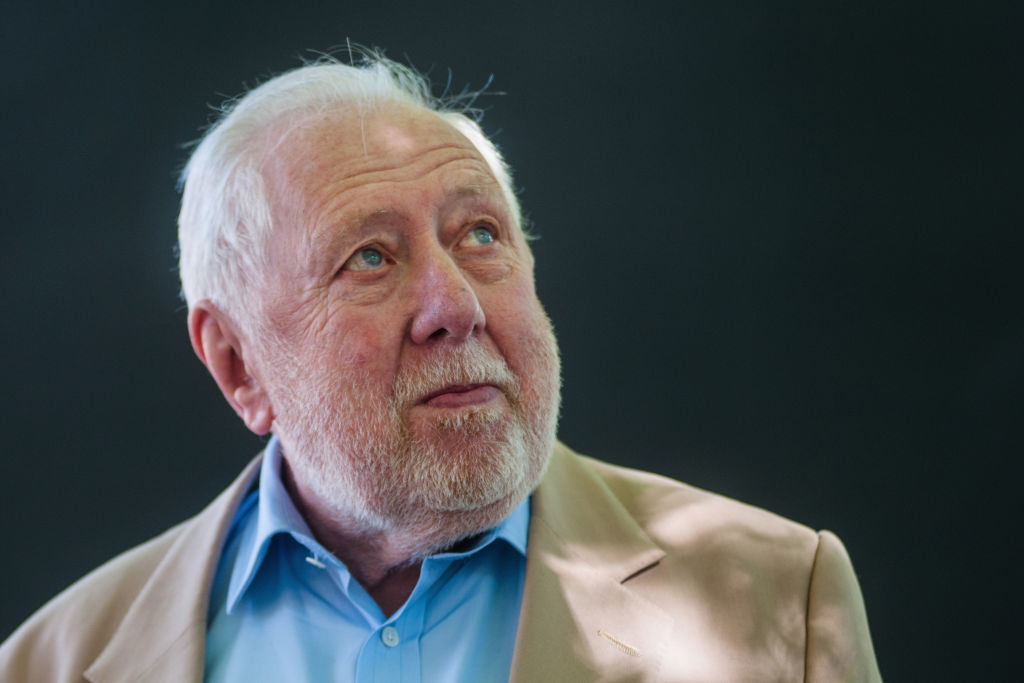
When Margaret Thatcher died a joke did the rounds after her funeral that most of her cabinet, by then in their dotage, had turned up to St Paul’s Cathedral looking at last like their Spitting Image puppets. Roy Hattersley, who died on Saturday, aged far better. In later life the chubby-cheeked, clean-shaven splutterer took on something of a stylish, elderly bearded-hipster look as the Labour grandee embraced his calling as an author.
He was fascinated by the motivations of the adherents of the theological system which his father had abandoned
The combination of politics and writing is a well-trodden path, although not all who tread it find fame and fortune. Hattersley excelled: millions of words flowed from his pen, including two-dozen books, and he was elected a Fellow of the Royal Society of Literature. Among his later works, despite his professed lack of faith, were religious subjects: notably biographies of William and Catherine Booth, founders of the Salvation Army, and of John Wesley.
Perhaps most remarkable of all was The Catholics, a history of post-Reformation Catholicism in the British Isles, published in 2017. Towards the end of his research he looked for someone who might be able to help him fine-tune his manuscript, and through a mutual friend found me. I was duly summoned to an interview over drinks in the bar at the Garrick.
His reputation preceded him, of course. Having grown up in the Welsh valleys I knew he had been deputy leader of the Labour party under Neil Kinnock; being a certain sort of teenager I had watched plenty of Spitting Image, and had been delighted by the infamous episode of Have I Got News For You in which, when he cancelled an appearance at the last minute, he was pointedly replaced by a tub of lard.

I knew, too, about his posturing over what Labour had intended to do to the independent education sector, which is to stay strangle it; he lived just long enough to see a much-changed party take up the same cause, but perhaps on different principles. I recognised that we might agree on very little, but work was work.
Roy met me at the top of the stairs, extending a warm, shaky hand. Despite his considerable frame he was smaller than I expected, but his broad Yorkshire burr was unmistakable. We talked about the project: I had not long before published a book on a related topic, which he was kind and canny enough to have noticed.
In the end the drinks-hour ran out before we could get to the main business of him taking me on. ‘You’d better come for lunch next time,’ he said, ‘at my other club’. By then I had realised that, close-up, he was quite unlike the stentorian foghorn I knew from TV, and strangely likeable. I readily agreed; lunch was lunch.
He stopped me as I rose to leave. ‘One more thing,’ he said. ‘I suppose you went to public school.’ ‘Yes,’ I replied. ‘Sorry’. ‘Oh, fine,’ he sighed. ‘Fine’.
We agreed terms a couple of weeks later, after which I gave him my arm as we made our way onto Pall Mall while the porter did the same for another elderly peer. ‘This is what people think the Reform is like every day,’ he mused. ‘Members of the House of Lords being helped down the steps after luncheon.’
Roy’s increasing frailty did nothing to dampen his enthusiasm for the work of the next few months, although he conceded that he had begun to find it difficult to take books down from shelves. We worked together in dusty basement archives, and when we came up for air he often talked about his life in politics. He sometimes bore the weariness of an elder statesman who had seen far fewer of his aspirations realised than he might have liked.
He was phlegmatic about the high offices he might have held, had history been different. He spoke, too, of fluctuating political disillusionment, and how the time had come to retire; he left the House of Lords in May 2017. Once, on Kensington High Street, I flagged down a cab for him to get to the chamber in time for a division. ‘What’s the vote about, Roy?’ I asked, as I helped him in. ‘I’ve no idea,’ came the reply. ‘I’ve just got to vote No.’
Most poignantly, Roy talked of his father: the Catholic priest who fell in love with a woman whose marriage he had solemnised, and with whom he ran away two weeks later. He renounced his orders and lost his faith but never breathed a word of his former life. Roy assumed that Hattersley senior had taught himself flawless Latin merely out of interest and a desire for self-improvement, until letters of condolence began to arrive when he died.
He was fascinated by the motivations of the adherents of the theological system which his father had abandoned, and which he could not bring himself to embrace: he called it ‘belief in the unbelievable’. He cherished his friendship with Cardinal Vincent Nichols, then his neighbour across the street from his flat in Ashley Gardens. He did not much care for John Henry Newman, whom he thought had a ‘petty-minded, pompous and self-loving’ side.
Roy excoriated the Church’s many failings, but in the end thought that post-Reformation Catholics in the British Isles were ‘more sinned against than sinning’. After 600 pages he acknowledged that in a world of compromise, inflexibility has its place: ‘Men and women do not go willingly to the stake or block in defence of common sense, sweet reason and majority opinion. They die for convictions that allow no reservations.’
I wouldn’t dream of speculating about what Roy believes today, now that the fever of life is over and his work is done. But I shall remember him fondly, come what may.

Comments