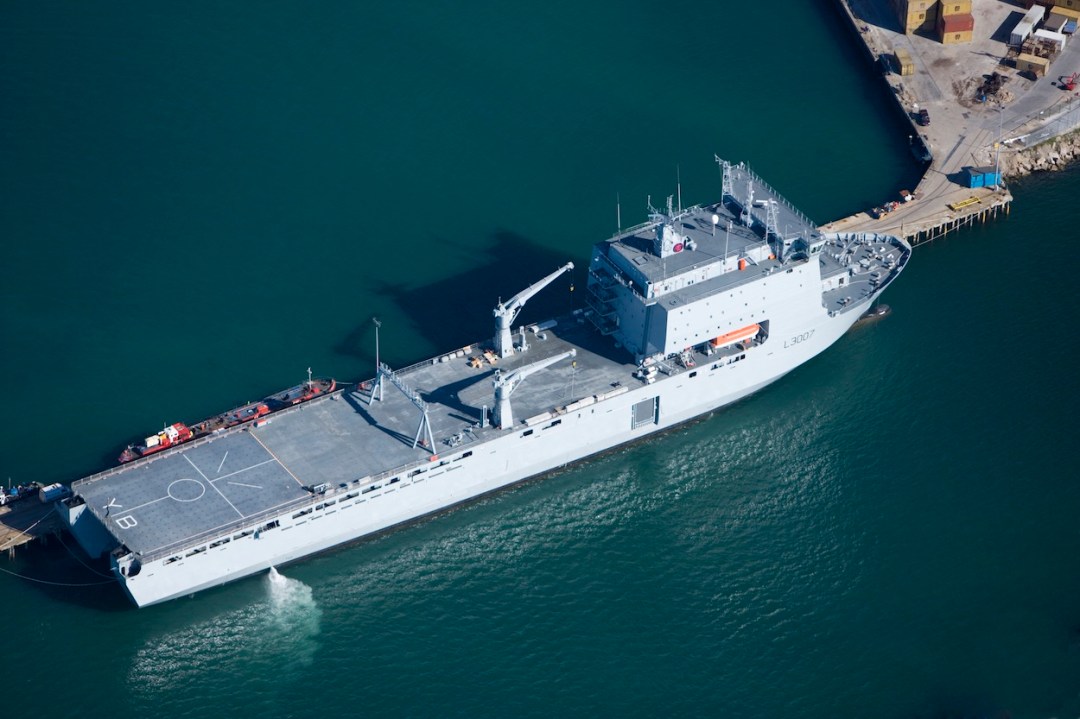
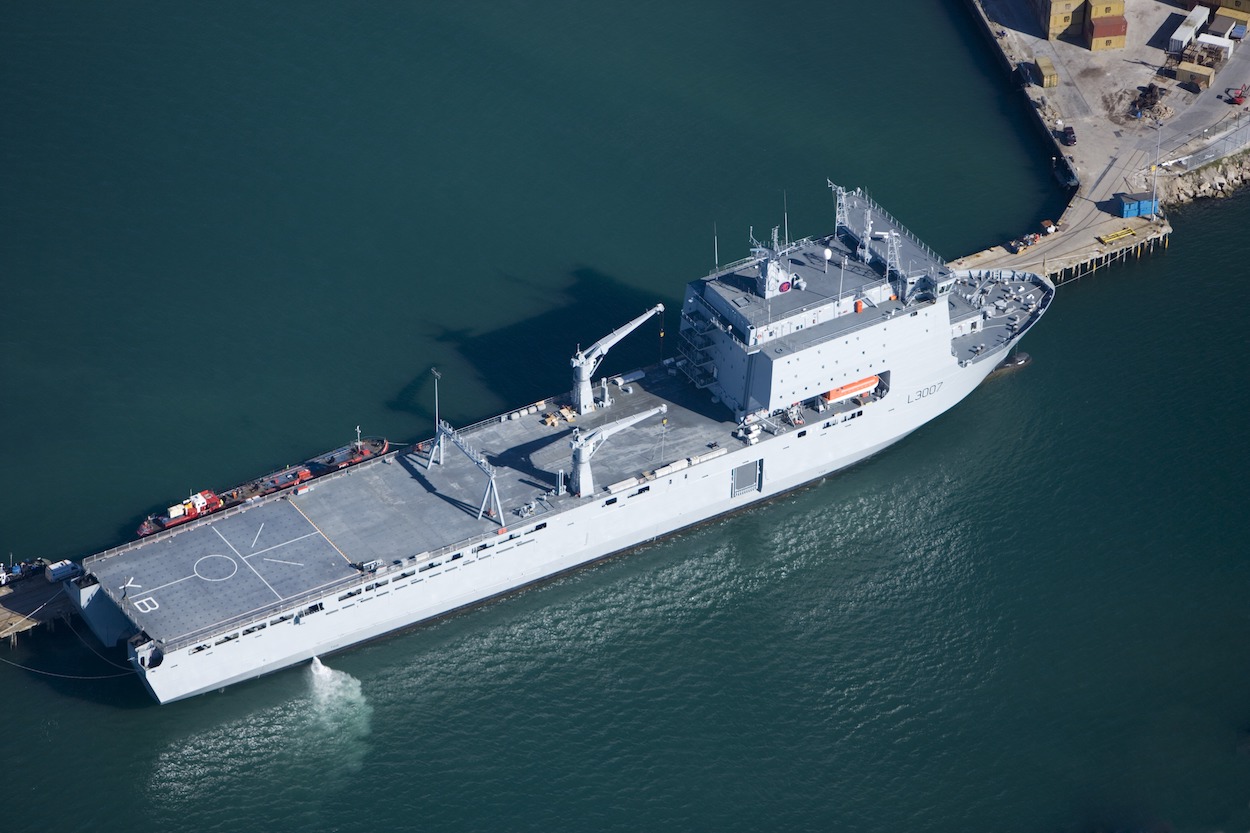
Royal Fleet Auxiliary Lyme Bay has just left Gibraltar carrying autonomous mine-hunting systems designed to keep the Strait of Hormuz open if Iran tries to close it. Nearby, uncrewed vessels are being prepared to patrol Gulf waters. Together they will test the Navy’s new ‘hybrid’ concept, a force in which traditional warships operate alongside autonomous systems above, below and on the sea.
General Gwyn Jenkins – First Sea Lord and the first Royal Marine to hold the position – has said that the Navy has no choice but to pivot to this hybrid future to deliver more platforms at sea, more firepower, and more flexibility within constrained finances.
Enthusiastic Defence Minister Luke Pollard has gone further, claiming that the ‘hybrid navy’ concept is ‘the most exciting transformation of the Royal Navy since its creation nearly 500 years ago’. He wants a ‘thousand-ship navy’ of mostly uncrewed vessels.

Military revolutions rarely unfold as smoothly as enthusiasts predict. New technologies undoubtedly offer enormous opportunities at sea. But naval history is littered with overconfidence, false starts and expensive dead ends.
Reversing decades of naval disarmament is going to be hard. But it is possible. After the Spithead Mutiny of 1797, Edmund Burke lamented that ‘our Navy has already perished with its discipline forever’ and ‘our only hope is a submission to the enemy’; eight years later came our greatest naval triumph at Trafalgar.
The Royal Navy, long a source of national pride, has lately become a symbol of British decline. Britain has an ageing nuclear deterrent, underdeveloped carrier capability, attack submarines stuck in port, and a much-diminished escort and support fleet. Personnel remain under severe strain. Many commentators have written the Navy off.
The picture is not entirely bleak. The Navy still has many world-class strengths if not its former scale. It is investing in infrastructure, especially nuclear, to get more vessels to sea. A new fleet of deterrent submarines, modern frigates and afloat support ships are being built. The Navy was seen as the big winner from last year’s Strategic Defence Review which recommended expansion of the attack submarine fleet and new amphibious landing ships. The long-promised Defence Investment Plan will hopefully put firm financial flesh on these bones.
But even if all current plans are fully realised, the Navy will still lack sufficient depth to prevail against major navies such as Russia and China. The hybrid approach aims to address this by blending high-end, expensive warships with cost-effective, adaptable drones and robotic systems capable of being produced faster and in large numbers. The United States, Netherlands and Australian navies have similar nascent ideas.
Testing for this future is underway. Beyond potential mine-clearance operations, the Royal Navy will use uncrewed underwater vessels to patrol the North Atlantic this year. Next year a jet-powered drone will be launched from a UK aircraft carrier to get more from these huge platforms. And in two years the Navy will trial operating an uncrewed surface vessel alongside a frigate.
But not everyone is convinced by the hybrid future. One naval expert compared the enthusiasm for drones to previous military theories that promised technological shortcuts for victory at sea – and which ultimately failed. Another told me that, by bigging up the promise of technology and describing warships as ‘exquisite and expensive’, the Navy is opening the door for cynical MoD bean counters to cut crewed platforms in exchange for future unmanned alternatives.
There is also a risk of adopting the wrong lessons. Pollard said the Navy ‘only’ needed to look at what Ukraine has done in using sea drones against Russia, adding ‘if it doesn’t work in Ukraine, I don’t want to buy it’.
Although Ukrainian successes are commendable, our geographic circumstances are different. The Black Sea is smaller and calmer than the North Sea, the North Atlantic bigger and wilder still. The Russian Northern Fleet based in Murmansk is a more capable opponent than the Black Sea Fleet. Moreover, as the government itself recognised last year, Britain needs a Navy to control the seas around it for its security and prosperity, not just deny their use to an adversary as Ukraine has done.
John Buchan wrote that ‘the sea endures no makeshifts. If a thing is not exactly right, it will be vastly wrong’. Despite glossy promotional imagery, much of the technology remains unproven at sea. There are massive engineering, networking and logistical challenges. It will be hard to get things ‘exactly right’ without extensive and realistic trials for which the Navy scarcely has enough sailors and ships to spare.
The Royal Navy has led global naval change for centuries. The transition from individual to fleet tactics, from sail to steam, from coal to oil, the introduction of naval aviation, and from guns to missiles all took place incrementally over many years.
‘A modern navy cannot be improvised’
Even the introduction of HMS Dreadnought, the first all-big gun fast battleship, was not quite as revolutionary as later mythology suggested.
President Taft said ‘a modern navy cannot be improvised. It must be built and in existence when the emergency arises which calls for its use and operation’. Crewed warships will remain the backbone of the Royal Navy; drones will never be able to enforce a blockade, evacuate the needy, assist after a disaster, repair themselves or fight on when damaged by enemy action and communications fail.
Experimentation, rigorous analysis and realism, can help build the hybrid fleet to augment them. The Royal Navy does need to adapt to a new technological age. But maritime history suggests that genuine revolutions at sea are usually recognised only in hindsight. Britain cannot afford to mistake experimentation for transformation.






Comments