
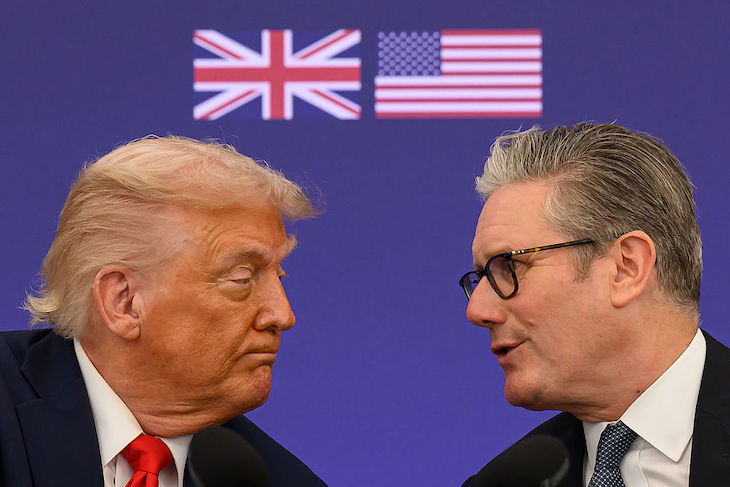
Here is a fun one: what do Giorgia Meloni, Pope Leo XIV, Ed Miliband and the Cato Institute all have in common? The answer is that they have each been attacked in the past 24 hours on Donald Trump’s overactive Truth Social feed. The US President’s erratic actions both online and off now seem to be exhausting the patience of even erstwhile allies. In the aftermath of the Iran crisis, Keir Starmer and his ministers appear to have had enough of pussyfooting and pandering to the whims of the Commander-In-Chief.
Downing Street sees little benefit in indulging what one Labour MP calls ‘Trump’s imperial overreach’
This afternoon, Rachel Reeves publicly called the war a ‘mistake’. The Chancellor, who is in Washington for a meeting of finance ministers, said she was ‘not convinced that this conflict has made the world a safer place’. It comes hours after Starmer told the Commons at Prime Ministers’ Questions that he would not join the Iran attacks, despite Trump’s persistent entreaties: ‘I’m not going to change my mind, I’m not going to yield, it is not in our national interest to join this war and we will not do so.’
This emboldened stance by the government’s two leading ministers suggests that Downing Street sees little benefit in indulging what one Labour MP calls ‘Trump’s imperial overreach’. Strikingly, both of Britain’s two centre-right parties, Reform and the Conservatives, have pivoted away from the President in recent weeks, amid his increasing unpopularity with domestic audiences abroad. Kemi Badenoch’s focus is on boosting UK defence spending, while senior figures in Reform are privately concerned about the President’s potential impact on the forthcoming local elections.
The collective Westminster souring on Trump is no surprise. Each day brings with it more bad news about the damage wrought by the Iran crisis. Andrew Bailey, the governor of the Bank of England, has warned it will cause a ‘major supply shock’, with grave potential consequences for inflation policy and financial stability. The repair bill for damaged oil and gas facilities in the Middle East from the Iran war could top £37 billion, according to a new analysis by Rystad Energy on the war’s 50th day.
Talks between the US and Iran on a second round of ceasefire negotiations are ongoing, but nothing has been scheduled yet. It comes as the Iranian military has again threatened shipping in the Gulf, the Red Sea, and the Gulf of Oman if the American naval blockade continues. The attitude of the US administration to all this is blasé at best: witness the casual assertion of Scott Bessent, the Treasury Secretary, that a ‘bit of pain’ was worth long-term security in Iran.
In such circumstances, the forthcoming State Visit by King Charles III to America in 12 days’ time assumes an increasingly important status. It is one fraught, as one government aide put it to me earlier ‘with plenty of risk and little prospect of reward.’



Comments