

‘Nostalgia is not a strategy,’ declared Schroders chief executive Richard Oldfield after announcing that the investment firm, descended from a City banking house founded in 1804, is to be sold for £9.9 billion to Nuveen – which sounds like a brand of cooking oil but turns out to be a Chicago-based manager of retirement savings. The two together will hold £1.8 trillion of assets, placing them tenth in a global league headed by the giant American ‘passive’ investors BlackRock and Vanguard.
Oldfield is right that there’s no point looking backwards in a tech-driven sector that’s rapidly consolidating to keep pace with those leaders. He’s also keen to point out that Schroders will stay in London, even if as a FTSE 100 company its de-listing is a disastrous blow to the London stock exchange.

Still I feel a tinge of sadness, having begun my working life in Schroders in the mid-1970s and having known at a distance both its last patriarch-owner, Bruno Schroder, and the founder of its investment arm, Michael Verey, an old-school City gent whose first post-war pension-fund clients included the Suez Canal Company. With hindsight, however, the moment for real regret fell a quarter of a century ago when the other half of Schroders, its blue-chip investment banking business led by Sir Win Bischoff, was sold
to Citigroup from New York.
Many historic City houses followed that same path in search of American or European parents with sufficient capital to compete in global markets. In practice, the bought firms tended to lose their culture and talent and many of their clients, leaving the buyer banks with scant value for billions spent. By contrast, the likes of Lazard and Rothschild continued to flourish in partnership form, as did many smaller financial boutiques.
The Schroder dynasty will cash out for more than £4 billion: call me old-fashioned, but it would be good to see them fund a new merchant bank based on the model their forebears would have recognised: prudent, collegiate, nimble, human in scale and devoted to its clients’ interests.
Slug on the roof
The past is certainly another country for the City of London’s planning committee, which has approved a 97-metre office block to be built above the concourse of Liverpool Street station, despite 3,700 letters of objection (versus 1,200 in favour) and fierce opposition from the Victorian Society and others. The angular glass tower will loom over the former Great Eastern hotel next door and bring a touch of Dubai to the surrounding conservation area – but the office-space development is intended to pay for the station upgrade below, which City policy chairman Chris Hayward calls ‘a modern, inclusive and future-focused transport hub’.
My mole in the planning meeting tells me that more attention was paid to step-free access than to the impact of ‘an 18-storey slug squatting on top of the station’. The approved £1.2 billion design by Acme architects replaced an even more jarring one by Herzog & de Meuron that was withdrawn under a hail of protest in 2024. But also still in play is a more sensitive and cheaper alternative scheme by John McAslan & Partners, architects of the King’s Cross transformation. And the conservationist Liverpool Street Station Campaign group (once led by Sir John Betjeman) says it is ‘prepared for the long haul’, awaiting final decisions from the Mayor of London ‘and if necessary, the Secretary of State’. Watch this space.
Bitter end
The concept of crowdfunding capital for offbeat start-ups was a post-2008 ‘democratic’ reaction to the perceived exclusivity and excesses of the City establishment. I remember briefly contemplating buying shares in a fresh-food station kiosk chain until I realised how flakey its proposal really was.
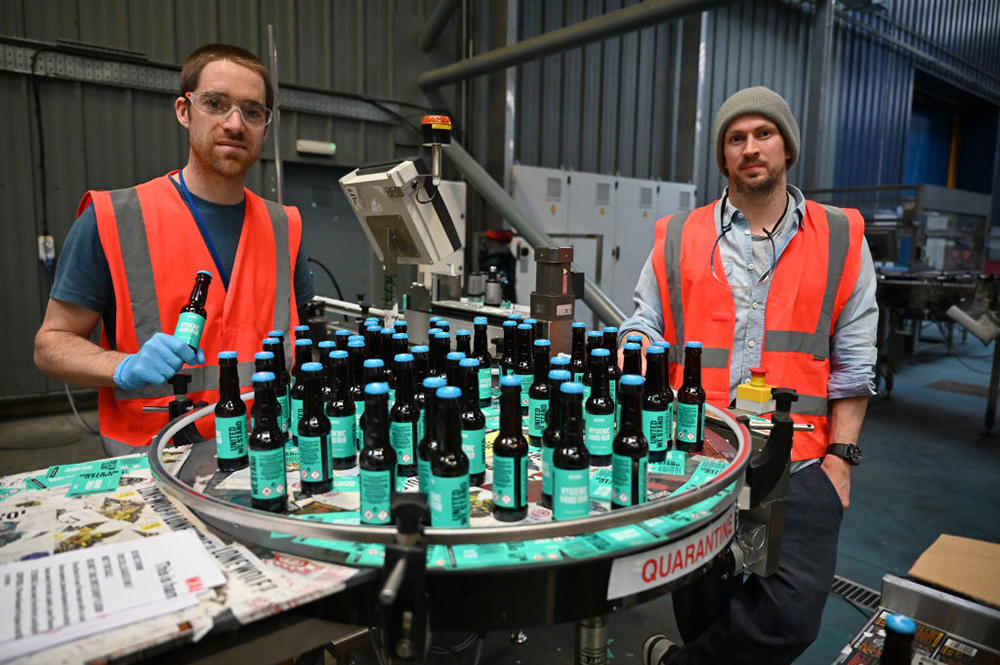
BrewDog, the self-proclaimed antiestablishment Scottish beer-and-pub venture, in its heyday crowdfunded upwards of £75 million from ‘equity punk’ supporters, who received free beer and might have profited from an eventual public listing. But now BrewDog is in the hands of ‘restructuring consultants’, and the punks may be wiped out in a fire sale favouring the dominant private equity shareholder, TSG, offering a harsh lesson in the realities of capitalism. As a poignant report in the Grocer says: ‘It wasn’t supposed to end like this.’
A sorry cast
I’m Sorry, Prime Minister by Jonathan Lynn is playing to full houses at London’s Apollo Theatre, with Griff Rhys Jones in the role of retired politician Jim Hacker. I’m sorry to report that it’s a pale shadow of Yes Minister, the well-remembered 1980s Whitehall sitcom by Lynn and the late Antony Jay. But at least this glimpse of Hacker and the mandarin Sir Humphrey in old age reminds us that their generation had wit and aplomb even when they got things wrong, unlike the sweary sociopaths of The Thick of It or the blunderers beyond satire in today’s real-life corridors of power.
The play made me think of my wise father, who judged everyone he met in public life by estimating the rank they would have achieved if, like him, they had made their careers in the hierarchy of Barclays Bank. His cross-party dream team was Tory grandee Lord Carrington as chairman, Labour chancellor Denis Healey as chief executive and Norman Tebbit as a cost-slashing general manager; his favourite civil servant was the formidable Treasury head Sir Peter Middleton, who actually did become chairman of Barclays in his later career.
I’ll never know what my father might have thought of Sir Keir Starmer, but in all large companies there are overpromoted middle managers who are prone to ducking blame while disloyal underlings jockey to take their place. For others in the Labour cast, I suspect his judgment would have been plainer: Rachel Reeves would never have risen beyond call-centre operator and Peter Mandelson would surely never have been hired at all.






Comments