
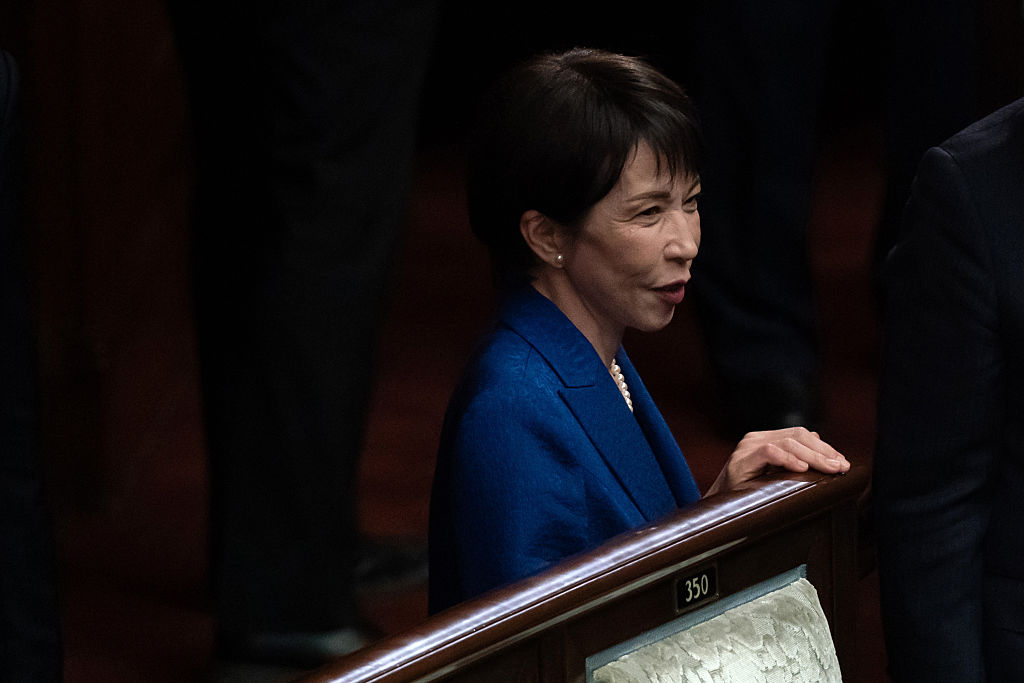
Is the Japanese economy about to crash? This once unthinkable prospect is now very much thinkable as concerns grow, and the cost of borrowing rises, in response to the bold but, to many, bewildering economic plans of Prime Minister Sanae Takaichi. It is a question of huge import, for if the Japanese economy collapses the consequences around the globe could be grave.
Whereas with Truss there is at least some doubt about what exactly happened in her brief but turbulent tenure, with Takaichi things seems more clear-cut
Takaichi, who faces an election on February 8 – where she will hope to boost her slender coalition dependent majority towards outright power – has pledged to boost the economy to the tune of 21 trillion yen ($138 billion) while at the same time cutting taxes, most significantly eliminating the 8 percent sales tax on food for two years. Borrowing costs surged to their highest levels in decades last week (40-year bonds hit 4.2 percent) at the prospect of her plans becoming reality.
Sound familiar? The inevitable, slightly lazy comparison is with Liz Truss – the former British prime minister accused of causing a run on the bond markets with her tax-cutting “mini-budget” – made even more attractive since the Anglophilic Takaichi has claimed Margaret Thatcher as her heroine and role model. But whereas with Truss there is at least some doubt about what exactly happened in her brief but turbulent tenure and where culpability lies, with Takaichi things seems more clear-cut. Many fear she simply doesn’t know what she is doing.
Takaichi won the election to be her party’s leader, and thus prime minister, almost by default. Her main rival, Shinjiro Koizumi, son of former PM Junichiro, might have bested her had his campaign not shot itself in the foot over a silly scandal (his team posed as voters and posted fake comments about him). Takaichi seemed professional in comparison, and having been a lawmaker for 33 years, there was a feeling it was her turn (it was her third attempt). As far as I can discern, the fact that she is a woman had nothing to do with it.

Her sex may have something to do with her soaring approval ratings, though. Takaichi has registered polling numbers that beggar belief in a country which tends to obsess lovingly over every aspect of its own culture – except its politics, which provokes deep cynicism. Politicians, typically bland, machine bureaucrats with little in the way of personality or fresh ideas and invariably tainted by corruption or nepotism or both, are put up with rather than especially admired.
Takaichi was different. From the start of her tenure she exuded positivity, even a touch of glamor, dressing sharply (her look is widely imitated) flashing her smile everywhere she went, and talking up Japan in a way not seen since the fun days of Junichiro Koizumi two decades ago. She is not from a political dynasty, which makes her unusual. My students like her and I’ve never known a politician even register with them before.
All of which may have gone to her head and caused her to overreach. Takaichi is no economist and her “yes, we can” attitude seems based more on hope and vibes than hard reality. That hard reality is that Japan is the most indebted country in the world (to the tune of $9.2 trillion), has an aging population, falling birthrate, depreciating currency and ossified corporate culture based on age-based seniority and stifling workplace conventions. Productivity is low despite punishingly long working hours and technology and English language skills are still way behind where they should be.
These are massive problems and a more realistic first step for a serious administration would be to identify the most serious and come up with a long-term plan to at least arrest the decline. But flushed with the approval of President Trump and new friends like Giorgia Meloni and those stellar polling ratings, Takaichi seems to be going for broke with voters. Along with a food tax pause (which will cost 5 trillion yen) she has pledged money for hi-tech industries and shipbuilding. Some of that may generate a return eventually but given the systemic problems in Japanese company culture few here are optimistic.
If Takaichi goes through with her plans last week’s bond market volatility may go down as a warning missed. At worst, there could be a collapse in confidence in the Japanese economy which could trigger a global sell off by investors of stocks, bonds and the Yen sending shockwaves through the world economy. The consequences are hard to predict but would undoubtedly be serious and felt far and wide.
The generally accepted perception of the global economy would be dramatically altered. For decades Japan has been seen as a safe haven for investors, the place to run to when things got dicey elsewhere. During the financial crash of 2008 for instance the yen nearly doubled its value against the British pound (happy days… I remember them well) as investors flooded in to shelter from the financial storms raging elsewhere.
Even if Takaichi backs down and dilutes her plans and ends up limping home on February 8 with another messy coalition and lacks the authority to proceed (her approval rating slipped today), the ructions in the bond markets will leave their mark. Japan’s gilt-edged reputation for fiscal probity will have been severely damaged. And once lost, it may never be regained.




Comments