Artificial intelligence

The Pope’s AI intervention shames our politicians

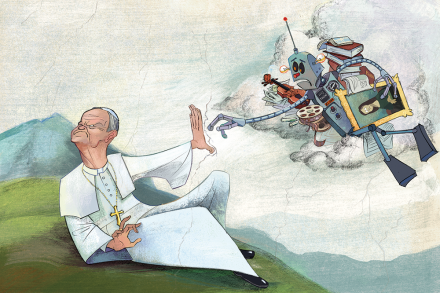
I was born into a sternly Presbyterian culture. Politically, I’m more Orange than Donald Trump’s skin tone. But today I am on my knees giving thanks to the Pope. He has produced the most powerful political document of the year, taking on the greatest challenge of our times. His first encyclical, Magnifica Humanitas, deals with the changes which will be wrought to all our lives by artificial intelligence in the months and years ahead. AI will transform our economies and societies massively and irrevocably; it will change what it means to be human; it may even mark the end of humanity itself. If it takes the Pope to alert us to this revolution then perhaps the Reformation wasn’t such a good idea after all.

AI

The Pope’s AI intervention shames our politicians

I was born into a sternly Presbyterian culture. Politically, I’m more Orange than Donald Trump’s skin tone. But today I am on my knees giving thanks to the Pope. He has produced the most powerful political document of the year, taking on the greatest challenge of our times. His first encyclical, Magnifica Humanitas, deals with the changes which will be wrought to all our lives by artificial intelligence in the months and years ahead. AI will transform our economies and societies massively and irrevocably; it will change what it means to be human; it may even mark the end of humanity itself. If it takes the Pope to alert us to this revolution then perhaps the Reformation wasn’t such a good idea after all.

Can AI make Spencer Pratt mayor?

What to make of the new AI election ad created by the filmmaker Charles Curran on behalf of Spencer Pratt, a reality TV star who is running to be Mayor of Los Angeles? The radio host Buck Sexton has already hailed the video as the future of political communication, and Jeb Bush has called it “maybe the best political ad of the year.” The video, which Pratt did not commission, but did repost on social media, shows California worthies – incumbent Mayor Karen Bass, Gavin Newsom, and Kamala Harris – assembled for a sinister banquet. Victims are brought before them: a mother whose children are being harassed by the city’s homeless, and a prostrate Hugh Jackman, who begs to be allowed to rebuild his house in Pacific Palisades.

Spencer Pratt

Fighting technology is futile

A 20-year-old from Spring, Texas, named Daniel Alejandro Moreno-Gama has been charged with attempted murder after he was accused of throwing a Molotov cocktail at the gate of Sam Altman’s San Francisco home on April 10. He then allegedly walked toward OpenAI’s Mission Bay headquarters and told employees he intended to burn the building down as well. He was reportedly carrying a manifesto – a “three-part series,” according to Fox News – that included a list of other AI executives and investors and their home addresses and documents discussing potential risks that AI poses to humanity, with a section titled: “Some more words on the matter of our impending extinction.

technology

Robots are ruining baseball

FanDuel and DraftKings ads spice the early spring airwaves, robots deliver their unimpeachable verdicts on human actions and a family of four shells out 500 bucks for parking and tickets to attend a game. Major League Baseball has returned! At least this year MLB scheduled its Opening Day game – a March 25 interleague (yech!) contest between the New York Yankees and San Francisco Giants – to be played stateside. Mixing America Last-ism with corporate-culture imperialism, six previous Opening Day games have been played on foreign soil. That other countries might have sports of their own annoys the panjandrums of professional baseball and football, who seek to impose spectatorial homogeneity on a diverse planet.

The disembodied brain cells playing video games

In a suburban Melbourne industrial estate, hidden in a clutter of brutalist buildings and parked trucks, tomorrow’s world is taking shape. Here, an Australian tech start-up called Cortical Labs has caused an internet sensation. More than 40 million people have watched a clip of disembodied human brain cells playing the 1990s video game Doom. These cells are kept in petri dishes, wired up to computers and trained to do whatever the researchers want. “Right now, the cells play a lot like a beginner who’s never seen a computer,” says neuroscientist and Cortical Labs’s chief scientific officer, Brett Kagan. “But they can shoot, they can spin, they can seek out enemies and, while they die a lot, they are learning.

I don’t trust AI’s built-in ‘safety systems’

Cars ruined cities. Anyone can see that cities built before the invention of the automobile are incomparably more beautiful and serene than anything built after them. The contrast between Los Angeles and Prague is unmistakable. But people like things that move fast and make life easier, which means we’re stuck with the modern city hellscape whether we like it or not. And today, the same is true for AI. The contrast between the internet five years ago and today is unmistakable: content-slop, workslop, AI-generated comments, fake opinions and phony judgments, trite phrases, apocalyptic hysteria, the biggest intellectual-property heist in human history – all because of the invention of Large Language Models (LLMs).

ai

Where will AI strike first?

Homo sapiens, as a species, is programmed to anticipate death, disaster and apocalypse. The monster in the mere, the ague that comes from the east, the flood that wipes out all living creatures outside the Ark. The reason children – and adults in horror movies – are scared of the dark is because darkness is where predators strike. We have a sensible evolutionary fear of things that go bump in the night. For thousands of years it was possible to argue this primal fear of apocalypse was overwrought. No matter what humans did, or did not do, we were incapable of destroying ourselves and anything that might destroy us in toto – like the comet that erased the dinosaurs – was simultaneously so rare and so beyond our ability to resist that it was pointless worrying.

Can superintelligent AI be regulated?

From our UK edition

In the House of Lords on Monday there was a short discussion, prompted by a question from an ex-Labour minister, about whether the government is doing enough to ‘regulate the development of superintelligent AI’. This is an example of what I call ‘Caligula syndrome’, a common affliction in the Upper House. You will recall that the lunatic Roman emperor declared war on Neptune, ordering his legions to line up on the coast of Gaul and collect seashells as ‘spoils of war’. What can the British government – or indeed any government – do to halt the advance of AI? Hubris doesn’t quite cover it. It’s in the same category as believing parliament can reverse climate change.

Is there a free-speech defense of Grok’s deepfakes?

There are scenes in blockbuster teen movies from the 1980s and 1990s that wouldn’t fly today. I think of Revenge of the Nerds, that classic raunchy coming-of-age tale about pocket protector-wearing geeks no woman would ever touch with a three-foot slide rule. You might recall the heroes of the story install hidden cameras in a sorority house in order to spy on naked, skinny, blonde cheerleaders. In triumph, the Byronic dirtbag yells, “We’ve got bush!” In our purportedly more enlightened age, Hollywood has forsaken making risqué teen comedies for vulgar imps; instead the vulgar imps have taken their raunch to the lawless internet. The powers of AI have multiplied their mischief. Their latest prank is to tell Grok, an AI chatbot on X.

grok

AI marketing is driving me to distraction

For years, retailers have been behaving like needy friends. My phone would ping. “Hi there!” an email would read, “We’ve missed you.” Who could this be? I would wonder happily, before realizing that the warm and loving message was from someone in the marketing department of the emporium from which I’d once bought a couple of pairs of expensive shoes. Emma usually, or Olivia. With the advent of artificial intelligence, though, personalized, over-the-top PR is getting much, much worse. At least in the past you’d needed an actual Emma to send these emails, some girl who’d gone into marketing, typing enthusiastic nonsense all day. There was at least a human who had “reached out” – they always “reach out.” AI is just so needy.

Will we ever stop predicting the end of civilisation?

From our UK edition

In the sphere of British environmentalism, Paul Kingsnorth is admired as a maverick in thought and deed. Starting out as a journalist with the Ecologist magazine, he co-founded the Dark Mountain Project, an online portal devoted to stories about the more-than-human world in a time of ecological collapse. On resigning from both, he retreated as a self-proclaimed ‘recovering environmentalist’ to an Irish smallholding, where he has embraced the Romanian Orthodox church. Against the Machine, his tenth book, is billed as a summary of his intensifying disillusionment with events in the past 30 years. It is a serious work leavened with sardonic humour and is by turns rich in unsettling ideas and deeply pessimistic.

Does it really matter if Grok undresses us all?

I’ve been fat and I’ve been thin; I’ve been pretty and I’ve been plain – ugly, even. Throughout this, my self-esteem has stayed generally constant, as if you’re going to base it on something as ephemeral as physical beauty, you’re going to run out of road very quickly indeed. This objective attitude to my own appearance reminds me of a funny story from the infant days of the internet. Imagine my surprise one morning to receive a message from an unknown recipient informing me that they had film of me masturbating to online pornography which they would make available to a wider audience should I fail to pay a ransom. (Don’t judge – I was young-ish and frisky and it was all so new – I soon grew out of it.

The speed-camera approach to government

From our UK edition

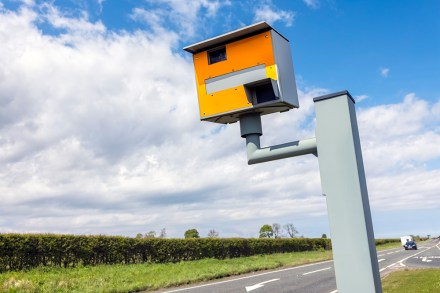
I was recently shown an AI analysis of long-term trends in the public’s attitude to government. The AI had been designed to look at changing attitudes to brands, but its creator had been curious to see what it revealed if the brand in question was The State. It was remarkably insightful. ‘New behavioural data reveals a structural shift: The State has moved from episodic authority to ambient friction.’ And ‘modern governments are, on the whole, stable – but increasingly so for structural rather than relational reasons. Stability is maintained through procedure… and compulsion, not persuasion… Authority now operates in an environment that never turns off – and never waits’.

Grok is the Botticelli of our time

From our UK edition

Liz Kendall, the Technology Secretary, stood up in the Commons on Monday and thundered against Elon Musk, saying the government would take urgent measures to hold him to account. The reason for her broadside is that Grok, the AI chatbot owned by Musk and now integrated into X, has been misbehaving. In the past few weeks, it has granted users’ requests to create sexualised images of women and children, causing something close to meltdown among the Musk-hating chattering classes. In the Lords, scarcely a day passes without Labour’s favourite bogeyman being wheeled out to be pelted with verbal brickbats. But how exactly does Kendall propose to rein Musk in?

AI porn will spawn a nation of addicts

If there is one safe prediction we can make about 2026, it is this: public debate and global news will be dominated by artificial intelligence and the anxieties that surround it. And near the top of that swelling list of worries will be “AI porn” – the fateful collision between ever more accomplished image-making machines and humanity’s eternal appetite for audiovisual sexual stimulation. The year has barely begun and already two loud tsunami sirens have sounded. The first is the latest Grok incident. For the uninitiated, Grok is Elon Musk’s AI, conceived a couple of years ago in a fit of pique after Musk’s spectacular falling-out with OpenAI.

AI will kill all the lawyers

From our UK edition

It feels, pleasingly, like a scene from a cerebral James Bond film, or perhaps an episode of Slow Horses. I am in a shadowy corner of a plush, buzzy Soho members’ bar. A mild December twilight is falling over London. Across the table from me sits an old acquaintance, a senior English barrister, greying, quietly handsome, in his mid fifties. And he wants to speak anonymously, because what he is about to say will earn the loathing of his entire profession. Let’s call him James. I’ve known him for a few years, and over these years we’ve discussed all kinds of things, from politics to architecture to the misfortunes of Chelsea FC. We’ve also discussed technology and AI. James’s views of AI were always like his politics: centrist, clever, moderate, sceptical.

‘I’ve been allergic to AI for a long time’: an interview with Peter Thiel

Peter Thiel has been described variously as ‘America’s leading public intellectual’, the ‘architect of Silicon Valley’s contemporary ethos’ or as an ‘incoherent and alarmingly super-nationalistic’ malevolent force. The PayPal and Palantir founder, a prominent early supporter of Donald Trump, is one of the world’s richest and most influential men. Throughout his career, his principal concern has always been the future, so when The Spectator asked to interview him, he wanted to talk to young people. To that effect, three young members of the editorial team were sent to Los Angeles to meet him. What follows is an edited transcript of their conversation.

Why America must lead on artificial intelligence

As stock markets wobble over fears of AI hype and the overvaluation of tech shares, it seems an unfortunate time for Donald Trump to launch an initiative boosting America’s artificial intelligence capabilities. But the White House sees matters differently. Its new “Genesis Mission,” which commits government departments to make sure adequate energy and computing power are available, has been purposely launched to remind the world that AI is not all froth – or “slop” to use the popular term. Team Trump likens Genesis to the Manhattan Project to develop a nuclear bomb during World War Two faster than the other side. For all the typically Trumpian bombast, that’s not a foolish way of thinking about the subject.

fraud

The march of the useless machines

From our UK edition

In search of coffee on my way to work the other day, I stopped short mid-way into a branch of a popular coffee shop when I noticed the digital ordering screens. Nothing will lose my business faster than being asked to queue twice and do the work of someone else for something simple. But these ordering screens seem to be becoming ubiquitous in our towns and cities, forcing those of us who have actually come into the office, likely to sit in front of a screen, to spend our lunchtimes also staring at a screen scrolling through options, when there is an actual human being standing behind a counter a few feet away with nothing to do.