William Clouston

Labour is incapable of fixing the migrant crisis

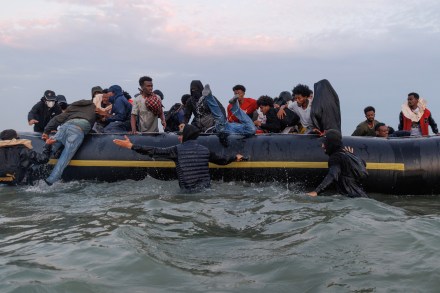
The news that over 50,000 migrants have arrived on small boats since Labour took office last year is of no surprise. If things don’t change soon another 50,000 are sure to follow and then another. The causes of the Channel migrant crisis are quite clear. Yet public frustration is at fever pitch partly because none of our political elites – red, blue or turquoise – have any idea how to solve the problem. Labour’s frontbench is comprised of post-national progressive politicians whose concern is global welfare rather than the particular interests of British citizens Both establishment parties reacted to the migrant crisis in the same way – not with substantial change but with slogans and ineffective schemes.

Why tariffs work

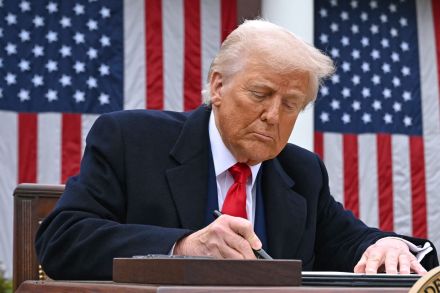
To travel by train through America’s rustbelt is to witness the real reason for Trump’s tariff revolution. Miles upon miles of derelict factories and decaying industrial architecture stand as monuments to trade policies which have gutted America’s manufacturing heartland and undermined the families – and the towns – which depended on it. In electing the Trump-Vance ticket last year American voters have called time on decades of elite indifference to industrial production and the liberal trade policies which have accompanied it. It turns out that the transitory profit secured by executives who out-sourced thousands of US industrial jobs to cheaper jurisdictions is no compensation for the loss of your industrial base.

Are Trump’s tariffs really that bad?

34 min listen

The Spectator's economics editor Kate Andrews and Social Democratic Party leader William Clouston join Freddy Gray to try and make sense of Donald Trump's decision to impose tariffs on Canada, Mexico and China. He has since threatened the European Union, and has warned the UK. Is this a negotiation tactic or something more? What political philosophy underpins the decision? And what will the impact be? Produced by Patrick Gibbons and Megan McElroy.

The man who defined Labour’s forgotten past

To read this long-overdue and welcome biography of Peter Shore is to undergo a journey from Labour’s eurosceptic heights in the 1960s to its demise as a party of the nation state in the 1990s. Titled Labour’s Forgotten Patriot, patriotism is a theme which constantly recurs and, to a considerable extent, defined Shore’s political life. Peter Shore has been a rather neglected figure. This is odd since he had considerable influence over Labour politics for two decades and was probably the staunchest defender of Britain’s independence.

A solution to Britain’s two-party problem

A paralysed prime minister holed up in Downing Street, a deadlocked Parliament out of touch with public sentiment and political discourse descending into rancour and abuse. Millions of British people can be forgiven for looking at this situation with total despair. What caused this situation? An unreformed political system well past its sell by date combined with political parties which have lost their way. Can we do better? Of course. The solution lies in a ‘red & blue’ political reformation.  For many years, those holding a traditional, communitarian or patriotic outlook have been gradually marginalised.