Travis Aaroe

Travis Aaroe

Travis Aaroe is an assistant editor on The Spectator’s World edition.

Taylor Swift: queen of the normies?

From our US edition

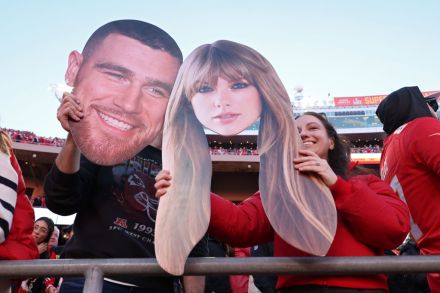
Politicos used to know how to take the temperature of the nation. They could talk to their cab driver. They could sidle up to the man fixing their toilet. There was the Iowa farmer, the diner waitress. There was Walter Cronkite.  Now there is only Taylor Swift. In a society that increasingly consists of mutually unintelligible niches – like multivolume works of Sonic the Hedgehog erotica or reenactments of the War of the Austrian Succession in Roblox – Swift can still fill huge arenas at short notice. Her fans cut across every social and economic class. To a political nation that's often baffled by this new society, Swift has become the great barometer.

Taylor Swift

A global MAGA crusade against web regulation?

From our US edition

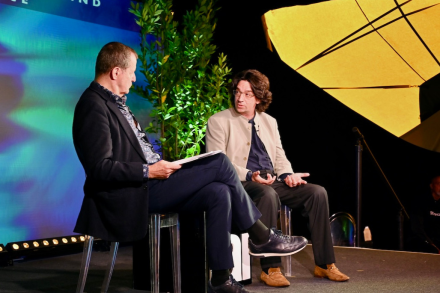
“Censorship is not how we do things in Western civilization”. So said Congressman Scott Fitzgerald (R-WI) of the United Kingdom’s new Online Safety Act (OSA). Its effects on free expression are “dangerous and needs to be addressed,” possibly by means of an international “united front”. The Congressman was fresh from meetings with British and Irish lawmakers and US tech firms, held as part of a House Judiciary Committee fact-finding mission to investigate the impact of the OSA and the European Union’s new Digital Marketing Act on American businesses. The main event was a one-on-one between Committee chair Jim Jordan (R-OH) and Peter Kyle, the United Kingdom’s Secretary of State for Science, Innovation and Technology.

Online Safety Act

Trumpism rules the world

From our US edition

Whatever loopiness there is in Donald Trump’s personality is a loopiness born of isolation. For ten years the history of the world has revolved around him, not he around it. The events of last November have left Trump as, for all intents and purposes, the only remaining historical actor – especially after Xi Jinping’s retreat into obscurantism since the pandemic.

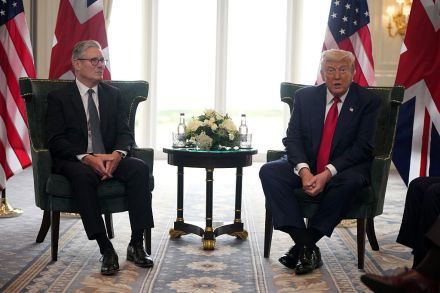
Trump Starmer

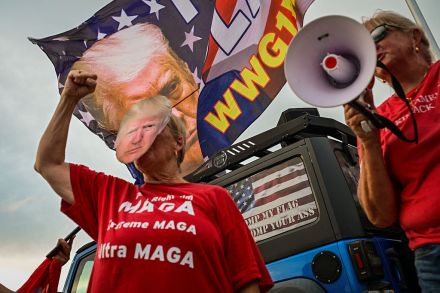
MAGA is America’s third party

From our US edition

Gearing up to launch his new "America Party," Elon Musk now speaks of a GOP-Democratic duopoly that has the country in its grip. But this system died ten years ago at the hands of Donald Trump: America's first third party president.  With a small band of misfit toys drawn from the world of Manhattan real estate Mr. Trump invaded an old and established party, replacing it with his own ideas and – in true cuckoo fashion – his own children. There is almost no intellectual continuity between the faction he now leads and the pre-2015 Republicans beyond a generic commitment to free markets and to law and order.

Third party

Henry VIII turned England upside down

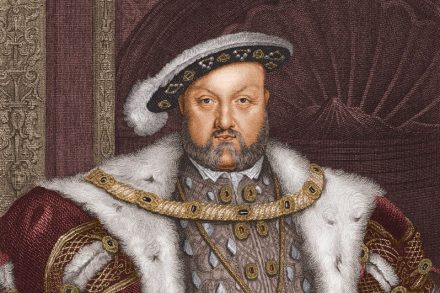
Henry VIII, who was born on this day in 1491, is the only English monarch other than William the Conqueror who can claim to have destroyed a society and replaced it with a new one. Catholic apologists like Chesterton are right to see in the Henry VIII saga a sort of secular apocalypse; it was, in Chesterton’s words, the ‘dissolution of the whole of the old civilisation’. The new England that grew up in its place – by Henry’s unwitting patronage – was alien, denatured, dislocating, and altogether more worthwhile than the one that had gone before it.  The story of Henry VIII’s is the story of an eccentric clique capturing society and recasting it in its own image. From 1529-47 nearly all of England’s historic institutions were destroyed.

Zohran Mamdani and the millennial soul

From our US edition

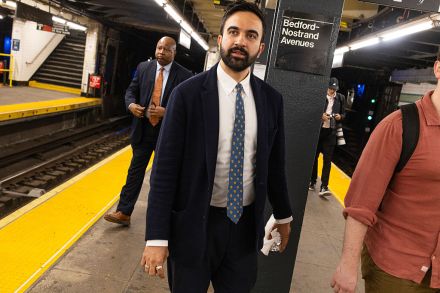
Rent controls don’t have a stellar track record but I’m no expert. In any case it’s academic. At 33, New York City’s rent-regulated apartments are mostly beyond the reach of Zohran Mamdani's contemporaries. That Mamdani, a millennial, has made the fate of this property portfolio the central issue of his campaign reveals not so much the radicalism of his generation but rather its retreat into quietism.  Whatever their merits these apartments operate on a semi-feudal system. Tenancies last for decades and are acquired largely via inheritance or the backslap.

Zohran

The strange futility of the Musk-Trump feud

From our US edition

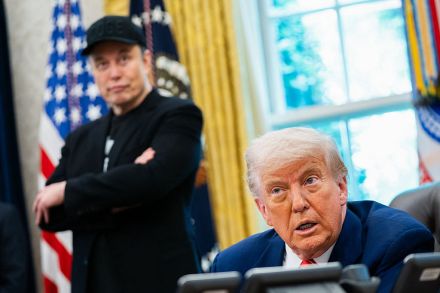
The Trump-Musk spat is not the sign of a new split between oligarchs and populists, as some have claimed – but of the growing pains involved in reassembling this old coalition.  Keeping capitalism going under mass suffrage is no small feat, and capitalists used to be much shrewder in how they went about it. Electorates wouldn’t reliably go for laissez-faire – except after a crisis – and so the only option for the capitalists was to hitch themselves to the wider lower-middle-class coalition for law and order, low taxes and national swagger. Musk’s attacks on Trump yesterday, which included a pitch for a new party “that actually represents the 80 percent in the middle,” represent something drawing to a close rather than being born.

trump

Has Trump’s return defanged Ezra Klein?

From our US edition

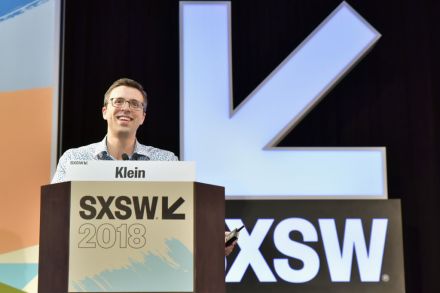
Wonks are a useful sort to have around; no governing class should be without them. A wonk is someone who makes technical improvements to the existing order of things while remaining obedient to its premises. No social order can run entirely on its own propaganda. There does, somewhere, need to be some group of sober and dutiful people applying themselves to secular problems. For 21st-century America, this has been the “juicebox mafia,” a group of liberal bloggers who came of age in the early 2000s. Ezra Klein, Matthew Yglesias, Markos Moulitsas and Noah Smith were self-conscious wonks – the first, indeed, to treat wonkery as a personal credo. They called their articles “explainers” rather than op-eds.

Klein

The rise of the liberal Caesars

From our US edition

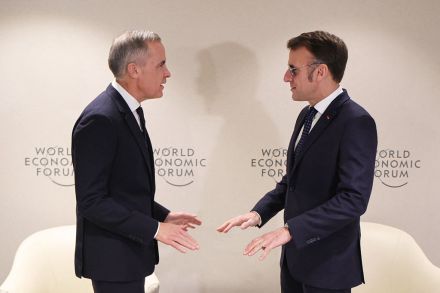
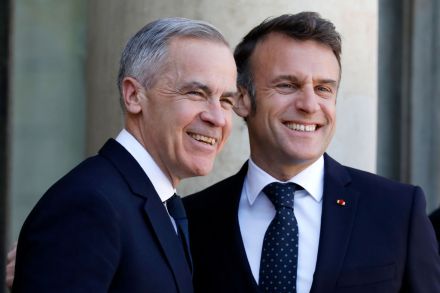
The triumph of Mark Carney in the Canadian election has turned what seemed like a series of local flukes into a global trend. The political mainstream has begun to despair of its own leaders, and now feels compelled to parachute in stately ex-mandarins of a slick, personalist style – figures who seem to stand above the factions. Call them "liberal Caesars." Carney is only the latest example.

liberal caesar

Who cares about globalization?

From our US edition

Donald Trump’s “Liberation Day” was the culmination of a 30-year insurgency against the global economic system. It was the most fiscally significant event since lockdown. By the fiat of the President, tens of trillions of dollars were on the move; stock markets trembled; and the US-China relationship – the material basis of globalization – seemed at risk of permanently freezing over.  Yet just under a week later, tariffs were to be displaced in the news cycle by the case of a deported "Maryland man," Kilmar Abrego Garcia, and his possible gang affiliations. Only one of these events would prompt five Democratic lawmakers to drop everything for an urgent trip abroad.

globalization

Who did Bill Ackman think he was electing?

From our US edition

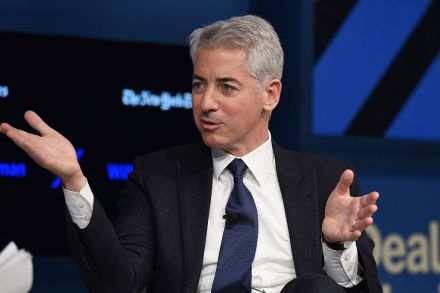
To take on America’s entire governing class and win, Donald Trump proved that he had an inhuman level of willfulness and sangfroid. Those are qualities that cut both ways, however, as the investor Bill Ackman is now discovering.  Wall Street has lost more than $5 trillion in value since the announcement of the new tariff regime last week, but Mr. Trump, speaking on Sunday on Air Force One, appeared deaf to all appeals. How big of a sell-off would the President be willing to endure, a member of the press pool asked. “I think your question is so stupid,” he replied. Many of Trump’s newfound admirers are panicking. Among them is Bill Ackman, manager of the hedge fund Pershing Square and a prominent Democrat defector in last year’s election.

We don’t live in an age of reason

From our US edition

When Tucker Carlson claimed to have been “physically mauled” by a demon in his sleep late last year, it was something of a bellwether: a sign that America’s cultural Right, now in the ascendancy, has persuaded itself to take a symbolic stand against the Enlightenment and the scientific worldview. Looking back on the 2010s and early 2020s, much of the American right now sees an era of secular hubris. The problems of the previous 15 years were put down to a naive faith in human reason; which was then confronted by dark and atavistic forces it couldn’t assimilate. The result had been all sorts of premodern terrors come again: plague, war, popular mania, social order overthrown.  The answer would have to be some sort of return of the spiritual.

reason

How America enfeebled Europe

From our US edition

Fighting to “rebalance” NATO, American leaders now look on the old continent with dismay. Europe cannot seem to muster the physical resources — and, still more, the cultural ones — to provide for its own defense. Even American liberals now mark this down to a late social democratic decadence, or civilizational ennui. To a certain kind of Elon Musk outrider, “Europe is cooked,” or, “Europe is a museum.” The go-to explanation is that America has spoiled these countries rotten for too long. Sheltering under Article 5 of NATO, European nations were able to run down military budgets and use the dividend to pay for generous welfare states. US overspending had allowed Europe to live in a post-historical dreamworld, but reality would have to intervene sooner or later.

europe museum america

Ignore the ‘oligarchy,’ Trump has mastered his coalition

From our US edition

The historian Niall Ferguson was in many ways typical of the high-level defectors to Trumpism. He found himself driven to MAGAdom only in extremis: over Biden’s plans to pack the Supreme Court, and over insufficient “deterrence” in the Democrats’ foreign policy. Last month, however, Ferguson tested the limits of this new coalition. He took to X to rebuke Trump’s handling of negotiations with Russia. Soon popped up no less a figure than J.D. Vance. “Moralistic garbage,” the vice president shot back. Ferguson felt obliged to clarify his position to the MAGA faithful.

oligarchy

We don’t need ‘postliberalism’

In 1979 the price of gas at the American pump doubled to $39.50 a barrel – $172 in today’s money. The future of industrial civilisation seemed in doubt. But to Jimmy Carter, these oil woes were a distraction from the real issue: the moral failure of the American people. ‘Much deeper’ than the energy crisis, said the President, was a ‘crisis of confidence’ in politics and society, born out of a ‘worship of self-indulgence and consumption’.  It was an example of a very old trick. The default response of a governing class to a crisis is to frame it as a general moral one – one that, conveniently, implicates everyone and no one in particular.

Britain is not a technocracy

The term ‘technocracy’, or more often ‘technocrat’, is found everywhere. Both Rishi Sunak and Keir Starmer are referred to as technocrats. But what exactly does it mean?   In the 15 years he served as prime minister, Lord Liverpool always put in the hours. He dutifully opened the latest despatches and read them in turn, though his delicate nature made him dread the task. He was scrupulously honest and always fair. He mastered the details. He was courteous towards colleagues and sensitive to their feelings. He was a devoted husband. He did not act rashly and sailed by no great ideological system. Had he lived today, Lord Liverpool would be what we might wincingly refer to as ‘a safe pair of hands’ or, worse, a ‘technocrat’.