Tom Slater

Tom Slater

Tom Slater is the editor of Spiked.

Rap stars like ‘Dave’ should stop calling Boris a racist

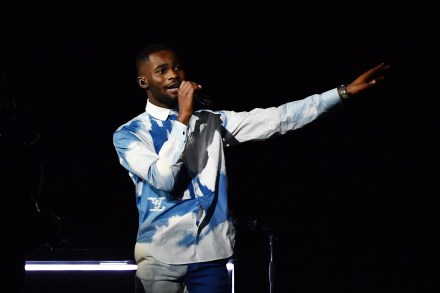
Plenty of people are pretending this morning that they actually knew who Dave was the day before yesterday. The Streatham rapper made headlines at the Brits last night for calling Boris Johnson ‘a real racist’ during a performance of his song ‘Black'. Suddenly, he’s the toast of Twitter, liberal-lefties and assorted other Boris-loathers, who eagerly shared clips of the performance. Following the huge success of his debut album, Psychodrama, which won album of the year last night, Dave, it seems, has achieved a kind of crossover success - he's cracked the Guardianista market.

Joaquin Phoenix’s Oscars speech was beyond a joke

The 2020 Oscars will go down in history for two things: Bong Joon-ho’s brilliant film Parasite becoming the first foreign-language film ever to win Best Picture. And Joaquin Phoenix talking about artificially inseminating cows. Yes, in a crowded field of un-self-aware, right-on speeches and stunts during this year’s awards season – Natalie Portman’s Dior cape bearing the names of snubbed female directors certainly deserves an honourable mention – Phoenix came out on top. In his emotional acceptance speech for Best Actor, won for his skeletal, bravura performance in Joker, Phoenix was almost quaking as he talked about the need for a political unity of purpose among the Hollywood set. ‘[W]e feel or are made to feel that we champion different causes.

The trans-sceptic academic who now needs bodyguards for protection

‘You can’t change sex – biologically, that is impossible.’ That, by most people’s standards, is a simple observable truth. But by the standards of campus activists, it is tantamount to hate speech, deserving of merciless retribution. The quote above is from Selina Todd, a professor of modern history at the University of Oxford. And for daring to express what most other people in this country would take to be common sense, she has been marginalised and threatened. Today the Telegraph reveals that she has been assigned two bodyguards to accompany her to all of her lectures for the rest of the year, after threats were made against her and circulated online.

Beware the university campus microaggression monitors

Are you a student at the university of Sheffield looking for work? Do you have an incredibly thin skin and a passion for policing other people’s conversations? Are you willing to work for £9.34 per hour? Then have I got the job for you. The university is hiring 20 students to challenge offensive language on campus. In particular, they’re going to tackle racial ‘microaggressions’, described by Sheffield as ‘subtle but offensive comments’. The brief says new recruits will help students understand racism and its impacts by leading ‘healthy conversations’, working between two and nine hours a week around campus. Vice-chancellor Koen Lamberts says the plan aims to ‘change the way people think about racism’.

Gillette and the rise of woke capitalism | 15 January 2019

The politicisation of consumer products is one of the weirder developments of recent years. First, Oreos came out in support of gay rights. Then Nike extolled us to ‘believe in something. Even if it means sacrificing everything’, in its multimillion-dollar campaign with controversial former NFL star Colin Kaepernick. Now Gillette has launched a new advert calling on men to be ‘the best men can be’ and shed the nefarious habits of ‘toxic masculinity’ in the wake of the #MeToo movement. The two-minute advert-come-public service announcement argues that men, in the words of actor Terry Crews, taken from his testimony on #MeToo in the US congress, should hold one another accountable for their behaviour.

Campus free speech is a thing of the past

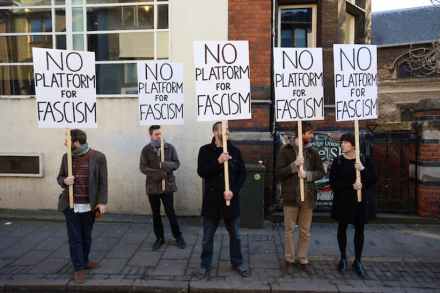
Not that long ago, the sorts of views that were verboten on a university campus were genuinely out-there and nasty: fascism, racism, radical Islam, that sort of thing. It was generally accepted that university was the place to air and interrogate even the most eccentric ideas. Many people still had their limits, but those limits were sufficiently broad that they weren’t tested all that often. And when they were, real scumbags, with genuinely obnoxious opinions, were usually involved. The big campus controversy of 2002 was whether British National Party leader Nick Griffin and Islamic fundamentalist Abu Hamza should be allowed to appear in a debate at the Cambridge Union. That’s almost unimaginable today.

The bizarre war on sombreros

Many Brits still bristle at the importation of Halloween. It’s easy to see why. It is an American holiday that involves grown adults dressing up and children begging for food from strangers. But there is one upside to it that we can all enjoy: woke campus officials losing their minds over ‘offensive’ costumes. It’s hilarious, and it is now an annual feature of Halloween – as traditional as carving the pumpkin or egging the neighbourhood sex offender’s house. Today we learn in the Times that officials at Sheffield University banned students from wearing sombreros this Halloween, because doing so is ‘culturally insensitive’.

Gandhi must not fall

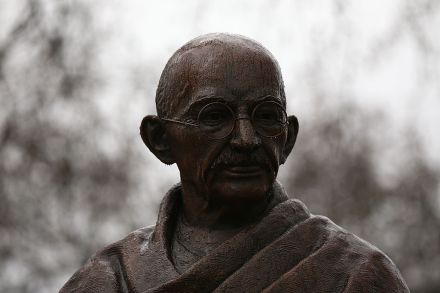
Student politics these days is frequently self-parodying. The Gandhi Must Fall campaign at Manchester university is a perfect case study. Manchester city council has approved plans for a nine-foot statue of Mahatma Gandhi outside Manchester Cathedral. The idea is to promote peace in the wake of the horrific Manchester Arena attack. Who could possibly object to this? Sara Khan, Manchester students’ union’s ‘liberation and access officer’, that’s who. She is leading the campaign against the statue on the grounds that the Indian independence leader made racist comments about Africans. This follows the Rhodes Must Fall campaign at Oxford, which unsuccessfully tried to have a statue of the long-dead colonialist Cecil Rhodes removed from Oriel College.

What Extinction Rebellion and the People’s Vote campaign have in common

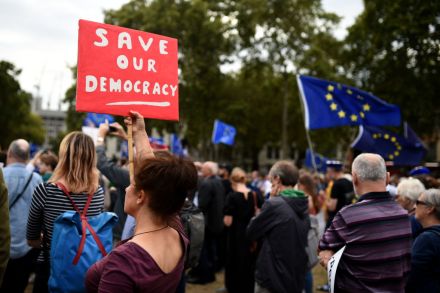
Extinction Rebellion (XR) has announced it will finish its ‘Autumn Uprising’ earlier than planned in order to make way for the People’s Vote march on Saturday. The two groups have been in informal discussions for some time aimed at avoiding getting in one another’s way, according to a report in the Times. Even if the Metropolitan Police’s draconian city-wide ban on XR may have made such a deal unnecessary, it reminds us how much the groups have in common. It’s not exactly a stretch to say these two predominantly bourgeois movements may have some crossover in support.

Is it illegal to mock this drug dealer’s haircut?

Is it a crime to mock a criminal’s unfortunate hairstyle? Police in South Wales seem to think so. Last week, Gwent Police posted on Facebook calling for any information on the whereabouts of 21-year-old Jermaine Taylor, a convicted drug dealer from Newport who had breached his license conditions. They put up the obligatory mugshot, in which Taylor sports his one-of-a-kind do – completely bald on top, two vertical, wispy columns of hair in the back. Facebook users proceeded to rinse him for all he was worth, with thousands of jokes, memes and puns. ‘Who done his hair? Moses?’, said one user, nodding to Taylor’s Red Sea-style parting. ‘Barber: “What you after bro?” Jermaine: “You know Joleon Lescott?

Everyone’s a potential victim in today’s selfie-surveillance state

Did you see the Welsh Tory MP David Davies and a pro-Brexit protester arguing outside parliament, pointing cameras at one another? Davies was being interviewed for BBC Wales about why he had taken to wearing a body camera. Having been on the receiving end of abuse from both pro- and anti-Brexit protesters, he said he did it for his protection. As chance would have it, one such protester — a hard-right social-media activist — was walking past, doing a live-stream to her followers. The protester who challenged Davies goes by the name Based Amy, or the Bacon Lady (don’t ask), and is part of a small association of hard-right agitators who have taken to haranguing people in Westminster.

iSpy

Did you see the Welsh Tory MP David Davies and a pro-Brexit protester arguing outside parliament, pointing cameras at one another? Davies was being interviewed for BBC Wales about why he had taken to wearing a body camera. Having been on the receiving end of abuse from both pro- and anti-Brexit protesters, he said he did it for his protection. As chance would have it, one such protester — a hard-right social-media activist — was walking past, doing a live-stream to her followers. The protester who challenged Davies goes by the name Based Amy, or the Bacon Lady (don’t ask), and is part of a small association of hard-right agitators who have taken to haranguing people in Westminster.

The shame of those boycotting Israel’s Eurovision Song Contest

Kobi Marimi, the 27-year-old Tel Avivian singer, picked to represent Israel at this month's Eurovision Song Contest, can't stop smiling: ‘I love my country. I love Tel Aviv. To know that I’m achieving a dream of mine, to be a part of Eurovision, it’s amazing in itself’, he tells me, with an earnestness that could crack the biggest Eurovision cynic. ‘But to know that I’m doing it in my country, my own city, it’s even greater than that.’ But not everyone is quite so enthusiastic about Eurovision being held in the Holy Land.

It’s no wonder young people are falling out of love with Corbyn

One of the ironies of contemporary British politics is that many younger voters – some of whom are so opposed to eurosceptic baby boomers that they accuse them of ‘stealing their future’ – are also enamoured with Jeremy Corbyn. The Labour leader is, after all, a eurosceptic baby boomer who some still speculate might have secretly voted Leave at the referendum. But a poll out today suggests that the Corbyn coalition is finally beginning to creak under the weight of this contradiction. According to an Opinium survey, commissioned by For our Future’s Sake (FFS), the student wing of the People’s Vote campaign, just 23 per cent of 18- to 34-year-olds approve of Corbyn’s handling of Brexit; 37 per cent are opposed.

Gillette and the rise of woke capitalism

The politicisation of consumer products is one of the weirder developments of recent years. First, Oreos came out in support of gay rights. Then Nike extolled us to ‘believe in something. Even if it means sacrificing everything’, in its multimillion-dollar campaign with controversial former NFL star Colin Kaepernick. Now Gillette has launched a new advert calling on men to be ‘the best men can be’ and shed the nefarious habits of ‘toxic masculinity’ in the wake of the #MeToo movement. The two-minute advert-come-public service announcement argues that men, in the words of actor Terry Crews, taken from his testimony on #MeToo in the US congress, should hold one another accountable for their behaviour.

What’s the real reason for the hold-up in the police’s Brexit probe?

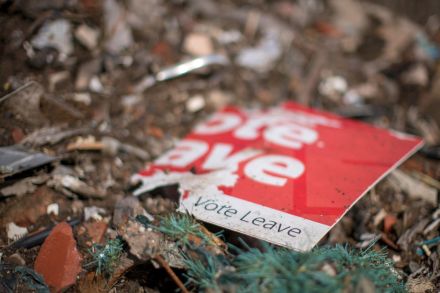
Brexiteers are occasionally depicted as being a little paranoid. If you listen to some elite critics of Brexit, you would think that a sizeable chunk of those who voted to Leave are sharing dodgy anti-George Soros memes long into the night. You might think, too, that a few Brexit voters see elite stitch-ups everywhere and never let the truth get in the way of their anti-Brussels prejudices. But if there is a paranoid style in British politics at the moment, it is not being practised by the 17.4million. It’s coming from that small set of elite Remainers in politics and the media who are resorting to desperate measures in their campaign to overturn the referendum result and stop Brexit.

The BBC is wrong: university censorship is definitely not a myth

Campus censorship is a myth. That’s the new line being spun by student union officials and university leaders in response to the campaigners, commentators and politicians raising concerns about the increasingly censorious culture on British campuses. The extent of No Platforming, Safe Space censorship and newspaper bans, they say, is being exaggerated by right-wing hacks desperate for something to fulminate about. Up to now, it’s an argument that’s been easy enough to dismiss given the very people making it are usually the ones responsible for the campus censorship we read about. But a BBC ‘Fact Check’, purporting to back-up their claims, has, irritatingly, given them a bit of a boost.

Vince Cable’s Brexit gag is a cry of desperation

Vince Cable has succeeded by one measure at this year’s Lib Dem conference: he’s actually managed to make news. With his Boris-esque aside in his speech today, that Tory Brexiteers are guilty of inflicting ‘years of economic pain justified by the erotic spasm of leaving the EU’, he has, however briefly, drawn attention to a conference that few will be attending, and even fewer will realise is happening; a conference at which the highlight so far has been anti-Brexit campaigner Gina Miller telling the crowd of assembled Lib Dems that she’s not a Lib Dem. His quip does, nevertheless, reek of desperation. After their bruising years in coalition, the Lib Dems had hoped, after Brexit, that they could turn themselves into the party of the 48 per cent.

Object lesson | 6 September 2018

‘If liberty means anything at all it means the right to tell people what they do not want to hear,’ wrote George Orwell in his preface to Animal Farm. It is a line that has gone down as one of the great capsule defences of dissent, made all the more prescient by the fact that the preface, an attack on the self-censorship of the British media during the second world war, wasn’t published until the 1970s. But the lines that follow it are too often overlooked. ‘The common people still vaguely subscribe to that doctrine and act on it,’ Orwell goes on, ‘it is the liberals who fear liberty and the intellectuals who want to do dirt on the intellect’.

What’s up with Generation Sensible?

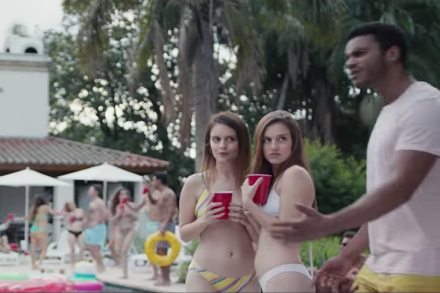
As Love Island enters its final fortnight and the ink dries on the annual moralising thinkpieces, decrying a younger generation happy to flaunt their bronzed bodies and sex lives before the viewing public, a new survey reminds us of the more depressing reality: that young people are less debauched than ever. According to the British Pregnancy Advisory Service, teenagers are much less likely to have sex, or drink, and are as happy spending time with their families as with their peers. Of 1,000 16- to 18-year-olds, two-thirds said they had never had sex. And 24 per cent said they had never drunk alcohol. It’s further proof of what has previously been dubbed the ‘rise of the sensible teenager’.