Tom Lees

Tom Lees is a theoretical physicist and managing director of consultancy firm Bradshaw Advisory. He worked for Michael Gove when he was education secretary

Petroc Trelawny, Gareth Roberts, Tom Lee, Leyla Sanai and Iram Ramzan

28 min listen

On this week’s Spectator Out Loud: Petroc Trelawny reads his diary for the week (1:14); Gareth Roberts wants us to make book jackets nasty again (6:22); Tom Lee writes in defence of benzodiazepines (13:44); Leyla Sanai reflects on unethical practices within psychiatry, as she reviews Jon Stock’s The Sleep Room (19:41); and, Iram Ramzan provides her notes on cousin marriages (24:30). Produced and presented by Patrick Gibbons.

Is it curtains for the Conservatives?

Can the Conservatives do it again? The Tories have won four elections in a row but face a struggle to emulate that success next year. The Budget yesterday offered a taste of the Tories' election pitch. But the government cannot escape some difficult numbers: Labour has led the Conservatives in the polls for more than 480 days. Keir Starmer's party enjoys a current average poll lead of around 21 points. If Rishi Sunak does defy these odds, his would be the first party since 1830 to win a fifth election on the trot. Back then, the Duke of Wellington was prime minister, the Slavery Abolition Act (abolishing slavery across the Empire) was a few years away and Stephenson’s Rocket had just made its debut.

Why isn’t Matt Hancock taking Covid false positives seriously?

As Matt Hancock was doing his media round this morning, it was refreshing to hear him finally being questioned about the challenge of false positives. But his response made me worry whether the Health Secretary really knows what a false positive is – or the potential extent of the problem when it comes to detecting coronavirus and the impact of that on decision making. False positives happen when someone is incorrectly given a positive result for something which in fact they do not have. As I wrote in May, no matter how carefully designed, created or performed, no test is perfect.

Contact tracing may be more of a placebo than a cure

We have been told by the Government that an effective test, track and trace programme is the key to ‘controlling’ Covid-19, allowing us to further unlock the country and take the economy out of its induced coma. The effectiveness of contact tracing depends on wide ranging factors including how many people have the virus but don’t show symptoms, the accuracy and speed of testing, levels of surveillance, the number of people that come into contact with an infected person and how many people comply with requests to self-isolate. Unfortunately for the Government the odds are not in their favour with Covid-19. This week the Office for National statistics and the University of Oxford released their third set of findings from their Covid-19 Infection Survey.

Seven mistakes politicians make when following ‘the science’

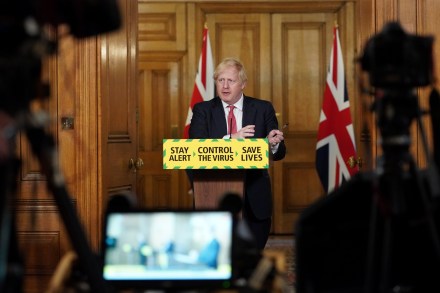
For anyone who watches the daily Covid-19 briefings, it is quite clear that too many of our politicians and journalists have little to no understanding of science and mathematics. Out of the 26 ministers attending cabinet, only three have higher-level STEM (science, technology, engineering and mathematics) backgrounds. In parliament, only around 100 MPs have science backgrounds.  Why does this matter? Training in science gives people a different perspective on the world. It makes them more sceptical, more rigorous in their approach and, most importantly, teaches them what science can and cannot answer. Unfortunately, too many of our politicians don't benefit from this approach – and coronavirus has exposed this problem at the heart of government.