Tom Gross

The westerners helping Hamas win the propaganda war

After two years of war, and despite Israel’s many successes on the battlefield, Hamas can also claim a kind of victory – at least for now. The terror group has survived and is once again exerting control in the areas of Gaza under its authority. Public executions, whippings, stonings and kneecappings have returned. In the first five days of the ceasefire, Hamas executed at least 100 Gazans. Hamas’s survival was achieved not only through its remaining fighters and its holding of hostages, but also thanks to a chorus of western apologists. A coalition of so-called progressives and professional activists has excused, rationalised and defended the group’s actions across universities and in newspaper editorials.
The folly of releasing Hamas terrorists for peace

Sorry to spoil the party, but there’s one aspect of this week’s Middle East peace deal which is pure madness. As part of the US-brokered ceasefire in Gaza, Israel is set to free 250 Palestinian terrorists serving lengthy prison sentences for murder and other serious offences. Many of them have boasted of their crimes and said they would happily carry them out again. (Up to 1,700 Hamas fighters captured during the current war are also set to be freed, but may be worth releasing if this deal brings an end to the conflict.) This kind of terrible deal-making will surely only encourage the future kidnapping of other innocent people by terrorists in order to secure the release of other murderers Israelis can be brilliant at many things. But sometimes they get it very wrong.

War and peace, why restaurants are going halal & the great brown furniture transfer

45 min listen

This week: war and peace Despite initial concerns, the ‘Complete and Total CEASEFIRE’ – according to Donald Trump – appears to be holding. Tom Gross writes this week’s cover piece and argues that a weakened Iran offers hope for the whole Middle East. But how? He joined the podcast to discuss further, alongside Gregg Carlstrom, the Economist’s Middle East correspondent based in Dubai. (01:51) Next: why are so many restaurants offering halal meat? Angus Colwell writes about the growing popularity of halal meat in British restaurants. This isn’t confined to certain food groups or particular areas – halal is now being offered across restaurants serving all sorts of cuisine, from Chinese to Mexican. But why is it so popular?

We should welcome regime change in Iran

On the first night of what Donald Trump has called the ‘12-day war’ between Israel and Iran, someone spray-painted a message in Farsi on a wall in Tehran: ‘Thank you, Israel. Hit the regime hard – and leave the rest to us.’ That graffiti encapsulated the feelings of many millions of Iranians. If you doubt this, you can read (in translation from Farsi) opposition accounts such as ManotoOfficial and IranIntlTV on Instagram or Telegram, which in the past two weeks have been posting countless messages and comments in support of Israel. These accounts are widely seen by people inside Iran, who use VPNs to get around the regime’s online censorship systems.

Is Keir Starmer really going to arrest Benjamin Netanyahu?

11 min listen

The International Criminal Court (ICC) has issued arrest warrants against Benjamin Netanyahu, his former defence minister Yoav Gallant as well as – separately – for Hamas military leader, Mohammed Deif. They are all wanted for alleged war crimes, but specifically regarding Netanyahu and Gallant the ICC say that, 'each bear criminal responsibility for ... the war crime of starvation as a method of warfare; and the crimes against humanity of murder, persecution, and other inhumane acts.' So why have these warrants been issued now? And what are the implications for Labour's relationship with Israel?   Oscar Edmondson speaks to James Heale and Tom Gross, commentator on the Middle East.

Benjamin Netanyahu has defied his critics again

With 97 per cent of votes counted, Israeli prime minister Benjamin Netanyahu looks poised to secure a remarkable record fifth term. Pundits had said Israel’s election was too close to call, and in many ways it was. Both Netanyahu’s right-wing Likud party and its main rival, the centrist Blue and White alliance look set to gain 35 seats in the 120 seat Israeli parliament, the Knesset. But Netanyahu has a much better chance of forming a coalition with the smaller right wing and religious parties. Nothing is decided for sure yet. Most of the remaining three per cent of the votes are those of soldiers and diplomats who don’t live in their home voting districts.

Could Donald Trump unexpectedly triumph in his bid for peace in the Middle East?

Could Donald Trump win the Nobel Peace Prize? He would be following in the footsteps of his predecessor but unlike Barack Obama in 2009 his award could be for something significant: helping to bring an end to one of the world’s most intractable conflicts – the dispute between Israelis and Palestinians.  It might sound implausible but Trump may have a better chance of delivering peace – or at least a non-belligerency agreement – than previous presidents, even if those chances do still remain low. Trump's Middle East peace envoy (and ex-real estate lawyer) Jason Greenblatt, who I met recently, says that the Trump team will soon unveil their plan – the “deal of the century”, as Trump has dubbed it.

Is New Zealand really such a tolerant country?

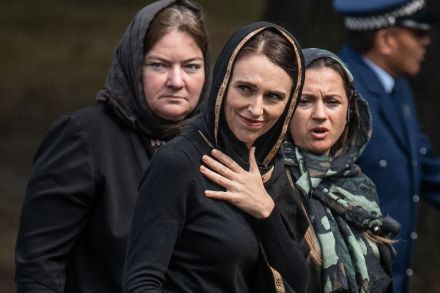
For years, New Zealand has been talked of as a beacon of liberalism, a country that other democracies including Britain – and, in particular, Trump’s supposedly intolerant America – should try to emulate. This has been even more pronounced since the massacre of Muslim worshippers at two New Zealand mosques by an Australian white supremacist a fortnight ago. In a rare gesture, the world’s tallest building was dramatically lit up last week with a giant image to honour New Zealand prime minister Jacinda Ardern for her leadership following the killings. The Burj Khalifa skyscraper in Dubai beamed out a photo of Ardern embracing a woman at a mosque in Wellington.

The good news about Gaza you won’t hear on the BBC

Donald Trump's election as US president has meant the whole notion of 'fake news' and 'alternative facts' is now very much part of a wider conversation. But for decades before the Trump era, more honest or open-minded journalists were aware that some of their colleagues often didn't tell the whole truth about all kinds of matters, or cherry-picked what they reported. And perhaps no subject has been so misreported as the Palestinian issue. Western media has often focused on this issue to the detriment of many other conflicts or independence movements throughout the world. The BBC, in particular, has devoted an inordinate amount of its budget and staff to covering the West Bank and Gaza in thousands of reports over the years.

The truth about Iran is now of little importance to Jeremy Corbyn

If any further evidence was needed about the disingenuousness of Jeremy Corbyn and the dangers a government led by him might pose internationally – not just for Britain but also for Britain’s Nato allies – it is worth watching Corbyn’s interview on Iran with the BBC’s Andrew Marr yesterday. ‘You've been very reluctant to condemn the government of Iran. Can I read you what Amnesty International has said about Iran… ?’ began Marr yesterday, to which Corbyn interrupted him with the extraordinary response: ‘I think that actually, if I may say so, you're spending too much time reading the Daily Mail, do you know that?

The self-righteous backlash to Trump’s immigration ban could play into his hands

Donald Trump’s executive order which, he says, was aimed at making it harder for terrorists to enter America, targets three groups: refugees in general, who are blocked from entering the U.S. for the next 120 days; refugees from Syria, who may be barred indefinitely; and citizens from seven Muslim-majority countries (countries initially selected by the Obama administration), who are barred from entering the U.S. for at least 90 days.

Dead Jews aren’t news

British newspapers care greatly about some victims of the Israel army, says Tom Gross, but not the Jewish victims of Palestinian terror — even if they are British Rachel Thaler, aged 16, was blown up at a pizzeria in an Israeli shopping mall. She died after an 11-day struggle for life following a suicide bomb attack on a crowd of teenagers on 16 February 2002. Even though Thaler was a British citizen, born in London, where her grandparents still live, her death has never been mentioned in a British newspaper. Rachel Corrie, on the other hand, an American radical who died in 2003 while acting as a human shield during an Israeli anti-terror operation in Gaza, has been widely featured in the British press.