Tom Goodenough

Tom Goodenough

Tom Goodenough is online editor of The Spectator.

What the papers say: Corbyn wins some rare praise

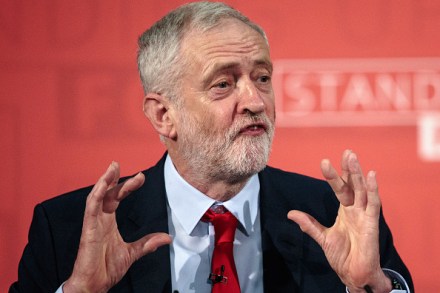
Jeremy Corbyn wins an unlikely supporter today: the Sun newspaper, which throws its weight behind the Labour leader's plans to axe hospital car park charges. The paper’s support might come as a surprise for Corbyn - particularly as its editorial goes on to criticise the health secretary Jeremy Hunt for talking ‘tough’ on scrapping charges but doing little in practice. It isn’t all good news for Corbyn though. The Sun says Corbyn ‘gets half Marx’ because of the ‘barmy’ tax on private health insurance he plans to fund it with. The Sun argues that it simply ‘never occurs to Labour to make a saving elsewhere’.
The Tories hit their highest poll lead since 1983

The Tories have just hit a new high in the polls: 49 per cent, handing them a 22-point lead over Labour. This margin is virtually uncharted territory for the Conservatives, with ICM pointing out that the party’s current lead has only been bettered once in the last 34 years of polling - back in May 1983. As ever, it’s less good news for Labour: the party sits on 27 per cent, according to ICM - a number which precisely matches the share of the national vote they picked up in last week’s local elections. If - and it’s a big if - this means the pollsters have pinpointed Labour's share of the vote at 27 per cent, the outcome would be disastrous for the party come June 8th. Replicated nationally, the Tories would win a thumping majority of 172.

Andy Street’s West Midlands victory is a big blow to Corbyn

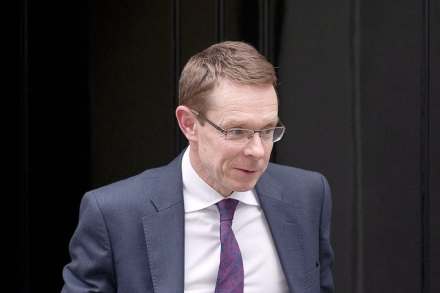
Andy Street has won the race to become the new West Midlands mayor in a huge triumph for the Conservatives. Street’s victory was narrow - by only a few thousand votes out of the half-a-million or so cast - but his success is extraordinary for the Tories on a day of sweeping wins for the party across the country. Labour are already trying to spin this election as being hard-fought from the outset. The shadow chancellor John McDonnell has said that it was ‘always going to be close’. But make no mistake: this is an embarrassment for Jeremy Corbyn and the Labour party. Street beat Labour’s Sion Simon on what should have been the party’s own turf, with Labour currently holding 21 out of the 28 Westminster seats in the West Midlands area.

Is the end nigh for Ukip?

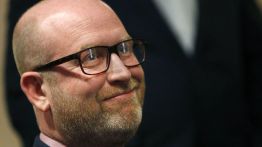
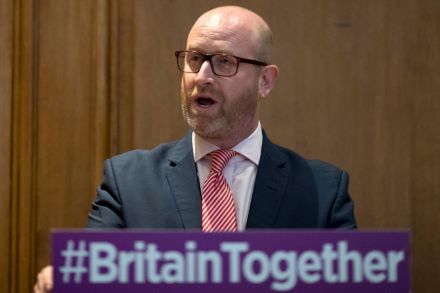
Ukip is a party dwelling on its past glories rather than its future this afternoon. The party’s leader Paul Nuttall has very few crumbs of comfort from the results so far: Ukip has lost every single one of the seats it had previously held. It has, just moments ago, snatched a single seat from Labour in Lancashire. Yet even the most optimistic Kipper would struggle to put a spin on the performance so far. The line that there are still results to come through is rapidly wearing very thin. Instead, when Nuttall broke his silence earlier he talked of the party’s ‘electoral success over recent years’ and how the party had forced the Tories to ‘embrace’ their cause. He went on to say that Ukip were 'the victims of our own success’.

Local elections: Labour lose control of Glasgow council for first time in 40 years

Labour’s performance in the local elections is going from bad to worse. The party has, for the first time in four decades, lost overall control of Glasgow Council. Not too long ago, the city’s council would have been a banker for Labour. Under Jeremy Corbyn, it’s a different picture. Labour needed to win 43 seats on the council to keep control. But having stood only 43 candidates in this election, they needed every single one to come through. That hasn't happened and the party's performance in Glasgow is likely to be the nadir in a dismal local election campaign. Labour’s pain isn’t the only story to come out of the results in Glasgow though. The SNP have increased the number of seats and could take overall control of the council.

Local elections: West Midlands win caps off a day of stunning successes for the Tories

The Tories are up 540 seats, have gained control of 11 councils and enjoyed success in the Tees Valley, Cambridgeshire and Peterborough and West of England mayoral races. Conservative candidate Andy Street has won the West Midlands mayoral contest. Labour's vote has plummeted, with the party losing 360 seats as well as control of six councils. Labour's Steve Rotherham won in Liverpool's mayoral contest; Andy Burnham won in Greater Manchester. Ukip has lost every seat it was defending. The party has gained one seat across the whole country - in Lancashire, from Labour. The Lib Dems have lost 24 seats but have seen their share of the national vote jump by seven per cent. The SNP are down 7 seats in Scotland, with the Tories up by 164.

What the papers say: Theresa May hits back against Brussels

Theresa May’s missive to Brussels delivered on the steps of Downing Street had a simple message: keep out of our election. The PM’s speech was her most direct attack yet against the EU and showed that she was intent on living up to her moniker of being a ‘bloody difficult woman’. Her words might have gone down badly across the Channel, but they’ve been warmly welcomed in today’s newspapers: ‘The gloves are off,’ says the Daily Telegraph, which argues that recent events have shown to the Prime Minister that ‘the prospects of a smooth Brexit have gone’.

Ukip targets foreign aid in its bid to woo wavering Tory voters

Ukip is a party searching for a purpose. In recent weeks, its focus has been on Islam. Now, it has hit on a new ruse to try and win over voters: going after Britain’s foreign aid budget. The party has said it will scrap the 0.7 per cent spending commitment put into law by David Cameron. Like it or not, it’s a popular move - with the millions spent on unwise projects, such as those in North Korea, doing little to endear a sceptical public to the cause of foreign aid. Hundreds of thousands of people signed a petition last year calling for cuts to the aid budget.

Jean-Claude Juncker could learn a thing or two from David Davis

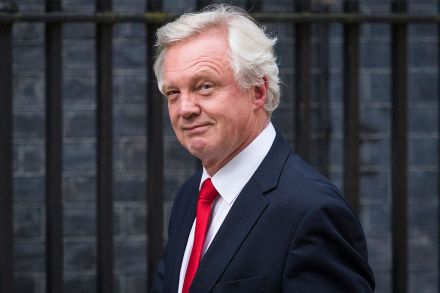
Even David Davis’s loudest critics would concede one thing about the Brexit secretary: he is nothing if not breezily confident. His performance on the media rounds this morning was no exception; and his message following Theresa May’s now-famously frosty Downing Street dinner with Jean-Claude Juncker could not have been clearer: keep calm and carry on - there’s nothing to worry about. Davis dismissed talk in the papers this morning that Theresa May will be sidelined by other EU leaders when thrashing out the terms of the Brexit deal. Instead, the Brexit secretary said that the PM will be front and centre of talks.

What the papers say: May’s ‘disastrous dinner’ with Juncker

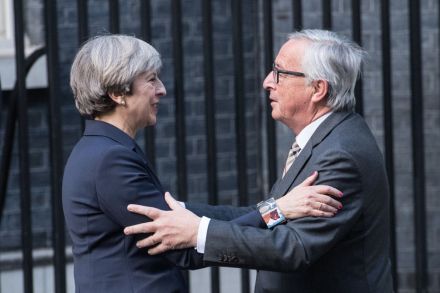
Theresa May and Jean-Claude Juncker were pictured on the steps of Downing Street greeting each other warmly ahead of their working dinner on Brexit last week. The next time Juncker comes for tea, the reception is likely to be somewhat frostier. An account of the meeting suggesting the PM was ‘on another galaxy’ has found its way into the press. May has hit back by calling the account 'Brussels gossip'. Yet whoever is telling the truth, this acrimonious encounter looks like a sign of things to come. Jean Claude Juncker is a ‘serial liar’, says the Sun which claims that ‘there are vipers more trustworthy than’ the EU president.

Ukip leader Paul Nuttall confirms he will stand for Parliament

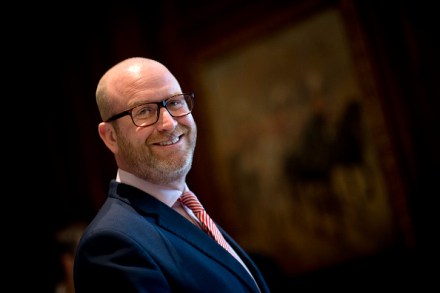
Paul Nuttall has just confirmed he will be standing in the upcoming election. The Ukip leader promised to be ‘leading the party into battle’ on June 8th. Where he stands, we’ll have to wait and see. Nuttall said that he would announce in the next 48 hours which seat he planned to target. In a statement, Nuttall said: ‘As the leader of the party I will be, obviously, leading the party into battle as I have done many times in the past’ Nuttall might now be saying his decision was obvious, but it hasn’t always looked that way.

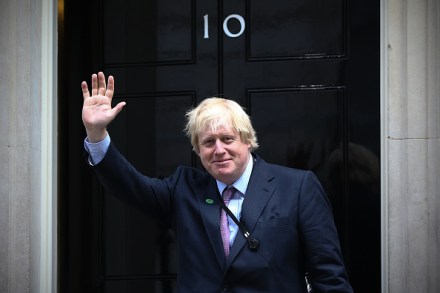
There’s more to Boris’s ‘mugwump’ insult than meets the eye

Boris Johnson has entered the election campaign with a bang. The Foreign Secretary was being squirrelled away, some were saying, after a number of ministers apparently suggested to Theresa May that she should sideline Boris to avoid alienating voters. It’s clear that’s not going to be happening. Today, Boris is front and centre calling the leader of the opposition a ‘mugwump’. In the Sun, Boris said that some may think Corbyn is harmless - a ‘mutton-headed old mugwump’ - but they’d be wrong to hold that view. The po-faced will say this is proof that Johnson is up to his old tricks and we shouldn’t fall for it; shadow foreign secretary Emily Thornberry has done just that, calling the comments ‘crass’.

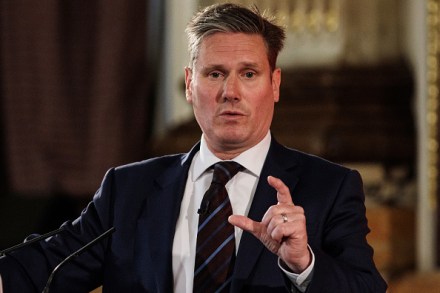
If Keir Starmer is Labour’s great hope the party really is in trouble

Is Keir Starmer Labour’s great hope? That’s what some longing for the day that Jeremy Corbyn calls it a day have said. The shadow Brexit secretary was centre stage yesterday as he spelled out the party’s plan for leaving the EU. But for those pinning their hopes on Starmer, today’s newspaper editorials make miserable reading. Labour’s plan for Brexit ‘is a joke’, says the Sun, which blasts the shadow Brexit secretary for his ‘waffle and wishful thinking’ yesterday. The paper says that Starmer’s argument that we should return to the negotiating table in Brussels if MPs reject the Brexit deal would give the 'EU licence to play hardball for years’.

Labour’s Brexit plan was doomed before Keir Starmer even opened his mouth

Brexit comes in all shapes and sizes: hard, soft, clean. Today, Labour added a new type: a ‘reckless Tory Brexit’. That’s what Keir Starmer accused the Government of trying to drive through as he detailed Labour’s plan for waving goodbye to the EU. The main purpose of Starmer’s tour of the airwaves was to clear some of the mud out of the water of Labour’s Brexit tonic. To be fair to Starmer, he did manage to offer some clarity: there would be no second referendum under Labour, which puts helpful space between the party and the Lib Dems who have promised voters a second say. Staying in the single market also remained an option that was ‘on the table’ if it was Corbyn doing the deal making in Brussels, according to Starmer.

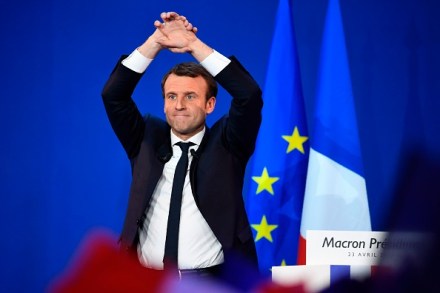
Jean-Claude Juncker’s joy at Macron’s win shows the EU’s big problem

Emmanuel Macron’s victory in the first round of the French presidential election is the good news the EU was waiting for. After Brexit and Trump, Brussels is delighted - so much so in fact that European Commission President Jean-Claude Juncker ditched the convention of staying out of ongoing elections by calling Macron a ‘pretty obvious choice’. But perhaps Juncker and his allies in Brussels would do well to take the hint from the millions of voters who backed anti-EU parties at the ballot box. Even from Dover, ‘you could almost hear the popping of champagne corks’ after Emmanuel Macron triumphed, says the Daily Mail. ‘In Brussels…the elation was unbounded,’ the paper says.

British universities must admit that there are some upsides to Brexit

Britain’s universities are finding it hard to look on the bright side of Brexit. One of their big gripes is that they feel that foreign students could be put off from coming to the UK. This fits into the narrative that Brexit is an exercise in hauling up the drawbridge. But in reality, the result of the referendum isn’t necessarily bad news for universities – especially ones that hope to attract overseas students. What’s more, Brexit might even encourage rather than put off foreign students from applying here, because the fall in the value of sterling is making the cost of a pricey British degree cheaper for them.

Len McCluskey’s victory finally gives Corbyn something to smile about

Len McCluskey has been re-elected as General Secretary of Unite. It was something of a messy fight: his rival Gerard Coyne was suspended yesterday - we still don’t know why - and the contest was much narrower than had been expected, with McCluskey winning by just 5,000 votes. The dismal turnout of 12 per cent also suggests that many of those eligible to vote were put off by the parochial rows at the heart of this contest. McCluskey accused a ‘cabal’ of Labour figures, who he described as ‘skilled masters of the darks arts’ of trying to use the election to oust Corbyn. While Coyne suggested that the general secretary of Unite shouldn’t be ‘the puppet master of the leader of the Labour party’, in a thinly-disguised dig at his rival.

What the papers say: Jeremy Corbyn does pose a threat to the Tories

Theresa May is riding high in the polls and there’s much talk of a Tory landslide - but that doesn’t mean the Government should rest on its laurels, says the Daily Telegraph. It’s vital, the paper says, that the PM does her best to ‘create a sense of urgency among the voters’; ‘They have to understand the dangers of not coming out to support her,’ the paper adds. Of course, some might laugh at the prospect of Corbyn making it to Number 10 - yet it’s just that sense of ‘impossibility’ that the Labour leader ‘hopes to exploit’.

Did Douglas Carswell try – and fail – to rejoin the Tory fold?

Douglas Carswell has just announced that he will not stand for re-election as the MP for Clacton. The independent MP, who quit Ukip last month, said that he was planning 'to move on to other things' and was looking 'forward to being able to read newspapers without appearing in them'. In a statement on his website, Carswell said: 'As I promised in my maiden speech, I have done everything possible to ensure we got, and won, a referendum to leave the European Union - even changing parties and triggering a by election to help nudge things along. Last summer, we won that referendum. Britain is going to become a sovereign country again. I have decided that I will not now be seeking re-election.

Labour’s General Election plan is already coming unstuck

What does it mean to be rich? That’s the question already getting the Labour party into a tangle as it struggles to get its act together ahead of the snap general election. Yesterday, John McDonnell said a Labour government would send a higher tax bill the way of all workers earning over £70,000. The shadow chancellor said simply that those earning more than that amount were ‘rich’ and should ‘pay their way more’. A straightforward policy, you might think. But today, it seems, there is already confusion in the ranks.