Thomas Edwards

Thomas Edwards is contributing editor at the Catholic Herald

Does MAGA have a Pope Leo problem?

J.D. Vance, perhaps the world’s most prominent Catholic layman, has found his political ideology at odds with the papacy for the second time in as many pontificates. Vance’s brand of Catholicism favours tradition and he is part of a growing cohort of young Catholics, sometimes affectionately referred to as ‘rad trads’. It is a Tridentine Mass, highly observant Catholicism that reacts against the liberalising reforms of the 1960s, which it sees as corrosive to the truth that came before. These Catholics are found across the world, but particularly in the Anglosphere – and especially in the United States. They attend Mass with reverence, observe Church teaching on sexual morality, and view Catholic doctrine as a much-needed antidote to the ills of modern society.
Why it makes sense to have an American pope

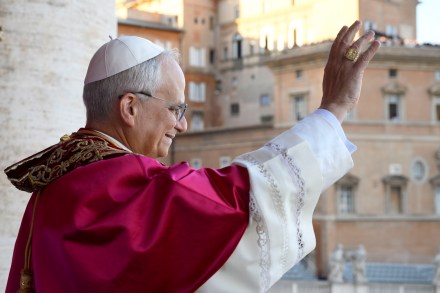
Around 40,000 people gathered in St Peter’s Square last night, the mood markedly more expectant than the evening before. While Wednesday had felt like a formality destined to disappoint, Thursday hummed with anticipation – and it delivered. The general consensus in the run-up to the conclave was that an American pope was unlikely. As the world’s strongest economic and political power, adding to that the honour of hosting the world’s most influential spiritual leader seemed excessive. The United States has also had the furthest to go in addressing the problem of clerical abuse.

Catholics are praying for a speedy conclave

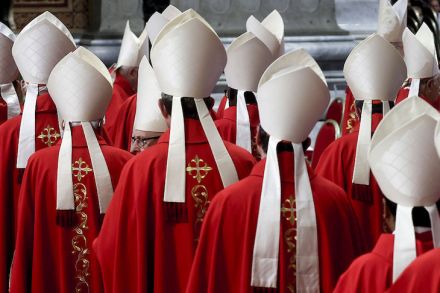
The Conclave, which meets in the Vatican today to elect a new pope, is likely to be brief. For the past hundred years, no conclave has exceeded four days, with two days being the most common. It seems unlikely that this one will be an exception. Many Catholics, at least, hope as much. The cardinals will not wish to expose the divisions within the Church to the world through a prolonged and fractious conclave. Taking their time would suggest a Church paralysed by competing factions. Convening quickly would project unity and resolve. The cardinals – mindful of both history and optics – will not wish to let ideological divisions harden into public spectacle But this being the Catholic Church, nothing is certain: deliberations can range from hours to years.

Pope Francis leaves behind a divided church

Pope Francis’s death at the age of 88 was neither untimely nor a great surprise. Having made what appeared to be a miraculous recovery from double pneumonia and kidney failure – and subsequently turning up at St Peter’s in a poncho just two weeks ago – Francis appeared to have been granted a new lease of life. Despite this, he left this world on Monday morning, the day after administering the Urbi et Orbi blessing and the second day of the Easter Octave. As times go for a Pope to depart this life, he picked a suitable moment. Many of the accounts of the Pope’s life, following his death, have bordered on the hagiographical – and, indeed, so they should be.