The Spectator

Which countries produce the most vegetables?

Striking out An England vs Wales rugby match was nearly called off after Welsh players threatened to go on strike over the terms of their new contracts. Although rare, industrial action is certainly not unheard of in the sporting arena. – In June last year the Canadian men’s football team went on strike demanding they share at least three quarters of World Cup prize money, rather than the 40 per cent they were being offered. A friendly against Panama was called off. – In August 2020, shortly after the BLM protests sparked by the murder of George Floyd, US basketball, soccer and baseball teams went on strike in protest at the shooting of another black man by police in Wisconsin.

Letters: Should Christians in politics leave their faith at the door? 

Beyond belief Sir: Tim Farron (‘Church and state’, 25 February) repeats many of the common errors made by those of faith. He starts by equating secularists with atheists, yet they are quite distinct. To be an atheist is simply not to believe in the existence of a God. That’s it. You can be an atheist and almost anything; communist, fascist, socialist, liberal, conservative. A secularist believes in the separation of church and state, as many people of faith do as well as atheists. This separation is enshrined in the secular US Constitution, in one of the more religious countries in the West. Secularism is actually the only possible guarantor of religious freedom, something Farron says he’s in favour of.

The SNP’s purity test

It seems as if Kate Forbes is about to achieve the remarkable distinction of losing an election as a result of a policy which she has not advanced and has no intention of enacting. It wasn’t she who raised the issue of gay marriage this week, but those who interviewed her after she announced her intention to stand in the Scottish National party leadership contest. Would she disavow the views of her church on sex, marriage and abortion? She would not. Her supporters peeled away. In succumbing to cancel culture, the SNP has weakened itself, perhaps fatally Just like the old Test Act, where Scots in public life had to swear they held no Catholic beliefs, a new test is emerging for would-be party leaders.

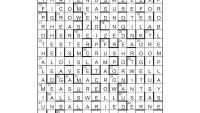
2590: Have a go – solution

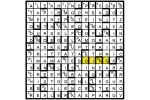
The seven unclued lights are BIRDs (36) minus one letter: (S)WAN (14), (G)ROUSE (18), P(H)EASANT (22), TE(A)L (40), S(W)ALLOW (7), R(O)OSTER (29) and S(K)IMMER (30). GOSHAWK (in the 9th column) was to be shaded. Title: cf. BI(R)D.

What else has had the Roald Dahl treatment?

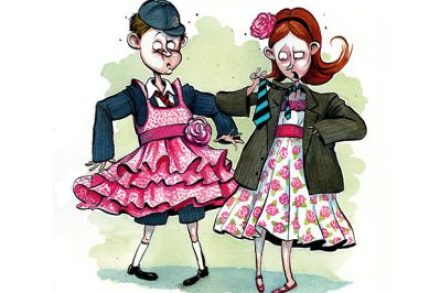
That’s another story Roald Dahl’s books have been edited to make them less offensive, with references to ‘fat’ and ‘ugly’ people removed. Other children’s media that has been revised: – The Noddy books originally featured golliwogs, which were removed in 2009. – Six Dr Seuss books were withdrawn from sale in 2021, one for featuring a Chinese man with chopsticks for eyes, another for depicting African characters in grass skirts. – Dumbo was taught to fly by crows with exaggerated southern US accents. One was originally called Jim but has been renamed Dandy, and a content warning added.  – Peter Pan refers to ‘redskins’, also now with a content warning. Turning profits How has the profitability of UK firms changed in the past decade?

Letters: Sturgeon’s delusion

Delusion of Sturgeon Sir: Nicola Sturgeon’s resignation speech was the longest and most delusional in living memory (‘After Sturgeon’, 18 February). There were reportedly more than 150 ‘me’, ‘my’ and ‘I’s spoken, as she congratulated herself at length, despite the government’s deplorable record since the SNP came to power. She referred to Scotland just 11 times. That tells the electorate where her government’s priorities have been all this time. Their focus was never us Scots; it was how to separate from the rest of the UK. If she wasn’t going to persuade the majority to vote ‘yes’ then, like her predecessor, she would be so irritating and divisive that she hoped Westminster would want to see the back of us and grant Scotland another referendum.

Sturgeon, Sunak and the state of the Union

Nicola Sturgeon’s resignation as First Minister of Scotland comes at a critical moment for the Union, since the question of Scottish independence has inevitably been tied to the ongoing dilemmas over Brexit. It seems that, over the next week or two, the UK and the EU will announce a potential agreement over the revision of the Northern Ireland Protocol. Goods travelling from mainland Britain for consumption in Northern Ireland will no longer be subject to automatic checks; a trusted trader scheme will allow most shipments to be waved through. In return, it appears that the UK government has dropped its opposition to the role of the European Court of Justice as the ultimate arbiter in disputes involving trade between Britain and the island of Ireland.

When did football first get referees?

For reference The Referees’ Association complained at the level of abuse against officials in amateur football games. Referees go back further than you might think: the first reference to one was in 1842 – meaning someone to whom gentlemanly players might turn if they could not sort out disputes between themselves. The role acquired an extra notoriety in 1874, when referees were first allowed to send players off.   Who works from home? Between September 2022 and January 2023, 16% of workers reported working from home only, 28% reported hybrid working, 10% said they could work from home but chose to go to work, and 46% said they travelled to work because they could not work from home. But there are big differences across the workforce.

Letters: Save our independent schools

Schools out Sir: Toby Young is absolutely spot-on in his assessment of the impact of Labour’s plans to put VAT on independent schools (‘Class conflict’, 11 February). Not only will it cost the government money, but it will destroy a sector that is one of the UK’s great success stories. The naive and childish perception on the left is that all independent schools are, like Eton or Harrow, backed by wealthy parents with very deep pockets. The reality is very different. A significant number of independent schools are really struggling, and several have closed recently. Many schools operate on the margins of profitability or run at a loss. The majority of parents in the sector struggle to find the fees, and an extra 20 per cent will make it unaffordable for most.

What Turkey needs

This week’s earthquake in Turkey and northern Syria is a reminder that in spite of civilisation’s advance and human ingenuity, there are natural disasters we can do little to prevent or to protect ourselves from. Though the death toll from floods, drought and storms has fallen dramatically over the past century, the toll from tsunamis, earthquakes and volcanos has remained the same. We have little defence against shifting tectonic plates. Poorly conceived aid projects can perpetuate rather than tackle poverty After an earthquake, what matters is the speed at which aid arrives. Every minute counts in the effort to find people buried under the debris, to distribute food and to rebuild infrastructure.

Portrait of the week: Rishi reshuffles, Truss talks and a trigger warning for Shakespeare’s Globe

Home Rishi Sunak, the Prime Minister, rearranged the deck chairs. The Department for Business, Energy and Industrial Strategy was broken up, and Grant Shapps, the Business Secretary, was put in charge of a new department: Energy Security and Net Zero. Kemi Badenoch, the Trade Secretary, added business to her portfolio, as the new Secretary of State for Business and Trade. Michelle Donelan, the Culture Secretary, became Secretary of State for Science, Innovation and Technology. The Department for Digital, Culture, Media and Sport had its ‘Digital’ lopped off and was put under Lucy Frazer. The new Conservative party chairman is Greg Hands, reckoned a safe pair.

Letters: How to stop the Ukraine war

A negotiated end Sir: Owen Matthews’s piece hinted at the likely outcome of the Ukraine conflict, but his conclusion was too pessimistic (‘Spring loaded’, 4 February). It seems probable that the war in Ukraine will drag on without a decisive conclusion and that there will not only be disagreement among Nato members about supplying further arms, but that other governments will get tired of it. The only way to stop it will, therefore, be by negotiation. Given that the most successful negotiated settlements end with all sides being reasonably satisfied with the outcome, Russia, Ukraine, Nato and the EU will have to make compromises. Ukraine will have to agree to cede Crimea, and the Donbas too.

Portrait of the week: Workers striking, economy shrinking and Tesco buys Paperchase

Home Teachers went on strike. Train drivers and railway workers went on strike for two days, with a day’s rest in between. Civil servants belonging to the Public and Commercial Services Union went on strike, including some who work for Border Force. Firemen voted to go on strike. Nurses and ambulance staff decided to go on strike next week. During a visit to Darlington, Rishi Sunak, the Prime Minister, told an audience of health workers: ‘I would love, nothing would give me more pleasure, than to wave a magic wand and have everyone, all of you, paid lots more.’ The Commons voted for a bill to impose minimum service levels in some kinds of work during strikes. The International Monetary Fund said that the UK economy would contract by 0.6 per cent this year.

Britain is becoming a greener and more pleasant land

To listen to many environmental campaigners, you would think that Britain was a toxic wasteland. They tell us that our wildlife is depleted, that our green spaces are endangered and that 40,000 people a year are dying from air pollution. This week, the Wildlife Trusts came up with another figure: that it would cost £1.2 billion a year to repair the industrial despoliation of Britain. Everyone wants clean air and water and to live surrounded by healthy green spaces, and there are places that could be a lot cleaner than they are. Yet in many ways Britain has become a far greener and more pleasant land over the past few decades thanks not so much to state subsidy but to business.

What’s moved the Doomsday Clock the most?

The final countdown The Bulletin of Atomic Scientists moved its ‘Doomsday Clock’ from 100 seconds to midnight to 90 seconds to midnight – the closest it has ever been to our apparent annihilation. How close was it during other periods of history? Cuban missile crisis, 1962 The standoff between the US and the Soviet Union brought the world to the brink, yet it was apparently a time of optimism compared with today – a few months later the clock was moved back from 7 to 12 minutes. Chernobyl, 1986 The world’s worst nuclear accident didn’t register on the clock: the hands were not moved for two more years, and then back from 3 minutes to 6 minutes.