The Spectator

Letters: decarbonisation is futile

What’s the point? Sir: Your editorial (‘Net loss’, 2 March) sets out how the decarbonisation industry is a net drain on the British economy. While you mention that the UK has already decarbonised faster than any other European country, the fact that the UK produces less than 1 per cent of global carbon emissions to start with means that even if we became carbon neutral overnight, it would have precisely no impact on global climate change. So the 765,000 people working in that sector are not only taking skilled labour away from sectors that are actually economically productive, but they are on a hiding to virtue-signalling nothing. They might as well be digging holes and filling them in again.

Portrait of the week: Budgets, by-elections and Big Brother

Home In the Budget, Jeremy Hunt, the Chancellor of the Exchequer, spoke of ‘long-term growth’. He cut National Insurance by 2p in the pound, saving the average worker £450 a year but pensioners nothing. A new ‘British Isa’ would allow an extra £5,000 a year tax-free investment. Tax arrangements for non-doms would be changed. The 28 per cent capital gains tax on property would go down to 24 per cent. Alcohol and fuel duty were frozen for a year; vaping would attract duty. He said the UK was on track to become the world’s next Silicon Valley and second only to Hollywood for film. The NHS would become ‘digitally integrated’ and drones become police first-responders. He announced devolved powers for Surrey and remarked on Sir Keir Starmer’s weight.

What do voters have to thank the Tories for?

Last November Jeremy Hunt announced what he proclaimed was ‘the biggest tax cut on work since the 1980s’. He cut employee National Insurance from 12 per cent to 10 per cent, yet to his great disappointment, the polls didn’t budge. This week he decided to double down, lowering NI again, to 8 per cent. ‘The UK now has the lowest effective personal tax rate since 1975,’ he said. It’s likely the public will still be unimpressed, because taxes are rising further. Hunt’s policies will in fact leave the UK with the highest overall tax burden since 1948. The headline rate may be falling, but the proportion of income subject to taxes has gone up, primarily because tax thresholds have been frozen.

Parliament and the press

Attempts by the Emirati government to buy The Spectator and the Telegraph through RedBird IMI, one of its state investment vehicles, pose a conundrum. There is no existing law against such a deal because until this point safeguards have not been needed. No autocracy has ever before attempted to buy a leading national newspaper in a democratic country. The Prime Minister may feel powerless to stop the deal, given the lack of legal tools available, but Baroness Stowell, a Tory peer, has now proposed an amendment to the Digital Markets Bill. This would require that any foreign power which wishes to buy a national publication must first secure parliament’s approval. No one in the House of Commons or Lords has raised a serious objection to this common sense principle.

The big lessons from Super Tuesday

From our US edition

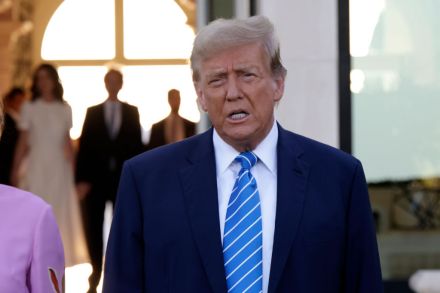
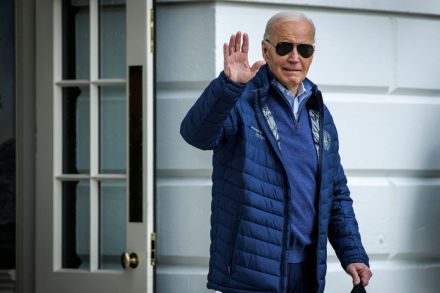
It’s (basically) officially over: former president Donald Trump and President Joe Biden will face off again this November. Former UN ambassador Nikki Haley, the only remaining viable challenger to Trump, dropped out of the race this morning after eking out just one Super Tuesday victory in Vermont’s open primary. (And Biden challenger Dean Phillips suspended his campaign as well). It wasn’t exactly a surprise. One of her biggest donors, Americans for Prosperity, pulled support last week; she had no public events scheduled in South Carolina as reporters holed up in hotel rooms rather than flocking to watch parties, and she was eerily quiet for hours as results poured in.

Nikki Haley dances on her own grave

From our US edition

Former South Carolina governor Nikki Haley finally notched her first win in the GOP presidential primary, winning the Washington, DC contest by about thirty points, or 598 votes. Haley picked up nineteen delegates in the contest and now trails Donald Trump by 201 delegates.  The nation’s capital is arguably the worst place Haley could have achieved her first victory. The Trump campaign immediately used it as proof that she is in bed with the political establishment and fundamentally a candidate that can only win with the support of the consultant and donor class.

Trump and Biden’s border battle

From our US edition

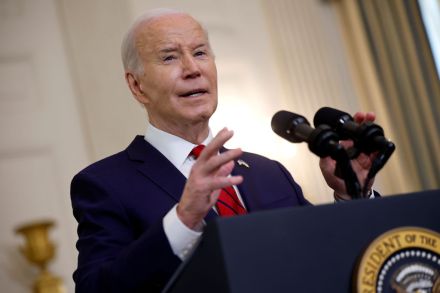
President Joe Biden and former president Donald Trump made dueling visits to the southern border this Thursday, as the issue of immigration becomes the political priority of millions of Americans. The latest Gallup survey (February 1-20) reveals that immigration ranks as the most important problem ahead of the 2024 presidential election. For context, 28 percent of Americans see the issue as the most crucial one, which is more than the following issues combined: federal deficit (3 percent), crime and violence (3 percent), foreign policy/foreign aid/focus overseas (3 percent), poverty/hunger/homelessness (6 percent) and inflation (11 percent).

biden trump border

Letters: Rod Liddle is on the side of experts

Work to do Sir: I agree with Kate Andrews’s diagnosis: the nation’s mental health is appalling and a major barrier to our economic prosperity (‘Sick list’, 24 February). I agree with her criticism of the treatment offered by the health service: we are failing to restore people to working health. Antidepressants are handed out like sweets while provision of talking therapy falls woefully short. What is missing from her otherwise excellent analysis is a consideration of aetiology. The pandemic unmasked, so to speak, but did not itself cause, a dearth of interpersonal connection in our society. We must all take responsibility for landing ourselves in this mess, and for finding a way out of it.

Which year was the worst for strikes? 

Populist roots Where did the term ‘populist’ come from? The original Populist party grew out of the Farmers’ Alliance, a movement set up to fight corporate interests in the US in the 1880s. It then joined with other minor parties to fight the 1892 presidential election under the Populist banner. Its candidate James B. Weaver won 8.5% of the vote and carried four states – Colorado, Idaho, Kansas and Nevada – with a set of left-leaning policies including free-collective bargaining, shorter working hours and lower interest rates. In spite of its success it broke up during the 1896 election campaign when many members chose to back the Democrat candidate William Jennings Bryan instead.

Net-zero targets have hamstrung British prosperity

Britain’s ‘net-zero economy’ is booming, creating more better-paid jobs than any other sector, but it is all being put at risk by the government’s reversal on policies on electric vehicles and heat pumps. That, at any rate, is what the Confederation of British Industry (CBI) and the Energy and Climate Intelligence Unit (ECIU) wants us to believe. In a report this week, these groups claim that the net-zero target has spawned an industry worth £74 billion, up 9 per cent in just a year. It has created 765,000 jobs which are 1.6 times as productive as the average UK job and which offer average wages of £44,600, compared with £35,400 for the rest of the economy.

Portrait of the week: Anderson’s outburst and Biden’s ceasefire prediction

Home Lee Anderson, a former Conservative party deputy chairman, had the whip withdrawn after responding to an article by Suella Braverman that said: ‘The Islamists, the extremists and the anti-Semites are in charge now.’ He said: ‘I don’t actually believe that the Islamists have got control of our country, but what I do believe is they’ve got control of [Sadiq] Khan and they’ve got control of London, and they’ve got control of [Keir] Starmer as well.’ He later added: ‘They are laughing at our police. This stems with Khan, he’s actually given our capital city away to his mates.’ Rishi Sunak, the Prime Minister, said the comments were ‘not acceptable. They were wrong’.

Hunter’s big day in Congress

From our US edition

Hunter Biden, the Biden family’s Mr. Worldwide, spent much of today behind closed doors in the Capitol for a deposition in front of the House Oversight and Judiciary Committees. The younger Biden accused Republicans on the committee of peddling lies and operating on the “false premise” that his father, President Joe Biden, had any involvement with his foreign business dealings, a focal point of the GOP’s impeachment inquiry.“I did not involve my father in my business,” Hunter said. “Never.” The first son has been on an image rehab tour, recently sitting down with Axios to discuss how his continued sobriety is essential in the “fight for the future of democracy.” Today’s deposition was a substantial departure from Biden’s previous Capitol Hill trip.

hunter biden

Ronna McDaniel hits the eject button

From our US edition

Ronna Romney McDaniel confirmed months of reporting on Monday by officially announcing her resignation as chairwoman of the Republican National Committee. She will step aside on March 8, a few days after the Super Tuesday primary contests.  “I have decided to step aside at our Spring Training on March 8 in Houston to allow our nominee to select a chair of their choosing,” McDaniel said in a statement. “The RNC has historically undergone change once we have a nominee and it has always been my intention to honor that tradition.” Given that former president Donald Trump is the presumptive Republican nominee — and that he has received McDaniel’s endorsement — he will choose her successor.

Trump’s unlikely ally in the NYC case

From our US edition

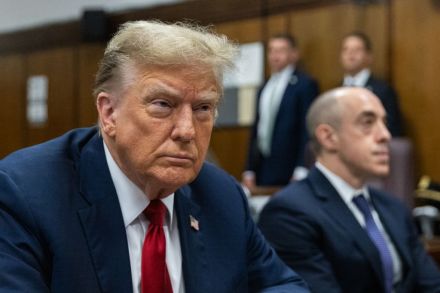
Former president Donald Trump is getting support from an unlikely ally: former Florida governor and presidential candidate Jeb Bush. Bush co-wrote an opinion piece in the Wall Street Journal on Wednesday arguing that the judgment in the New York civil fraud case is an example of “dangerous judicial rulings” against the left’s political opponents.“The unusual New York law Ms. James used to investigate and sue Mr. Trump didn’t require her to prove that he had intended to defraud anyone, or even that anyone lost money. The Associated Press found that of the twelve cases brought under that law since its adoption in 1956 in which significant penalties were imposed, the case against Mr. Trump was the only instance without an alleged victim or financial loss,” Bush wrote.

Letters: Rishi’s ‘road tour’ is not a good idea

Navy to the fore Sir: In Eliot Wilson’s stimulating article highlighting the lack of capability within our armed forces (‘Losing battle’, 17 February), he comments on the reduced size of the army and the fact that it would be pressed to contribute a brigade to any conflict in the near future. This reminded me of the strategic debate before the first world war and Professor Julian Corbett’s well-argued view that, as an island nation dependent ultimately on the sea lanes, the British role in a European conflict should be to keep maritime supply lines open for the Allies. British resources should therefore focus on the navy. The land battle should be left to the armies of our more numerous continental allies.

Does any country allow children to vote? 

Baby voters The Lib Dem Polly Mackenzie proposed giving people the right to vote from birth, with a proxy vote going to the under-tens. Does any country allow children to vote? – No country has a voting age lower than 16, although Iran allowed 15-year-olds to vote until 2007. Those countries that do allow 16- and 17-year-olds to vote are not all necessarily the most democratic. 16 Argentina, Austria, Brazil, Cuba, Ecuador, Isle of Man, Jersey, Malta, Nicaragua, Scotland (not UK general elections), Wales (not UK general elections) 17 East Timor, Greece, North Korea   Holiday homes Which areas of England and Wales have the highest proportion of properties used as second homes/holiday lets?