The Spectator

Favourite cocktails from Matthew Parris, Jeremy Clarke, Martin Vander Weyer and more

We asked our writers to write about their favourite cocktails, from aperitifs to nightcaps, all the way through to the hangover cures. Here’s what they said. Matthew Parris The Iron Lady For years in the 1980s I tried to develop a cocktail to be called the Iron Lady. There were problems: the signifier for iron is really red, while she was clearly blue; and the only blue liqueur I could find was Blue Curaçao. My final prototype consisted in vodka and Blue Curaçao, with a cube of ice impaled by a steel nail (freeze with nail in place, or heat the nail and push it through). It was OK — but the Curaçao was so sweet that you could only use a little, and the whole thing lacked the kick or bite that I think she would have wanted.

Lesson of the Autumn Statement? Boldness is best

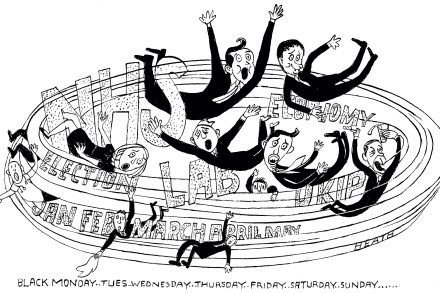
Here is a preview of the leading article from this week's Spectator, out tomorrow, on George Osborne's Autumn Statement:  When George Osborne first became Chancellor, he asked to be judged on his ability to reduce the deficit. He does not make that request any more. This year’s deficit is almost three times higher than the £37 billion he originally planned, but he understandably glossed over this point when delivering his Autumn Statement. He has other interests now: pension reform, building motorways, or spending more on GPs. The mission to balance the books has been delayed until the end of the decade — or, perhaps, the start of the next. He said this week that his extra spending was made possible by ‘the hard decisions that we have taken’.

Full text: George Osborne’s 2014 Autumn Statement

Mr Speaker, Four years ago, in the first Autumn Statement of this Parliament, I presented the accounts of an economy in crisis. Today, in the last Autumn Statement of this Parliament, I present a forecast that shows the UK is the fastest growing of any major advanced economy in the world. listen to ‘Osborne's Autumn Statement in full’ on audioBoom Back then, Britain was on the brink. Today, against a difficult global backdrop, I can report: higher growth, lower unemployment, falling inflation, and a deficit that is falling too. Today a deficit that is half what we inherited. Mr Speaker, our long term economic plan is working. Now Britain faces a choice.

The Spectator at war: The waste of war

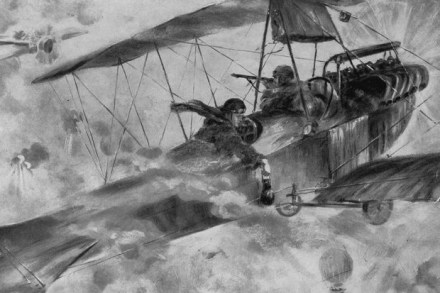
From The Waste of War, The Spectator, 5 December 1914: The destruction which the Germans have wrought in the towns and villages they have occupied is a net loss to the world. Before the war began these aspects of war had impressed the minds of many writers even more than now appears to be justifiable. We had, for example, the famous book of the Russian writer M. Jean Bloch, who, at the end of the nineteenth century, demonstrated to his own satisfaction that a European war would not take place, because it would involve such wholesale destruction and such a universal increase of prices that normal human life would become impossible. M. Bloch was followed by Mr. Norman Angell. Events have shown the complete unsoundness of these calculations.

The Spectator at war: The King at the front

From NEWS OF THE WEEK, The Spectator, 5 December 1914: THE King has been at the front during the past week, and as we write is still there. Indeed, it was stated in Friday's newspapers that the visit, which has proved eminently satisfactory from every point of view, is likely to be further prolonged. We sincerely hope that this may be found possible. That the King is exceedingly glad to be at the front no one will of course doubt for a moment. It is equally certain that it is a great pleasure and source of satisfaction to the Generals, officers, and rank-and-file of the Army to see His Majesty in the field. There is always a certain sense of isolation among troops in action, even if they are only fifty or sixty miles from England, as in the present case.

The best and the worst of Gordon Brown

Tonight Gordon Brown announced he will stand down as an MP at the next election. Current political leaders have been paying tribute, with Ed Miliband calling his old boss a 'towering figure', while David Cameron said he was 'someone dedicated to public service and has worked very hard for other people'. Even those who worked with Brown accept in their tributes to their former boss that he wasn't perfect, while pointing out the good they felt he did in his long spell in frontline politics. So what were Brown's good and bad bits? Spectator editor Fraser Nelson and our political editor James Forsyth pick one of each: Fraser Nelson Good: He tested to destruction the idea that more money is the remedy for bad public services. Thanks to him, no one will make that mistake again.

The Spectator at war: The great game

From The Spectator, 28 November 1914: Professional football is something worse than an excuse for young men who refuse to do their duty. It is actually an incentive to them to continue their lives in the ignoble ordinary way, because the very continuance of the games suggests that everything is going on as usual.

David Cameron’s immigration speech: full text

Today I want to talk about immigration. Just as this government has a long term plan for where we are taking our country so within that we have a long-term plan for immigration. Immigration benefits Britain, but it needs to be controlled. It needs to be fair. And it needs to be centred around our national interest. That is what I want. listen to ‘David Cameron's immigration speech’ on audioBoom And let me tell you why I care so passionately about getting this right – and getting the whole debate on immigration right in our country. When I think about what makes me proud to be British yes, it is our history, our values, our creativity, our compassion but there is something else too.