Nice Guy
In with the new How the new year is being celebrated around the world. From 1 January… BRITAIN: Annual Investment Allowance for businesses cut from £500,000 to £200,000. Deposit Guarantee Limit for savers — the sum which the government will refund to savers after a bank collapse — is cut from £85,000 to £75,000. Drink industry workers face a fine unless they sign up with the Alcohol Wholesaler Registration Scheme. RUSSIA: Food imports from Ukraine banned. SWITZERLAND: Cost of private language schooling no longer tax-deductible. SOUTH AFRICA: Carbon tax introduced. Out with the old In 2015… — 142m people were born and 56m people died, making for population growth of 83m. — 2,030m tonnes of grain were harvested.
What Blair omitted to say Sir: Mr Blair’s latest in these pages, like his recent Foreign Affairs Committee appearance on Libya, papers over so much history that one hardly knows where to start (‘What I got right’, 12 December). His own Libyan history will do. We all know the ‘deal in the desert’, whereby Gaddafi relinquished a feeble ‘WMD’ programme to come in from the cold, lift the sanctions, and pave the way for oil deals. What was not known until 2011 was the real price of this bargain. The price was a UK-US-Libyan conspiracy to kidnap two whole families from exile and ship them to Gaddafi. Had we not seen the proof in black and white after the dictator’s fall, who would have believed it? But documents don’t lie.
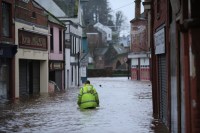
As the chairman of the Committee on Climate Change, Lord Deben, observed this week, there is a bizarre dislocation between the government’s pronouncements on climate change and its attitude towards spending on flood defences. Only a month ago, David Cameron was at the Paris climate summit lending his weight to apocalyptic warnings of flood and tempest unless the world acted quickly to reduce carbon emissions. Yet with tracts of northern cities underwater, his government continues with a make-do-and-mend flood-defence policy which, never mind climate change, is incapable of dealing with the climate we already have. While lecturing us on the threat of greater rainfall and rising sea levels, the government has reduced spending on flood defence.
Home Thousands of houses were flooded in York, Leeds, Manchester and other parts of Lancashire and Yorkshire, after weeks of repeated flooding in Cumberland and Westmorland. On the River Foss in York, a flood barrier was lifted to avoid even more houses being flooded by keeping it in position. Tim Peake, the British astronaut in the International Space Station, tweeted a photograph of northern England as he passed overhead and said that his ‘thoughts are with all those affected by flooding’. After a fund-raising drive, two brothers from Leicestershire, aged 11 and seven, born without toes, were given silicone ten-toed feet to wear like galoshes over their own. The growth of Britain’s economy in the third quarter of 2015 was revised to 0.4 per cent from an earlier 0.
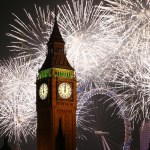
January David Cameron, the Prime Minister, said that only electing the Conservatives could ‘save Britain’s economic recovery’. Labour unveiled a poster saying: ‘The Tories want to cut spending on public services back to the levels of the 1930s,’ and Ed Miliband, the party leader, said he would ‘weaponise the NHS’. Two male ‘hedge witches’ were wed under the equal marriage law in a pagan ceremony in Edinburgh. Alexis Tsipras became prime minister of Greece, heading a Syriza coalition. In Paris, gunmen murdered 17 people, 11 at Charlie Hebdo, the magazine that had published cartoons of Mohammed. The price of Brent crude oil dipped below $50 a barrel, down from $107 a year earlier.
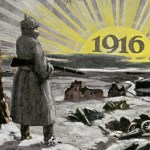
From ‘The Military Situation’, The Spectator, 1 January 1916: The opening of a new year is a time for taking stock of our situation. When we look back upon the beliefs and predictions of a year ago, we have to admit that there have been many disappointments and that unforeseen things have happened; but war would not be war if it were not full of surprises. We have as much to be thankful for as to deplore, and on the whole we think there is a good balance to our credit. We are a visibly winning people. If we were a losing people, we should be lamenting by this time all sorts of disintegrating movements and crumbling processes.
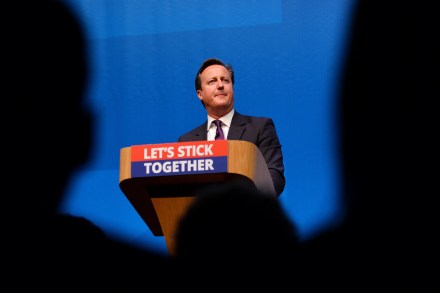
Last year, the United Kingdom came within 384,000 votes of destruction. A referendum designed to crush the Scottish nationalists instead saw them win 45 per cent of the vote — and become stronger than ever. Since then, the SNP has taken almost every Scottish seat in the Commons and is preparing for another landslide in the Holyrood election next year — giving Nicola Sturgeon the power to threaten a second referendum. We may be just a few years away from a second battle for Britain. In her short time as First Minister, Sturgeon has established herself as one of the most formidable politicians in Europe. She has raised a rebel army that she inspires with talk of destiny and dreams — while her opponents drone on about banks and the Barnett formula.
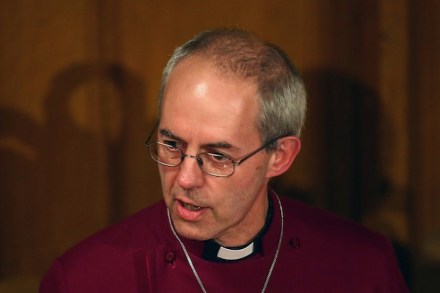
In the Spectator's Christmas treble issue, Michael Gove speaks to the Archbishop of Canterbury, Justin Welby. Below are some outtakes from the interview. On the supposed decline of religious belief I don’t believe that that was then or is now an accurate perception. Church attendance in this country has fallen hugely both in absolute terms and as a proportion of the population. The number of Christians around the world has risen hugely since the nineteenth century and continues to rise at an extraordinary rate: it is over two billion now. So we’re seeing a change in the pattern of where the church is: the Anglican Communion is essentially global, as much for a sub-Saharan woman and not just someone in a church in England.
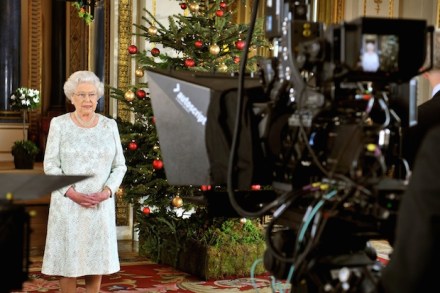
Jacob Rees-Mogg The three highlights of my Christmas are Midnight Mass at Downside Abbey, children tearing open their presents and the Queen’s Speech. For a successful Christmas, avoid tiresome, Cromwellian stuffiness. Susan Hill A friend always has a pork pie for breakfast on Christmas Day, but I have nothing so original to offer. We do, however, always have smoked salmon for lunch and eat a turkey – with all the trimmings, naturally – in the evening. At Christmas, never ever ever tell the truth. To the cook: ‘Well, I don’t think it was cooked right through.’ To the child: ‘You’re a bit too old to believe in him still.
For the Spectator’s Christmas survey, we asked for some favourite seasonal rituals – and what to avoid at Christmas. Niall Ferguson Every Christmas — or, to be precise, every Hogmanay — all the members of the jazz band I played in at university gather together with their families at our place in Wales. We eat and drink gargantuan amounts and play music with steadily deteriorating precision. It is a wonderful way to see in the new year. Annie Nightingale My favourite ritual is visiting people, and I have some rules. A bottle of bubbly to each. Be charming, be fun, but be brief. Quit while you’re still popular. Then you can book a cab home to watch Some Like It Hot and High Society. Now that’s what I call Christmas.
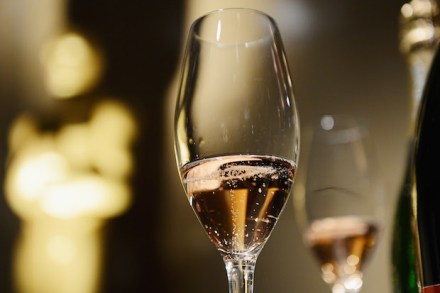
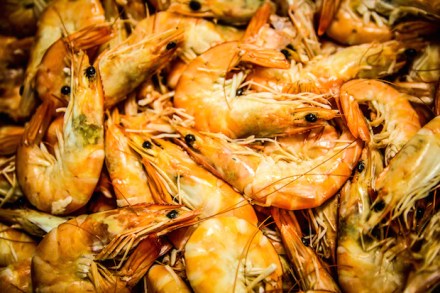
For the Spectator’s Christmas survey, we asked for some favourite seasonal rituals – and what to avoid at Christmas. Tim Rice ‘Once In Royal David’s City’ (all six verses, please) is the thing I love most. For a successful Christmas, avoid prosecco and prawns. Prosecco is not my favourite taste and prawns can play havoc with your stomach. Jilly Cooper My husband Leo and I used to dream up our own Christmas cards, and I still do. One year we had three black labradors in turbans in the middle of the desert. The caption was: ‘There came three wise dogs from the East, bearing bones, and being wise they ate them.
For the Spectator's Christmas survey, we asked for some favourite seasonal rituals - and what to avoid at Christmas. Helen Lederer I enjoy the annual eating of chocolate money on Christmas Eve — it has been bought to be stuffed in the toe of each stocking — and then having to do a search of all the sweet shops for replacements, by which time everyone has sold out of chocolate coins. Sometimes two trips are required if the second lot also gets eaten before the stocking is handed over. Playing a board game that has not been road-tested is always a bad idea. My worst one was a charity-shop purchase for wine snobs, which was not only complicated beyond belief, but also had bits missing.

For the Spectator's Christmas survey, we asked for some favourite seasonal rituals - and what to avoid at Christmas. Dan Snow My favourite thing is being allowed to ignore my phone and email for days on end, re-engaging with that vaguely remembered place, the now. However, avoid overindulgence the night before Christmas. The kids will wake up on the happy morn earlier than seems possible. Even by their own nocturnal standards. Alain de Botton My favourite ritual is reminding everyone involved that we will, of course, be having a sad and tense Christmas; there will be arguments, frustration, bitterness and barely suppressed longings to be elsewhere with other (better, more interesting) people.
For the Spectator's Christmas survey, we asked for some favourite seasonal rituals - and what to avoid at Christmas. Clare Balding I love a good walk on Boxing Day followed by watching the racing at Kempton. Avoid the internet. Be present in the moment, enjoying time with family rather than being distracted by online conversations. John Rutter I conduct Christmas concerts around the country in the weeks before Christmas, so by the time the day comes, I’m ready to veg out, going to Christmas morning service in King’s College Chapel (sitting back while someone else does all the hard work), and enjoying food, drink and family at home.