Garden Fence
What might have been Sir: Harry Mount points out that Boris Johnson is two years older than David Cameron (Diary, 27 February). Both, however, began their careers in the same year. On 15 June 1988 I interviewed David Cameron for a post in the Conservative Research Department; on 26 July it was Boris’s turn (‘Johnston’ in my diary). The former was signed up to cover trade and industry issues (memorably forgetting the trade figures when Mrs Thatcher asked him for them). Boris was invited to follow in the footsteps of father Stanley, who had been the department’s first environment expert in the Heath era. But journalism lured him away. Would they have forged a lifetime’s close and harmonious friendship if Boris had reached a different decision?
You can’t do that there ’ere Some of the things which have been banned under Public Spaces Protection Orders, according to a report by the Manifesto Club: Kettering More than four people standing within vicinity of a motor vehicle. Guildford Shouting. Hillingdon Gathering in groups of more than two unless waiting for a bus. Blackpool Engaging in card tricks. Birmingham Wearing face coverings. Shepway Sleeping in a public place. Brent Offering casual work. Shop talk The British Retail Consortium has claimed that 900,000 jobs could be lost by 2025 thanks to the minimum wage and the shift to online sales. Who are the 2.9 million people who work in the retail business? — One third are under 25. — Half work part-time. — 58% are female, 42% male.

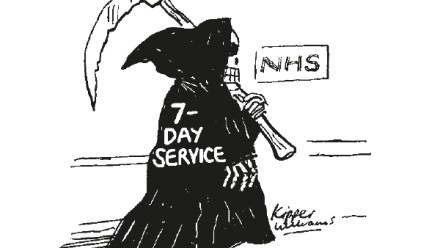
Home An official analysis by the Cabinet Office said that if Britain left the EU it would lead to a ‘decade of uncertainty’. Opponents of Britain remaining in the EU called the report a ‘dodgy dossier’. George Osborne, the Chancellor of the Exchequer, said that the economy would suffer a ‘profound economic shock’ if Britain left, echoing a communiqué of the G20 which referred to ‘the shock of a potential UK exit’. Boris Johnson revised his suggestion that a vote to leave could bring about a better deal from Brussels; ‘Out is out,’ he told the Times. Sir Jeremy Heywood, the Cabinet Secretary, declared that ministers opposing government policy on the referendum should not be shown government papers on the matter.

One of the marks of a good Home Secretary is a healthy wariness of those in authority who come begging for ever-greater powers. The former Labour Home Secretary Charles Clarke failed on that score. Just over a decade ago, the police persuaded him that they needed the freedom to lock up terror suspects for 90 days without trial. The rebels who defeated the Labour plan were right: ten years later no one has presented a case of a suspect who committed an act of terror because they had to be released before the 90 days were up. Theresa May, who has confronted the police unions with such admirable fortitude, is now showing worrying signs of falling into the same trap as Clarke.

In this week's issue, Freddy Gray discusses Donald Trump's success on Super Tuesday. America has been the world's most benevolent superpower, Freddy says, but now its turning nasty. What does Trump's rise say about America? On the podcast, Freddy tells Isabel Hardman: 'It actually says something quite troubling about America. I think the rise of Trump suggests that America's can-do spirit and very positive outlook on the world is changing. I don't think it's isolationism so much as more a kind of nastiness, that Trump reflects. It's a result of the disappointment in Obama. Trump is a sort of bitter, anti-Obama.

From ‘Henry James’, The Spectator, 4 March 1916: Englishmen are not likely ever to forget the generous thought which inspired the late Henry James to become a naturalised Englishman at the moment of England’s greatest distress… Henry James was good enough to say in substance that he was proud of England and her cause, and that he wished to stand with her in her trial. And now on the sorrowful occasion of his death every Englishman, care he much or little for the great art which the dead man cultivated, will wish to say that he is proud of Henry James.
In defence of the heads Sir: It is fair for Ysenda Maxtone Graham to criticise heads who garner publicity but neglect the core business of good teaching, if such people exist (‘Big heads’, 20 February). However, targeting Anthony Seldon and Richard Cairns was a mistake. Although both may be what my wife calls ‘media tarts’, Seldon saved two schools which were in great financial difficulties by hugely increasing the number of applicants and Brighton College under Cairns has maintained its trajectory to the upper reaches of the league tables, becoming one of the largest independent schools in the country in the process. Both heads have been outstandingly successful, creating secure and dynamic schools. Both, incidentally, are great classroom teachers.
Vote no, vote often David Cameron scorned Boris Johnson’s idea that voting to leave the EU might result in further reforms followed by another referendum. History, though, would side with Boris. — In June 1992 Denmark rejected the Maastrict Treaty, with 50.7 per cent voting against in a referendum. Denmark was granted four opt-outs, including from the single currency, and held another referendum a year later. — Ireland rejected the Lisbon Treaty in a 2005 referendum, with 61.5 voting against. After several concessions, Irish voters approved it a year later. — An ‘out’ vote might serve British teams well at the European football championships. In the same month that Denmark voted no to Maastrict they also won the competition.
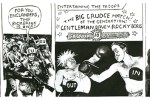
Home David Cameron, having continued talks through the night in Brussels, announced that he had achieved a ‘special status’ for Britain in the European Union and would call a referendum on it for 23 June. One concession he had wrung was that, for seven years, Britain could decide to limit in-work benefits for EU migrants during their first four years in Britain. ‘I do not love Brussels; I love Britain,’ he said. The cabinet met next morning, and six members left by a back door to promote their support for the campaign to leave. The biggest beast among them was Michael Gove, and the others were Chris Grayling, Iain Duncan Smith, Theresa Villiers, John Whittingdale and Priti Patel.

Imagine if Nigel Farage declared that police should be ready to shoot migrants trying to make it from Calais to Britain; saying: ‘I don’t want to do this, but the use of armed force is there as a last resort.’ And imagine that in spite of this — or perhaps because of it — Ukip were to overtake the Labour party in a national poll to become the most popular opposition party. This, in effect, is what is happening in Germany. The words above were spoken by Frauke Petry, leader of Alternative für Deutschland (AfD), the insurgent party which is threatening to make large gains in state elections in three key German regions next month.

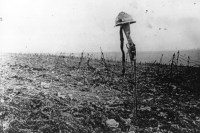
From ‘Justice and Security’, The Spectator, 26 February 1916: If the conditions upon which we are willing to make peace are to be summarised, they cannot be summarised better than by the words Justice and Security. It is for these that we and our Allies are fighting. These are the signs in which we shall win. We do not believe, and never have believed, in the talk about the nation coming out of the war ruined and crippled, and with no capacity left in us to rebuild our civilisation. On the contrary, we are convinced that when the war is over the nation will go forward with renewed energy, not only on the moral and intellectual but on the economic plane.
I have spent the last nine months setting out the four areas where we need reform and meeting with all 27 other EU Heads of State and government to reach an agreement that delivers concrete reforms in all four areas. Let me take each in turn. First, British jobs and British business depend on being able to trade with Europe on a level playing field. So we wanted new protections for our economy; to safeguard the pound; to promote our industries – including our financial services industries; to protect British taxpayers from the costs of problems in the Eurozone and to ensure we have a full say over the rules of the single market, while remaining outside the Eurozone. And we got all of those things.
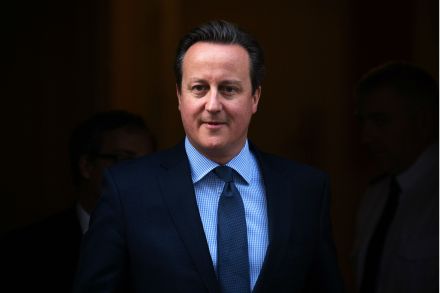
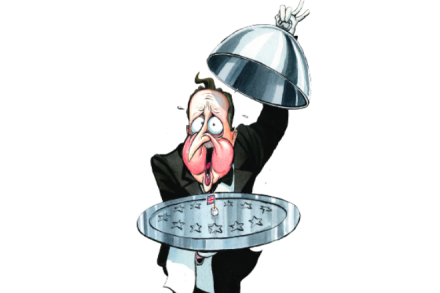
[audioplayer src="http://rss.acast.com/viewfrom22/spectatorpodcastspecial-davidcameronseudeal/media.mp3" title="David Cameron seals the EU deal - but is it any good? Isabel Hardman, James Forsyth and Fraser Nelson discuss" startat=18] Listen [/audioplayer] So in the end, David Cameron’s attempt to renegotiate Britain’s EU membership served to remind us of the case for leaving: the EU is designed in such a way that almost no sensible proposal can be passed. Its negotiations start after dinner, and are designed to drag on until 5am - a formula designed to stifle debate, and to wear people down. The Prime Minister was kept waiting until 10pm to be told that he had agreement on a deal - but one perforated by the bullet holes of other member states.