Tanya Gold

Tanya Gold

Tanya Gold is The Spectator's restaurant critic.

A light in the darkness: Home Kitchen reviewed

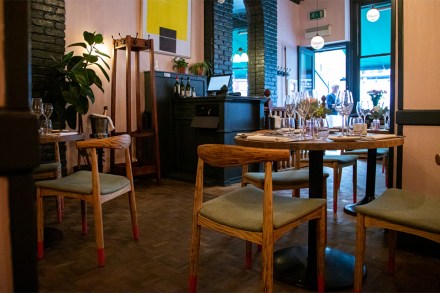
Home Kitchen is in Primrose Hill, another piece of fantasy London, home to the late Martin Amis and Paddington Bear. It is a measure of the times that Elizabeth II had no literary chronicler – no Amis, no Proust for her – but was, almost against her will, given Paddington Bear instead. When I saw the small bear at her memorials, I thought: is that her genre? Infants’ fiction? Couldn’t she do better? The question that follows is, of course: would they have eaten together at Home Kitchen? The barley is doughty, fragrant and from the earth.

I am addicted to Rolls-Royce

Rolls-Royce calls the Cullinan Series II, the new version of its 2018 ‘high-sided vehicle’ (read SUV), its ‘most capable’ motorcar. That is an understatement. Rolls-Royces can be understated because they are bespoke and, as such, they are what you want them to be. You are dropping the price of a house on a motorcar, after all – the parallels with sexual longing are obvious, if under-disclosed. For every hot pink, or blush pink, Phantom with an interior ceiling lit up as your late dog’s face or horoscope – they can do this – there is an inky Ghost impersonating Bette Davis’s black silk dress in All About Eve. That’s my Rolls-Royce. Mostly, I like them black and white, like chessboards. But they are infinite. No one can touch you in a Cullinan.

Christopher Caldwell, Gus Carter, Ruaridh Nicoll, Tanya Gold, and Books of the Year I

34 min listen

On this week’s Spectator Out Loud: Christopher Caldwell asks what a Trump victory could mean for Ukraine (1:07); Gus Carter argues that leaving the ECHR won’t fix Britain’s immigration system (8:29); Ruaridh Nicoll reads his letter from Havana (18:04); Tanya Gold provides her notes on toffee apples (23:51); and a selection of our books of the year from Jonathan Sumption, Hadley Freeman, Mark Mason, Christopher Howse, Sam Leith and Frances Wilson (27:08).  Produced and presented by Patrick Gibbons.

Toffee apples: a dangerous food for frightening nights

Bonfire night is more about burning Catholics than haute cuisine and it shows. I’ve always felt for Catholic friends at this time of year, but I am a Jew, and I am told I am oversensitive. It’s also three decades since I made £150 doing ‘Penny for the Guy’ on Hampstead High Street. The last time I went to a bonfire night party it was hosted by a Catholic, and this confused me, until I remembered: she is an English Catholic. If Christmas is for the goose, and Easter for the hot cross bun, bonfire night has the toffee apple. Because this is a desolate festival, it has neither toffee on the apple – we will get to that – nor, too often, a bonfire. I’m not for burning Guido in effigy like those pyromaniac loons in Lewes, about whom I always think: who will they burn next?

You’re spoiling us: The Ambassadors Clubhouse reviewed

The Ambassadors Clubhouse is on Heddon Street, close to Savile Row and the fictional HQ of Kingsman, which was a kind of privatised MI6. I wonder if the Kingsmen eat here, being clubmen. Heddon Street needs fiction because its reality is one-dimensional. It is an alleyway behind Regent Street, and it used to be interesting. There was an avant-garde café under the Heddon Street Kitchen called The Cave of the Golden Calf. Ziggy Stardust was photographed for his album cover outside No. 23; from Heddon Street you could hear the Beatles play their final concert on the roof of 3 Savile Row in 1969. This is dense, fierce, very sophisticated food and it is all superb But that is over.

A teashop like no other: Sally Lunn’s Historic Eating House reviewed

Sally Lunn’s is a teashop in Bath. It sits in a lane by the abbey, and the Roman baths. Paganism and Christianity jostle here: Minerva battles Christ, who wins, for now. Sally Lunn’s calls itself ‘the oldest house in Bath’ (c. 1482). It is rough-hewn, with a vast teal window and pumpkins on display. The pumpkins might be plastic. I don’t know. Tourists queue in the hallway behind a large wooden cutout of a woman who might be Sally Lunn. She is a semi-mythical woman: the Huguenot refugee Solange Luyon, who came to Bath in the 1680s with brioche in her hands. No one knows if she really existed.

An inedible catastrophe: Julie’s Restaurant reviewed

At Julie’s at the fag end of Saturday lunchtime, Notting Hill beauties are defiantly not eating, and the table is covered with crumbs. Restaurant Ozymandias, I think to myself. This is no longer a district for the perennially wracked, or unrich. The Black Cross – Martin Amis’s ideal pub in London Fields – is now a sushi joint. Of course it is. The omelette is bright yellow and tough, like a hi-viz croissant Julie’s, which is named for its first owner, the interior designer Julie Hodgess, mattered in the 1980s.

As good as Noble Rot: Cloth reviewed

Cloth is opposite St Bartholomew the Great on Cloth Fair. People call this place Farringdon, but it isn’t really: it belongs to the teaching hospital and the meat market and William Wallace who died a famous death here and has only a little plaque in turn. Smithfield embraces the dead. Sherlock Holmes met Dr Watson here and, for BBC1, jumped off the roof of the hospital. If Cloth calls itself a ‘neighbourhood wine bar’, which sounds less threatening than ‘restaurant’, its true customers are the dead, and that is no criticism. The chips are marvellous, and this matters. I always judge a restaurant on the chips I am early, so I sit in St Bartholomew the Less – this is how buildings fight!

Curiously understated: Porthminster Kitchen reviewed

Porthminster Kitchen sits above Warren’s Bakery on St Ives Harbour, like a paradigm of the British class system in food. This happens everywhere, but it is particularly pronounced in St Ives, which is unlucky enough to be a site of pilgrimage for Virginia Woolf addicts – her childhood holiday home sits above the town, her lighthouse is on the bay – and other feckless Londoners. But the balance is long lost. Since the Tate Gallery arrived in 1993, Cornish natives, who used to live alongside artists – Barbara Hepworth, Patrick Heron – have left the old town (‘downalong’).

Joan Collins, Owen Matthews, Sara Wheeler, Igor Toronyi-Lalic and Tanya Gold

30 min listen

On this week’s Spectator Out Loud: Joan Collins reads an extract from her diary (1:15); Owen Matthews argues that Russia and China’s relationship is just a marriage of convenience (3:19); reviewing The White Ladder: Triumph and Tragedy at the Dawn of Mountaineering by Daniel Light, Sara Wheeler examines the epic history of the sport (13:52); Igor Toronyi-Lalic looks at the life, cinema, and many drinks, of Marguerite Duras (21:35); and Tanya Gold provides her notes on tasting menus (26:07).  Presented and produced by Patrick Gibbons.

The unappetising truth about tasting menus

The tasting menu has fallen from fashion, and this is good. They are a curio – a window to the chef’s soul – and they have always incited more pity in me than awe. They draw the chef’s subconscious on the plate, and it isn’t always palatable; or, rather, it is too complex for joy. In their own words, they are unhappy. In The Devil in the Kitchen, Marco Pierre White writes that he was haunted by the loss of his mother, and his kitchen was an attempt to recover her. ‘I suppose,’ he wrote, ‘I was trying to kill myself but sacrificing your health for your career was all the rage.’ Bernard Loiseau (three Michelin stars) killed himself in 2003. Anthony Bourdain killed himself in 2018.

A slice of Paris in Crouch End: Bistro Aix reviewed

There is a wonderful cognitive dissonance to Bistro Aix. It thinks it is in Paris but it is really in Crouch End, the flatter twin to Muswell Hill, a district so charismatic it had its own serial killer in Dennis Nilsen. (He killed more people in Willesden, but Willesden doesn’t receive its due: here or anywhere.) We pick our way through the Versailles of north London, past Little Waitrose and the clock tower I have never thrived in Paris. My sister says I always go with the wrong men, which is unfair, because it was a school trip and I had no choice about the (very small) men. I prefer the Paris of my imagination, which is quite a lot like Bistro Aix in Crouch End.

A French restaurant Glastonbury would be proud to host: Café Lapérouse reviewed

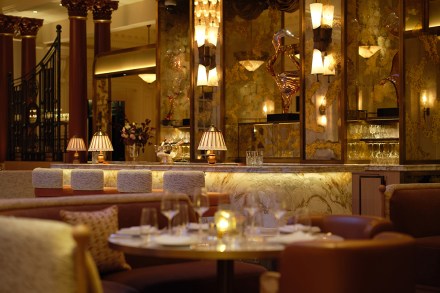
I am working my way around the restaurants of the Old War Office (OWO), now an acronym and Raffles hotel on Whitehall, because the swiftness with which the great institutions of the state have become leisure opportunities for the wrongfully rich is dark, mesmerising and, if you don’t mind too much anarchy, funny. I have reviewed the cold, painted Saison, and the lively Italian Paper Moon, which a kind reader wrote to say he loved and which I do not expect to survive. It is too joyful and well-priced for the wrongfully rich and their internal landscape of nude cashmere and paranoia. It squeaked through. The transience of the exterior is not mirrored within. The opposite is true Here, now, is Café Lapérouse in the courtyard.

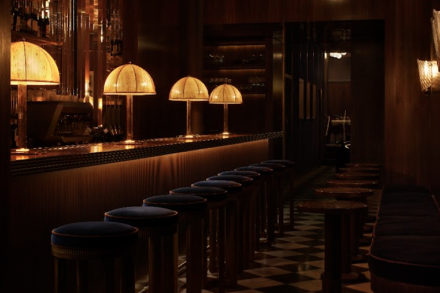
Jeremy King has done it again: The Park, reviewed

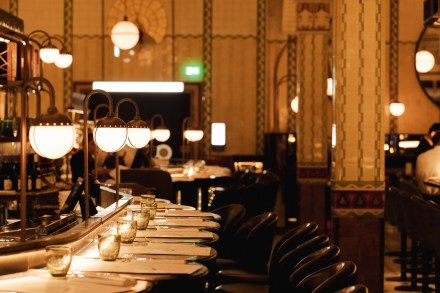
The Park is the new restaurant from Jeremy King, and it sits in a golden building to the north of Hyde Park, just off Queensway. This is an interesting district compared with Knightsbridge – it is still capable of reality – but isn’t every-where interesting compared with Knightsbridge? The Park is Art Deco of course: the presiding aesthetic of familiarity, snatched joy and inevitable doom. It looks like an exquisitely appointed cruise ship of the mid-20th century King is a specialist in grand cafés. He opened the Wolseley in Piccadilly and the Delaunay on the Aldwych, though he lost them to his feckless backers in 2022, and has begun again with Arlington by the Ritz, Simpson’s on the Strand, pending, and this. Queensway has a grand café now, and I am pleased for it.

‘An uneasy place’: Chez Roux at The Langham reviewed

The Langham is a Victorian Gothic hotel opposite the BBC in Portland Place. It’s an odd place: haunted house near the wreckage of Newsnight. Perhaps I think this because the last time I came here I interviewed Jeremy Paxman about his ghosts: when he was anxious he banged the wall. The time before, my godmother collapsed at tea in this very room, now Chez Roux. It’s a vast, dimly lit silver space. The lights are long and slender, like giant earrings. Palms wobble. A palm court is a Victorian conceit; the Titanic also had one. I wonder if they were here for Napoleon III, Guy Burgess, or Sherlock Holmes. I wonder how they stay alive in darkness. Le Gavroche closed in January, and if it hasa successor, it is this It’s a hard thing to dress, a windowless room.

‘An exceptional roast lunch’: Quality Chop House reviewed

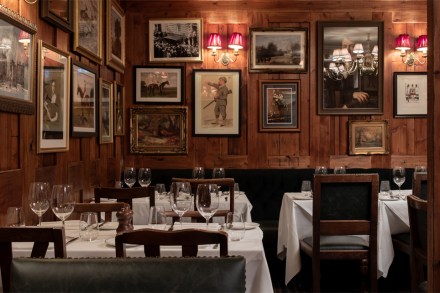
The oldest and best chophouse in London was Simpson’s Tavern in Ball Court Alley off Cornhill (since 1757 on that site): Charles Dickens’s favourite chophouse, and mine. Simpson’s was locked out by landlords who impersonate cartoon villains at the end of 2022 for failing to pay pandemic arrears promptly. Simpson’s said they survived world wars, the plague and the Industrial Revolution, but not a landlord who doesn’t understand chops. (This part I paraphrase.) We settle into a spindly table for what is, by any measure, an exceptional roast lunch Court proceedings are ongoing: meanwhile it’s a ruin. It was vandalised in May, as these things tend to be. Now it is empty, and ornamental books tumble out of smashed windows.

‘Grand and isolated’: The Wolseley City, reviewed

I am fretting about this restaurant column’s election coverage and then I alight on something superficially grand and lovely, which has been hollowed out and is now useless and barely able to function: a shell. It is the Wolseley 2 – the Wolseley City – and this is perfect. I name it the election restaurant, and Tories should eat here while they still have their shirts Few restaurants are important, though I treasure Martha Gellhorn’s description of an operating theatre for the wounded of the Spanish Civil War which was once a restaurant in a grand hotel. But was it any good? Tales of society folk eating are self-serving: real history happens nowhere near them, says the Marxist in me – and PR is, well, PR.

‘Great restaurants can’t thrive in Hampstead’: Ottolenghi reviewed

Ottolenghi is an Israeli deli co-owned by Yotam Ottolenghi, an Israeli Jew, and Sami Tamimi, a Palestinian Muslim. They met in Baker & Spice in London, where they bonded over the dream of persuading more British people to eat salad. This is an ideal story of co-existence (I have met a group of Israeli Jews and Arabs dieting for peace) and I thought the new Ottolenghi in Hampstead might be picketed by idiots shouting for peace but meaning war. (Martha Gellhorn was right about slogans. Never shout them: even ones you agree with.) It is fine in that I wish I were in the Middle East to eat the original But this is Hampstead, not Bloomsbury, and there aren’t any pickets.

‘Vital but fraying’: Five Guys reviewed

Five Guys is a burger house from Arlington, Virginia, based on the premise that if you can serve a drink, cut a fringe, or make a hamburger, you will always make money in America. Thirty years and 1,700 restaurants later, it sits on Coventry Street off Piccadilly, soaking up the alcohol of a thousand British stomachs. If central London is a strip-lit bin alley between palaces, this is its restaurant: vital but fraying. I am here because I will not eat at McDonald’s, even when I am sad. I do not think my McDonald’s burger is all from the same cow, and this disturbs me: I can eat one cow happily, but a multitude frightens me. McDonald’s doesn’t fill you either, no matter what you eat: is it just an idea?

‘Five stars, no notes’: Arlington reviewed

Arlington is named for the 1st Earl of Arlington and his street behind the Ritz Hotel. It used to be Le Caprice, which was opened in 1947 by the Italian Mario Gellati, who would not, by the new rules, get into Britain now, but this is not a column about pain. In 1981 Le Caprice was taken over by Chris Corbin and Jeremy King, and it became the most fashionable restaurant in London. Princess Diana dined here and when Jeffrey Archer was released from prison, he ate here. None ofthese dishes could be improved. Five stars, no notes After an interregnum from Richard Caring, under which Le Caprice closed in 2020 – it could not compete with Caring’s mad themed restaurants across Piccadilly – Jeremy King, who is more emotional and skilful than most restaurateurs, returned here.