Suzanna Murawski

The secrets of Henri Rousseau

From our US edition

Henri Rousseau (1844-1910) was so earnest that it landed him in jail. When a former student asked him to use forged identity papers to open a bank account, Rousseau, who was then in his sixties, was happy to help out his old acquaintance. He seemed unaware that he was doing anything more than a favor, let alone committing fraud. To prove the painter’s innocence, his lawyer brought one of his canvases before the jury and declared: “You do not have the right to condemn a primitive.” The works that result from such legendary naivety are on view at the Barnes Foundation in Henri Rousseau: A Painter’s Secrets.

Inside the Inca ritual of child sacrifice

From our US edition

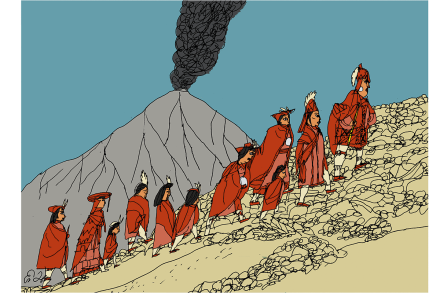
The children of Llullaillaco don’t look too different from the living children I’ve seen around Salta. They’ve got the same diamond-shaped faces, pecan-colored skin and straight, pitch-dark hair. Of course, the children of Llullaillaco are smaller, as people five centuries ago were wont to be – and dead. I’m talking about three Incan child-sacrifice mummies, estimated ages five, six and 15. As of about 25 years ago, they’re permanent residents of Salta, Argentina, the capital of a province of the same name in the country’s northwest. As the crow flies, the city isn’t that much closer to Buenos Aires than to Lima. Due west of Salta, in the Andes, is the peak of the volcano Llullaillaco.

inca Llullaillaco

Man Ray is alluring in the way a psychopath is

From our US edition

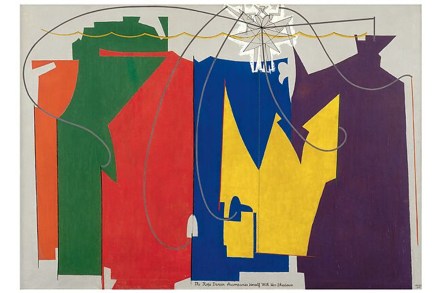
Down to his chosen name, Man Ray (born Emmanuel Radnitzky in Philadelphia in 1890) worked hard to squash anything about him you might call human. At least that’s what is suggested by the Met’s exhibition Man Ray: When Objects Dream. The show spans much of his career – he was associated with surrealism and dada, held a day job as a commercial photographer and experimented with almost every medium imaginable – but coheres around his so-called rayographs, also known, in less egotistical fashion, as photograms. Many will know this medium from elementary school: place objects on top of a light-sensitive sheet and expose them to light to yield white silhouettes against a dark background.

man ray

Vermeer’s Love Letters is something of a riddle

From our US edition

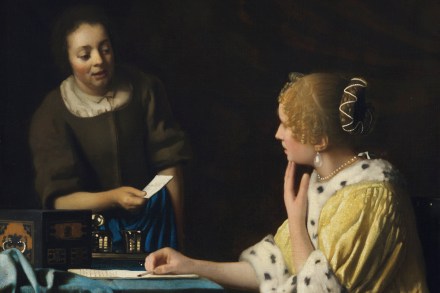
Johannes Vermeer (1632-75) is doubtless a blockbuster artist, but the Frick’s exhibition, Vermeer’s Love Letters, is the size of a postage stamp – or, maybe more fittingly, a wax seal. The Frick has three Vermeers of its own, but only one made the cut: “Mistress and Maid” (c. 1664-67). From the 37 known works by the artist, the museum has only borrowed two to bolster the show: “Woman Writing a Letter with her Maid” (c. 1670-72) and “The Love Letter” (c. 1669-70). Each depicts a woman, her maid and at least one letter somewhere in the mix. Though we don’t know exactly what’s written in those papers, it’s fair to say that these discreet works have an air of romance. The show’s effect is something of a riddle. Why has the Frick picked these three?

Vermeer