Stuart Jeffries

Stuart Jeffries is a former Guardian journalist and author of Mrs Slocombe’s Pussy and Grand Hotel Abyss.

Dark family secrets: Repetition, by Vigdis Hjorth, reviewed

‘Back then, of course, I didn’t know my parents were locked into an impossibility even greater than mine. That I was living in a crime scene.’ So writes the narrator 48 years after the strange events that unfold in this bitter, brief, shattering novel. But what was the crime? Is the narrator the victim? Is her controlling mother’s hysteria over perfectly normal adolescent exploits explained by the fact that the father had abused his daughter? Is the narrator in truth Vigdis Hjorth? And is this book then the Norwegian novelist’s harrowing memoir? Is autofiction really fact in a cunning mask? Is all fiction waiting to be decoded into reality? Like the police, Hjorth doesn’t do answers.

The lost world of the pinball machine

‘Pinball games, with their flashing lights and unforgettable names, are the one thread that runs together my otherwise fragmentary life.’ So writes Andreas Bernard in the last sentence of this touchingly Proustian memoir. He hymns a life spent flipping small steel balls up and down machines which, despite their clamorous lights, bleeps and honks, amounted to glorified beer coasters and ashtrays, usually in dank corners next to the toilets of some German bar, Italian resort arcade or glum rest stop on California’s Pacific highway. The subtitle is misleading: the book is Bernard’s biography, not the pinball machine’s. He begins his tale as a pre-pubescent, sneaking into Munich bars with his chum Stefan to play these captivating games.

Where will the extremes of OOO philosophy lead?

The world divides between creeps and jerks. History can be seen as a long, unedifying creep, or what one of Alan Bennett’s characters called ‘one fucking thing after another’. Alternatively, it might be seen as consisting of jerks – that’s to say, big events that revolutionise the world (the invention of the printing press, the advent of steam, the French Revolution, Hiroshima, Tim Berners-Lee’s creation of the world wide web). The latter position is essentially that of the philosopher Alain Badiou. The French Maoist maintains that the significance of events that stand out from the usual blah of history can only be grasped retroactively – vindicating Zhou Enlai’s reply when asked in 1972 about the significance of the French Revolution: ‘Too early to say.

Is it possible to retain one’s dignity in the face of annihilation?

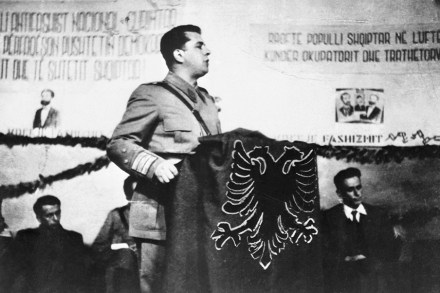
Before the second world war, the Croydon-born cricketer C.B. Fry was offered the throne of Albania. It’s not certain why. Possibly because his splendid party piece involved leaping from a stationary position backwards on to a mantelpiece. Or because, historically, the Balkan nation has been so inexplicably Anglophile as to appreciate the pratfalling funnyman Norman Wisdom. Sadly Fry declined the role and it was later taken by the fabulously named if catastrophic ruler King Zog (real name Ahmed Muhtar Zogolli). Had Fry accepted, history, that capricious monster mixed of chance and fate, would have been very different. In reality, Zog was toppled in 1939 by Mussolini’s invading fascists, who turned Albania into an Italian protectorate before it fell under the Nazi yoke.

How to fix MasterChef

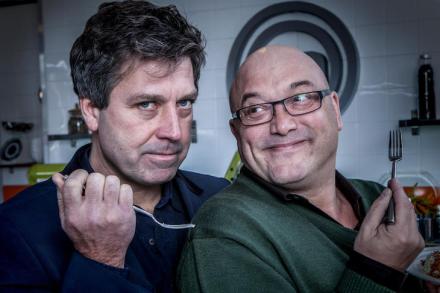
In retrospect, as has so often been the case with my attempts at Delia’s thrice-baked goat’s cheese soufflé, the question was not so much when MasterChef was going to collapse, but how.  The warning signs were there. Not only in 2001 when Lloyd Grosman, Britain’s answer to Paul Newman (in pasta sauce endorsement terms if not acting), flounced off the show because, so far as I understand the dispute, a revamp dictated that contestants all use the same ingredient. But also in 2018, when now disgraced judges Gregg Wallace and John Torode managed to unify the whole of Malaysia in affront. For which feat, whatever their later sins, I salute them.

The architects redesigning death

Unesco doesn’t hand out world-heritage status to absences, but if it did, there would be memorials all over the western world to our genius in erasing death from our consciousness. We have airbrushed the deceased from our lives with a ruthless efficiency, banishing them to suburban cemeteries where they can spend eternity unvisited. Burials and cremations are today spiritless, functional affairs, death rituals perfunctory, public grieving rare, graves unworthily negligible or unspeakably vulgar, our wakes pretexts to get drunk and obliterate the memory of what just happened. I exaggerate, but not much. The Maltese architect Anthony Bonnici wants to change all that.

Starmer at sea, Iran on the brink & the importance of shame

46 min listen

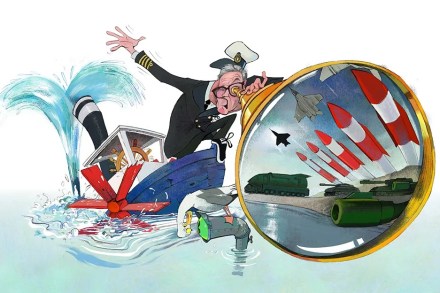
Starmer’s war zone: the Prime Minister’s perilous position This week, our new political editor Tim Shipman takes the helm and, in his cover piece, examines how Keir Starmer can no longer find political refuge in foreign affairs. After a period of globe-trotting in which the Prime Minister was dubbed ‘never-here Keir’, Starmer’s handling of international matters had largely been seen as a strength. But as tensions escalate in the Iran–Israel conflict, global events are beginning to create serious challenges. They threaten not only to derail the government’s economic plans but also to deepen divisions within the Labour party, particularly between the leadership and much of the parliamentary party. Tim joined the podcast alongside The Spectator US editor Freddy Gray.

The importance of feeling shame

In several homilies, the late Pope Francis spoke of the ‘grace of feeling shame’. What a strange idea! Nobody wants to feel shame. Adam and Eve, after all, first felt shame only after being expelled from the Garden of Eden. Shame was God’s punishment: they felt ashamed of what had never troubled them before, namely their nakedness and their sexual desires. But what the Pope meant, I think, is absolutely salutary for our age. Shamelessness is ubiquitous. It is the accelerant of social media that encourages us to narcissistically fire up our victimhood to a gimcrack blaze. It is why so many of us are chained to the brazen idea that we can never be wrong. It’s the seeming life strategy of the most powerful man on Earth.

The joy of discussing life’s great questions with a philosopher friend

At an improbable soirée in 1987, Mike Tyson was making aggressive sexual advances to the young model Naomi Campbell when the septuagenarian philosopher A.J. Ayer stepped in to demand that the boxer desist. ‘Do you know who I am? I’m the heavyweight champion of the world,’ snarled Tyson. ‘And I,’ replied Ayer, ‘am the former Wykeham Professor of Logic. We are both pre-eminent in our fields. I suggest we talk about this like rational men.’ And while Campbell sensibly slipped away, the odd couple did just that.

Damian Thompson, Paola Romero, Stuart Jeffries, Ysenda Maxtone Graham, and Nicholas Farrell

35 min listen

On this week’s Spectator Out Loud: Damian Thompson argues that Papal succession plotting is a case of life mirroring art (1:26); Paola Romero reports on Venezuela’s mix of Evita and Thatcher, Maria Corina Machado, and her chances of bringing down Nicolas Maduro (11:39); reviewing Richard Overy’s book ‘Why war?’, Stuart Jeffries reflects that war has as long a future as it has a past (17:38); Ysenda Maxtone Graham provides her notes on party bags (24:30); and, Nicholas Farrell ponders on the challenges of familial split-loyalties when watching the football in Italy (27:25).  Presented by Patrick Gibbons.

The futility of ever hoping to give peace a chance

‘War – what is it good for?’ asked Edwin Starr on his 1970 single of the same name, before answering his rhetorical question:   ‘Absolutely nothing.’ In this, Starr was not only excoriating America’s contemporary folly in Vietnam. He was implicitly endorsing the philosopher Immanuel Kant’s recommendation that humanity could and should trade up from endless war to perpetual peace, and the anthropologist Margaret Mead’s suggestion that war was not natural to our species.

AI is both liberating and enslaving us

Elaine Herzberg was pushing a bicycle laden with shopping across a busy road in Tempe, Arizona in 2018 when she was struck by a hybrid electric Volvo SUV at 40mph. At the time of the accident, the woman in the driver’s seat was watching a talent show on her phone. The SUV had been fitted with an autonomous driving system consisting of neural networks that integrated image recognisers. The reason Herzberg died was because what she was doing did not compute. The autonomous driving system recalibrated the car’s trajectory to avoid the bicycle, which it took to be travelling along the road, only to collide with Herzberg, who was walking across it. She became the first casualty of artificial intelligence.

Are we all becoming hermits now?

Long before Covid, wi-fi and Deliveroo, Badger in The Wind in the Willows showed us how to live beyond the manifold fatuities of this gimcrack world. Cosily tucked into his burrow with a roaring fire and well-stocked cellar, he was unbothered by importunate weasels and other denizens of the Wild Wood. He padded his underground realm for six months a year in dressing gown and down-at-heel slippers not just because he was a hibernating animal but out of existential temperament. ‘Badger hates Society,’ explained Rat. But, really, don’t we all? Not for him the ‘Poop! Poop!’ of Mr Toad, always going places and doing stuff.

The firebrand preacher who put Martin Luther in the shade

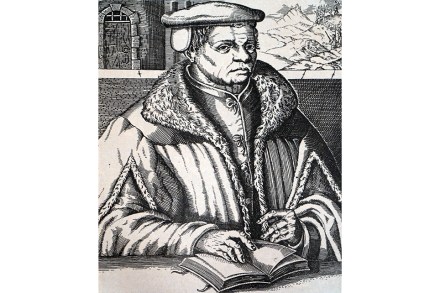
‘Now tell us, you miserable wretched sack of maggots,’ wrote Thomas Müntzer, sounding like the love child of Owen Jones and Ian Paisley, ‘who made you into a prince over the people whom God redeemed with his own precious blood?’ The question Müntzer posed Count Albrecht of Mansfeld was, you’d think, rhetorical. Like his contemporary Martin Luther, if less unremittingly scatological, the radical millenarian preacher wielded a sharp pen. Don’t forget Ezekiel’s prophecy, he wrote to Count Albrecht’s brother Ernst: ‘God would command the birds of the air to feast on the flesh of the princes and command the unthinking beasts to lap up the blood of the bigwigs.

Has Germany finally shaken off its dark past?

In 1982, a board game appeared in West Germany. If you landed on square B9 you were sent to a refugee camp in Hesse where you became ill from loneliness, unfamiliar food and not being allowed to work. Worse still, you had to miss a go and spend the free time thinking about ‘how you would feel in such a situation’. Even if, like me, your childhood was spent crying over lost games of Monopoly, nothing could quite prepare you for the cheerless experience of playing ‘Flight and Expulsion Across the World’. It’s unlikely an updated version has been commissioned for our home secretary, with players assigned counters representing the Bibby Stockholm, inflatable life rafts and Rwanda-bound jets, but you never know.

Has VR finally come of age?

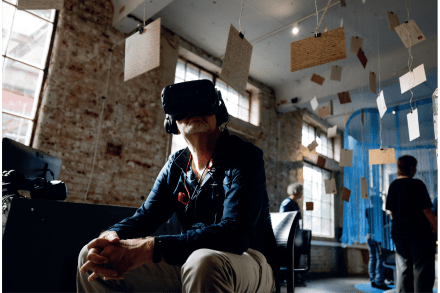
A heavily made-up Iranian woman in bra and knickers is dancing seductively before me. We’re in some vast warehouse, and she’s swaying barefoot. But then I look around. All the other men here are in military uniforms and leaning against walls or sitting at desks, smoking and looking at her impassively. I slowly realise we are in a torture chamber and this lithe, writhing woman is dancing, quite possibly, for her life. Me? I have become one of her tormentors. You can immerse yourself in war-ruined Ukraine, go on the run from the Holocaust, become a mushroom Welcome to The Fury, a bravura attempt by Iranian artist Shirin Neshat to use virtual technology in her art. ‘Have you ever experienced VR before?

What should we make of the esoteric philosophy Traditionalism?

Last August a bomb tore through a Toyota Land Cruiser outside Moscow killing its 29-year-old driver. Darya Dugina, a pro-war TV pundit, had been returning from a conservative literary festival where her father, an ultra-nationalist ideologue, had been giving a talk on tradition and history. Quite possibly he was the intended target. Alexander Dugin was called ‘Putin’s Brain’ by Foreign Affairs magazine and ‘Putin’s Rasputin’ by Breitbart. He had advocated conflict with the West and told Russians they should ‘kill, kill, kill’ Ukrainians. Ukraine denied responsibility for the attack.

The philosophical puzzles of the British Socrates

Imagine your donkey and mine graze in the same field. One day I conceive a dislike for my donkey and shoot it: on examining the victim, though, I realise with horror I’ve shot your donkey. Or imagine a slightly different scenario. As before, I draw a bead, but just as I pull the trigger, my donkey – perhaps more invested in this vale of tears than yours – steps out of the firing line and I shoot your donkey. Now here’s the question. When, in either case, I turn up on your doorstep with the remains of your donkey, how should I frame my apology to you? In his 1956 presidential address to the Aristotelian Society, J.L. Austin (1911-1960), White’s Professor of Philosophy at the University of Oxford, a man who, M.W.

The bad boy of German cinema who ‘wanted to be Marilyn Monroe’

Jane Fonda’s telephone manner was nothing if not imperious. ‘This is Jane Fonda herself,’ she said one spring morning in 1982, in a transatlantic call from Hollywood to Cannes. The German film director Rainer Werner Fassbinder was so tickled that for days afterwards he took to answering every phone call in English with: ‘This is Fassbinder himself.’ ‘Fassbinder wanted to be Marilyn Monroe. He wanted to walk down a staircase wearing feathers and a gown’ It was the meeting of opposites. She was Hollywood royalty, Henry’s daughter, sexy star of Barbarella and double Oscar winner, poised to release the first of her series of workout videos that would in the next 13 years sell 17 million copies. By contrast, Fassbinder probably didn’t even own a pair of leg-warmers.

A look inside Britain’s only art gallery in jail

The centrepiece of the exhibition at Britain’s only contemporary art gallery in a prison is an installation, consisting of two broken, stained armchairs. They’ve been placed face-to-face, as if for a therapy session. Elsewhere there are silkscreen prints and paintings. This outbuilding-cum-art studio and gallery is where prisoners are also taught dry-point etching – surprising given the needles involved, but I am assured that all potential weapons are accounted for at the end of each session. ‘For two hours a week I come here and learn new skills,’ explains the silkscreen artist and inmate of HMP Grendon. ‘I get completely absorbed in printmaking. I feel freer here than any other time in prison. I’ve recaptured my childhood love for art.