Stewart McDonald

Stewart McDonald is the former SNP MP for Glasgow South and the party's defence spokesman for six years. He is currently the director of Regent Park Strategies.

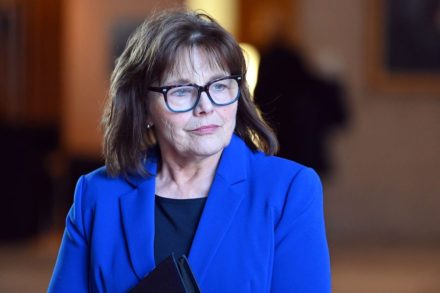
There will be few politicians like Jeane Freeman again

There is no shortage of noise in contemporary politics, nor of people keen to confuse it with authority. Jeane Freeman, the former Scottish health minister who passed away this weekend, never did. She moved through political life with the calm confidence of someone who was always three steps ahead of any room she was in and entirely comfortable letting others catch up. This is not, however, to be confused with arrogance, of which she displayed not a hint. I came to know Jeane a little over the last few years, meeting every so often for coffee or lunch. I can’t claim we were close friends, but I always enjoyed those catch-ups. They were fun, full of gossip and the sort of dark humour that comes naturally to people who have spent too long watching their own party eat itself.
A year on, has John Swinney turned things around for the SNP?

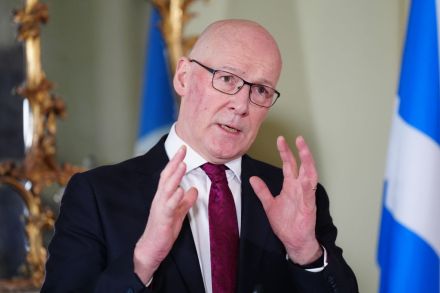
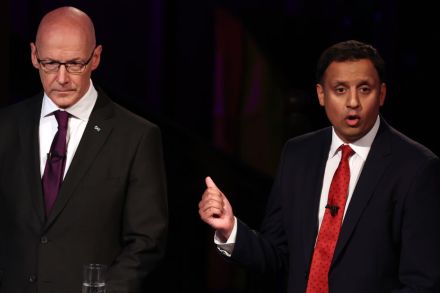
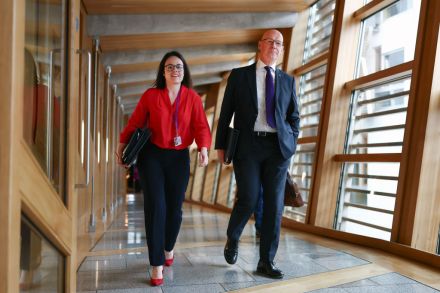
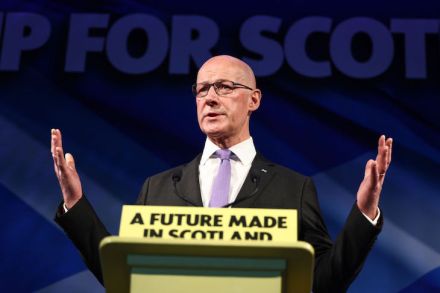
It’s difficult to imagine a more cautious revolutionary than John Swinney. When the First Minister was unexpectedly swept into Charlotte Square just one year ago – answering the call of a party in need of healing and direction in equal measure – few expected him to author a radical’s reset. The party of the late Alex Salmond’s braggadocio, Nicola Sturgeon’s sure-footedness and Humza Yousaf’s faltering optimism had turned, perhaps inevitably, to the reassuringly experienced veteran whose political style has been compared to that of a Blairgowrie bank manager.  When he returned to the frontline, some thought Swinney was to play the part of a political caretaker – a soothing interregnum before the next generation of SNP politicians step up.

The chequered leadership of Nicola Sturgeon

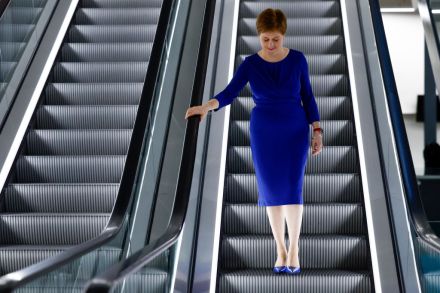
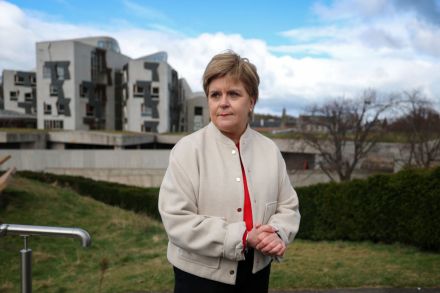
The news came on Wednesday that Scotland’s former first minister will not seek election to the Scottish Parliament for the first time since it was reconvened in 1999. Nicola Sturgeon's announcement that she will stand down at the 2026 Holyrood election marks the end of an era for the most electorally dominant UK party leader since Tony Blair. If her predecessor won Holyrood elections and precipitated a referendum he was never expected to win, Sturgeon undeniably brought sustained electoral success. At the same time, the former FM was having to react to events outwith her control – like Brexit – by marshalling the SNP coalition into a more durable one that could deliver sustained support for independence.

What will Nicola Sturgeon’s legacy be?

12 min listen

Nicola Sturgeon has announced her intention to step down at the next Scottish Parliament election in May 2026. One of the original MSPs elected to Holyrood in 1999, Sturgeon has dominated Scottish and UK politics over the past two decades. The Salmond-Sturgeon era began in 2004 and she went on to serve as First Minister for the best part of a decade. Stewart McDonald, former SNP MP for Glasgow South 2015-24, and Lucy Dunn join James Heale on this special Coffee House Scots to discuss Sturgeon's legacy. She brought Scotland the closest to independence for 300 years, yet resigned in 2023 under a cloud over party management. Attention turns to next year's election, could the SNP's winning streak continue without her? Produced by Patrick Gibbons and Natasha Feroze.

The SNP must shed its nervousness on defence

Sir Keir Starmer has this week urged President Trump to reverse his decision to cut off aid to and intelligence sharing with Ukraine. In Scotland, the governing party backs this case call – and many are on side with the Prime Minister too over his pledge to increase defence spending. In fact, there is an appetite to go further. My good friend Ian Blackford has been making headlines recently after penning an article in the Scottish Times in which he urged Scotland's governing party, the SNP, to rethink its stance on Trident. Such were the geopolitical changes taking place, Blackford says, that the party’s decades old position of unilateral nuclear disarmament was no longer fit for purpose and a multilateral position should be adopted instead.

Scotland’s investment bank needs to be able to spend on defence

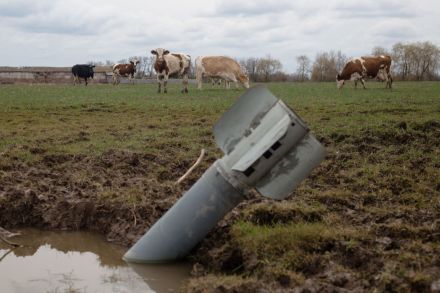
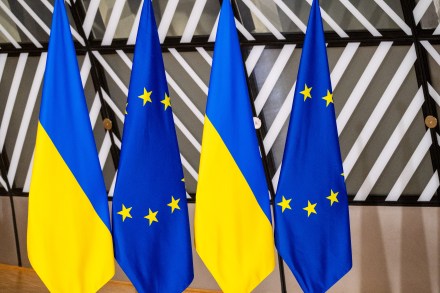
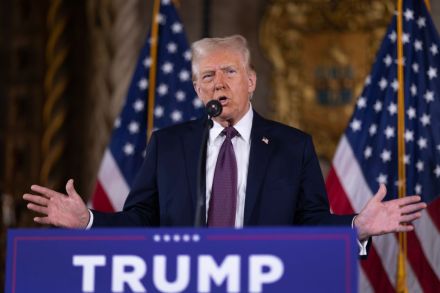
Europe’s security debate has been transformed overnight. After President Trump announced his 90-minute phone call with Russia’s dictator, Vladimir Putin, the 47th Commander-in-Chief sent a chill wind through European capitals as he made clear that he’s happy to negotiate away Ukrainian sovereignty and that the return of great power politics is back. This was made worse by his newly confirmed Defence Secretary, Pete Hegseth, who, upon arriving in Europe for the first time since being confirmed, ruled out future Nato membership for Ukraine and said that it was ‘unrealistic’ to think Ukraine will ever get back Crimea and other territories Russia has occupied since 2014.

Ukraine’s security depends on Europe’s courage

If anything was going to make Donald Trump come around to supporting Ukraine in its war with Russia, ‘rare earth minerals’ – an issue of increasing geopolitical importance in the global competition with China – would not have made it to the top of most lists. Yet the US president has hinted this could be the key to the continuation of US investment in the nation as Russia’s war rages on. The proposal hasn’t impressed everyone – German chancellor Olaf Scholz has called the plan to make money from the war ‘selfish’ – but President Zelensky is open to the idea.

Why the SNP should form a pact with Labour

Last year, marking the tenth anniversary of Scotland’s independence referendum, I wrote an article for The Spectator looking at the state of Scotland’s political conversation and the prospects for the cause of independence a decade on from defeat.   After setting out why I thought MSPs ought to pass a budget that crossed the nationalist-unionist divide, softening the intense tribalism that has become a hallmark of parliamentary exchange, I also cast an eye forward to next year’s Holyrood election, in which no party is likely to have overall control. Recent polling trends show that Reform UK are hoovering up support from disillusioned Conservative and Labour voters alike, with Nigel Farage’s party likely to take seats in Scotland’s devolved legislature.

Trump has a point about Greenland

As the second Trump term looms in the near distance, it’s become a bit of a cliché to say that ‘a stopped clock is right twice a day’. Pinko liberal Nats like myself have had to get used to the fact that for all our disagreements with the man on policy and style, there are certain areas where we fundamentally agree.   Most prominently, it was after all Dòmhnall Iain (as his first cousins on Lewis would call him) who first really grasped the systemic challenge posed by China to Western states in his first term. As a member of the Inter Parliamentary Alliance on China (IPAC), it was with a wry smile that we noticed the quiet acquiescence of the Biden administration on that front even as it rolled back other Trump foreign policies.

Are things looking up for the SNP?

After the general election skelping my party got in the July election, I was asked by Alex Massie (formerly of this parish) if I thought the SNP was in line to get horsed in the 2026 Holyrood election. I answered in the affirmative. Unless the party changed direction, then of course we would lose. Well, things look rather different now.  Since then, the mood within Scotland’s two dominant parties has changed dramatically. The SNP is the most upbeat it has been for a while while Labour’s sense of jubilant victory after its election landslide is tinged with vulnerability. The change in mood has been apparent in almost every conversation I’ve had with people from either side. If I had a pound for every campervan joke, I could probably compensate the WASPI women.

Scotland must push for higher defence spending

And so it seems that Scotland’s most prolific hotelier will return to the White House. Donald Trump has staged a political comeback that has torn up the normal rules of politics and sent shockwaves around the world. There are a great many reasons to be aghast at Trump’s return, but as he prepares to take up the Oval Office in just a few weeks, there is precious little time to get emotional. This is a time for hard-headedness. Understanding the importance of the Scotland-US relationship, Scotland’s First Minister John Swinney has written to the president-elect and offered his congratulations. Bristle at this though some might, it was the right thing to do. The US is an important market for Scotland and maintaining good relations is in our national interest.

The complex legacy of Alex Salmond

In reflecting on the life of Alex Salmond, I should begin by paraphrasing his successor as First Minister, Nicola Sturgeon. I cannot pretend that the last few years of the breakdown in his relationship with the mainstream of the party he once led did not happen, but we cannot help but reflect on a remarkable political life. Salmond was central to the birth of the modern SNP. As former political editor of the Herald Murray Ritchie put it, he took an 'ill-disciplined, fractious and impecunious fringe party and established it as the dominant force in Scottish political life', noting: 'This in a country where Labour had been in control for half a century.

Starmer needs to get serious about China

In the coming days, Foreign Secretary David Lammy will visit China and Chancellor Rachel Reeves is eyeing up a visit early next year for economic and financial dialogue. Whilst engagement is important, it’s not unreasonable to expect an understanding of the government’s strategic position on such a defining relationship before ministers board their flights. Does the government believe in deepening and expanding cooperation with China, or does it believe – as it appeared to in opposition – that China is a threat and must be dealt with as such? We are simply left guessing. As Starmer marks his first 100 days in office, the fact that there is little-to-no clarity on the government’s approach to the defining geopolitical challenge of our time raises eyebrows.

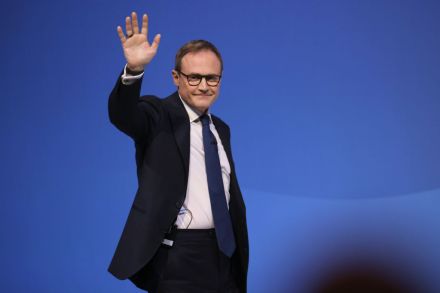
Politics needs more Tom Tugendhats

'I’ve got you a Tom TugendHAT,' a friend texted from this year's Conservative party conference. I haven’t received it yet, but I’ll save it for Tom’s next campaign. I’m no Tory – though I’ve had plenty people try and dispute that – but if we’re to have a Conservative party then it should have sensible people like my good friend Tom at the top. And while, on this occasion, he won’t be in the leader’s chair, I have no doubt that he will play a significant part in his party’s revival. You don’t have to be a Conservative to understand that we all have skin in the game when it comes to who the party’s next leader is, even if we don’t get a vote.

Is there any hope left for the independence movement?

As we mark 10 years on from Scotland’s independence referendum, the entire political ecosystem in Scotland is engaged in attempts to define, or redefine, the narrative of that time. Those on my side of the independence argument remember a campaign of energy, optimism and positivity that is simply unmatched. It’s also the case that, for many on the pro-union side, they recall a divisive and hostile experience of the Yes movement. Both points of view can, of course, be true and are equally valid. Yet, it’s a uniquely Scottish curiosity that my side – ultimately, the losing side – speaks more fondly of that time than the actual winners. But this is Scottish politics, and normal rules don’t always apply here.

Can the SNP bounce back before 2026?

SNP conferences of late haven’t been what they were in the aftermath of the 2014 referendum. Gone are the days when a carnival atmosphere ensued. That’s for the best. Those times felt like our conference was on loan to an impatient ‘Yes’ movement rather than a conference of the party of government, focused on ensuring good public policy choices and Scottish self-determination.   But absent too from the weekend’s 90th annual conference was the miasma of despair that hung over us as the Sturgeon-Salmond feud gathered pace. Even last year in Aberdeen during Humza Yousaf’s first and last gathering as leader, uncertainty lingered heavily.