Sophia Falkner

Sophia Falkner is a researcher and writer at The Spectator and former special adviser in 10 Downing Street.

Why Starmer is courting TikTok influencers

Some of my oldest and dearest school friends absolutely hate reading the news. One called me up nearly a week after Rishi Sunak called last year’s election to ask if I fancied a weekend in the countryside. ‘That sounds great,’ I said ‘but you know I’m working on the election?’ ‘Oh my gosh, there’s an election?! Totally missed that!’ she squealed. Sometimes, ignorance really is bliss. Her bliss, however, has been somewhat disrupted by TikTok. I nearly fell off my chair when she asked if I’d seen Keir Starmer’s Labour party conference speech last year. Starmer’s demand for the release of the sausages (instead of hostages), had understandably, gone viral, reaching even my staunchly anti-media friends. While recruiting influencers shows No.

Sophia Falkner, Roger Lewis, Olivia Potts, Aidan Hartley and Toby Young

27 min listen

This week: Sophia Falkner profiles some of the eccentric personalities we stand to lose when Keir Starmer purges the hereditary peers; Roger Lewis’s piece on the slow delight of an OAP coach tour is read by the actor Robert Bathurst; Olivia Potts reviews two books in the magazine that use food as a prism through which to discuss Ukrainian heritage and resistance; Aidan Hartley reads his Wild Life column; and Toby Young reflects on the novel experience of being sober at The Spectator summer party. Hosted and produced by Oscar Edmondson.

Keir’s peer purge, how to pick an archbishop & is AI ruining sport?

44 min listen

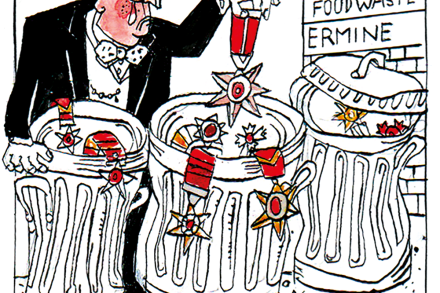
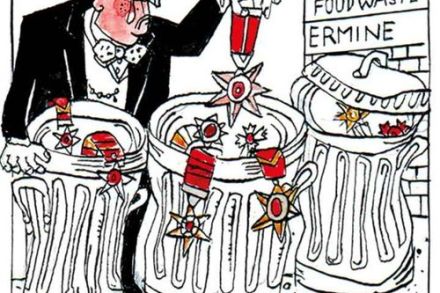
This week: Peerless – the purge of the hereditary peers For this week’s cover, Charles Moore declares that the hereditary principle in Parliament is dead. Even though he lacks ‘a New Model Army’ to enforce the chamber’s full abolition, Keir Starmer is removing the hereditary peers. In doing so, he creates more room, reduces the Conservatives’ numerical advantage, and improves ‘the sex and ethnic balance’. But 86 hard-working and dutiful peers ‘lacking worldly ambition or partisan passions’ will be lost. Also in the magazine, Sophia Falkner, researcher at The Spectator, sets out exactly what we stand to lose by profiling some of the most capable hereditary peers in the House. She warns that Labour’s purge is ripping the heart out of the Lords.

Good Lords: the House is losing some of the best

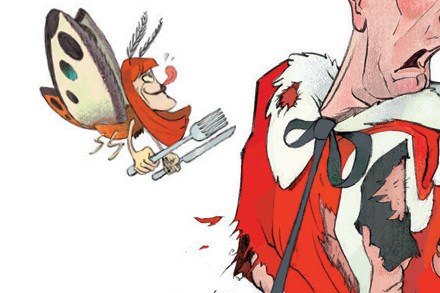
Keir Starmer has not been the luckiest general. But, in one respect, he has bested Napoleon. The Duke of Wellington will shortly be purged from parliament, two centuries after Waterloo. Like his ancestor, Charles Wellesley has led a life of public service. For that, he will shortly receive the sack as part of the greatest purge of active lawmakers since Oliver Cromwell. All this so Starmer can make way for the likes of Tom Watson, Sue Gray and Richard Hermer. Among the hereditary peers are Olympians and entrepreneurs, artists and academics Among the hereditary peers are Olympians and entrepreneurs, artists and academics. Some are genuine blue bloods, others political animals.

Nigel Farage was the spending review’s real winner

When chancellors approach a major moment like a Spending Review, they tend to have a figure in their mind’s eye – someone who embodies the type of voter they hope to win over at the next election: a Mondeo man or Stevenage woman. Rachel Reeves clearly had a very specific figure in mind for today’s Spending Review. But unlike her predecessors, this was no Labour voter. Her Spending Review was laser-focused on Nigel Farage. So why double down on a strategy that was hardly popular with the electorate? Between a laundry list of spending pledges that would have you believe Britain is in a boom, Reeves took aim at Farage. She castigated him for backing Liz Truss’s mini-budget and for spending too much time at the pub (arguably one of his best attributes).

The disposable vape ban has changed nothing

I felt a mixture of annoyance and relief when I bought my first non-disposable Elf Bar last weekend, ahead of the disposable vape ban. Relieved, because to all intents and purposes, the new vape is identical to the old one. It looks the same, tastes the same and costs the same. The only difference is that when you give it a tug, a ‘reusable’ pod slides out. Annoyed, because after all the fuss over the ban over the past few years – panicked headlines, furious parents, relentless lobbying – vaping is effectively unchanged. What a waste of time and energy. In the next few days, a third emotion started to creep in: fear. I can’t be the only one to have noticed that the new vapes are just as delicious and, in practice, as disposable as the old ones.

The welfare select committee is wasting its time

The Work and Pensions Committee’s recent safeguarding report reminded me of the worst thing about working in politics: other people finding out you work in politics. There was the wedding where four men took turns giving me 30-minute monologues on why the Conservatives lost the election (as if living through it once wasn’t enough). My friends now roll their eyes and laugh when a guy at a party starts talking at me: ‘Oh god, he’s into politics’. Even I couldn’t believe my luck when last month, in a Parisian bar at 1 a.m, I was cornered by someone shouting over the music about u-shaped parliament and how select committees don’t get enough media attention (I’m still cringing). Having worked in No.

Labour and the Tories are both to blame for two-tier justice

If ever there were a week for me to commit a crime, this was it. The Sentencing Council – which advises judges on how long convicted criminals should be locked up for – was poised to implement guidance that would mean that, as an ethnic minority, I stood a better chance of avoiding prison than a white male. But at the last minute, they capitulated. Fortunately, as a woman, I still stand a good chance of avoiding being locked up if I end up in trouble. Rhetoric from both parties against two-tier justice – where criminals are treated differently because of who they are – has been strong. The Lord Chancellor, Shabana Mahmood, has declared that she is against ‘any differential treatment before the law for anyone of any kind’.

Why did I bother getting a job?

It was an ominous start to the day of Rachel Reeves’s Spring Statement, when she had to rush out messy, last minute changes to Labour’s package of welfare reforms. To unhappy Labour MPs, this confirmed their belief that the policy is Treasury bean-counting masquerading as reform. They’re not wrong. The current trajectory was unsustainable. We were on track to spend £1 in every £4 of income tax on health and disability benefits by 2030, according to the Policy Exchange think tank. Tightening the qualifying criteria for Personal Independence Payments (PIP) and more frequent reassessments are clearly sensible and necessary.