Sohrab Ahmari

Sohrab Ahmari is comment editor of the New York Post. His book The Unbroken Thread: Discovering the Wisdom of Tradition in an Age of Chaos will be released in June.

The flawed idealism that united the right

From our US edition

Modern American conservatism is composed of three distinct traditions: libertarian economics, foreign-policy hawkism and social traditionalism. This “fusion” was born of a contingent historical moment, the Cold War, when the Soviet threat forced different social classes and their ideological spokesmen to band together in common cause. There was no eternal principle demanding that these groups tie their destinies together — a fact that became apparent with Donald Trump’s rise, which divided the three camps along various axes of alliance and enmity. Fusionism is dead. Well and truly dead.
conservatism fusionism

Anti-anti-crime policies are ruining American cities

From our US edition

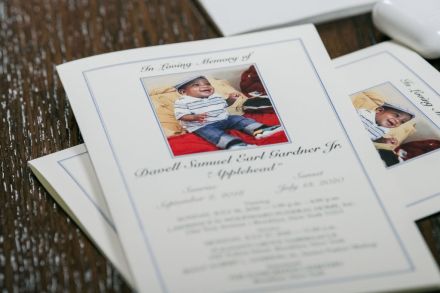
I didn’t meet Davell Gardner Jr. Yet his photo — and the bubbly personality it captures — will forever remain etched in my mind. The picture shows a baby with fuzzy curls; trusting, happy eyes; a beaming, gap-toothed smile. His chubby, loaf-like baby hands remind me of my own kids’ hands, which I often can’t help kissing or blowing raspberries on. There he is, crawling on his dad’s belly, enjoying one of the last playtimes of his life. On July 12 last year, a convoy of three cars pulled up in front of a residential building on Pulaski Street, in Brooklyn. Suspecting potential gang activity, officers in an NYPD cruiser flashed their lights, and one of the cars, a Volkswagen Jetta, sped away. The cops gave chase, exactly as the gangsters had hoped they would.

cities

Is New York coming back?

From our US edition

New York Well, at least P.J. Clarke’s survived the lockdown ordeal. Founded as a ‘saloon’ by an Irish migrant in the late 19th century, the restaurant-bar is a Manhattan dining icon — and a defiant one at that: it’s housed in a modest two-story building, nestled among the skyscrapers of Midtown East, a relic of an older, redbrick Gotham, refusing to give way to the titans of law and finance who occupy the commanding heights of glass and steel nearby. Reality is a little more complicated than that, of course. These days, P.J. Clarke’s is owned by a consortium of financiers, and before the lockdowns, its patrons very much included the finance bros dressed in their standard-issue uniforms (button-down, slacks, Patagonia vest).

p.j. clarke's
protest

Can COVID-19 tell whether a protest is progressive?

From our US edition

New York City This past month shattered all my sense of stability and permanence in New York, the city I’ve called home since 2012 (though I’ve spent some of those years in London). The looting mobs that rampaged through Gotham’s streets put me in mind of my native Middle East, a phenomenon I thought I’d left behind ‘over there’, not to be encountered except on the occasional reporting trip to Iraq or Egypt. But no. An unjust police killing in Minneapolis — combined, no doubt, with the effects of a prolonged lockdown — Arab Spring’d the United States, if you will. Or rather, the riots revealed that America’s advanced liberal society isn’t all that different from the Arab client states Washington likes to lecture.

Has liberalism gone too far?

27 min listen

In this week’s episode of The Green Room, Deputy Editor of The Spectator's world edition Dominic Green meets the author Sohrab Ahmari for a chat about his new book, The Unbroken Thread: Discovering The Wisdom Of Tradition In An Age Of Chaos. In it, Ahmari, a writer and New York Post op-ed editor, makes a compelling case for seeking the inherited traditions and ideals that give our lives meaning, via 12 fundamental questions that challenge our modern certainties. Among them: Is God reasonable? What is freedom for? What do we owe our parents, our bodies, one another?

The unenlightenment: liberalism comes at a cost

Are citizens of liberal societies permitted to question liberalism? In theory, the answer is yes, given liberalism’s commitment to ‘free thought’ and ‘the marketplace of ideas’. Such tolerance is rarely in evidence in practice, however — a reality illustrated in hilarious fashion by a writer for a Washington magazine who recently decried ‘cancel culture’ even as he insisted that: ‘It’s absolutely necessary to de-platform public intellectuals who object to liberal democracy.

The right after Trump

From our US edition

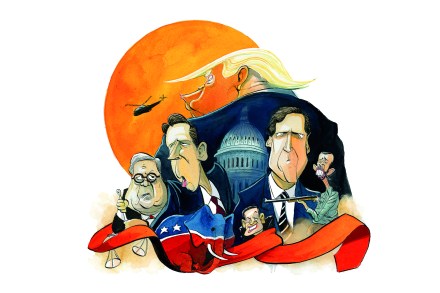
Two broad camps divide American conservatism today: those who get it, and those who don’t — the woke and unwoke, if I may borrow a lefty term but give it a slightly different meaning. For the right to have any shot at taming liberalism’s raging furies, woke conservatives must remain ascendant and consolidate the movement. President Trump was among the first to get it, in his own intuitive, messy way. The ambitious Missouri senator Josh Hawley is likewise woke. So are Attorney General Bill Barr and Fox News host Tucker Carlson. But too many credentialed conservatives don’t get it. What’s the it conservatives need to get?

after trump right

This ‘revolution’ isn’t what it looks like

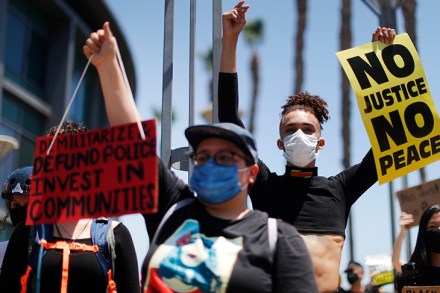
America is not in the middle of a revolution — it is a reactionary putsch. About four years ago, the sort of people who had acquired position and influence as a result of globalisation were turfed out of power for the first time in decades. They watched in horror as voters across the world chose Brexit, Donald Trump and other populist and conservative-nationalist options. This deposition explains the storm of unrest battering American cities from coast to coast and making waves in Europe as well. The storm’s ferocity — the looting, the mobs, the mass lawlessness, the zealous iconoclasm, the deranged slogans like #DefundPolice — terrifies ordinary Americans.

I thought I’d left looting mobs behind in the Middle East

Last week shattered all my sense of stability and permanence in New York, the city I’ve called home since 2012 (though I’ve spent some of those years in London). The looting mobs that rampaged through Gotham’s streets — including my block — put me in mind of my native Middle East; it’s a phenomenon I thought I’d left behind ‘over there’, not to be encountered except on the occasional reporting trip to Iraq or Egypt. But no. An unjust police killing in Minneapolis — combined, no doubt, with the effects of a prolonged lockdown — Arab Spring’d the United States, if you will.

The new boat people

When the migrant crisis started, about three years ago, it was seen as a mainly Syrian affair. Caught in the crossfire between Bashar al-Assad and sundry jihadist groups, ordinary Syrians were heading for Europe, part of the largest mass movement of people since the second world war. But as we now know, that analysis was wrong. Or rather, it was only one facet of the historical migration phenomenon that was unfolding then and still is today. As a reporter, I hit the migrant trail, following the new arrivals by foot, bus, train and ferry through the Greek islands and the Balkans. I heard many languages besides Arabic, among them Pashto, Urdu, Bengali and even French (spoken by a Congolese family I encountered at the Serbian--Hungarian border).