Simon Kuper

Simon Kuper

Simon Kuper is an FT Weekend columnist.

Would W.G. Grace recognise the game of cricket today?

There’s a fascinating thought that the authors of Full Circle pursue for just a couple of pages, then leave hanging: ‘Association football offers an alternative history by which to consider the course cricket might have taken.’ In fact, the book demonstrates that cricket has followed football’s course, albeit about a century late. In cricket, too, professionals ousted amateurs, embraced the market, saw economic power shift east and chose a short format that allowed games to be played in an evening. Like it or loathe it, cricket has effectively become football. Reading this serious and competent work, you wonder at times why the journalists Richard Heller and Peter Oborne bothered to write it. There are already countless cricket histories.


The secret of Gary Lineker’s success

In his closing pages, Chris Evans delivers his verdict on his subject: That’s what Gary Lineker is: human. As his story shows, it’s possible to accomplish seemingly impossible things while staying grounded and true to your roots. I hate to be cruel about a diligently researched book by a freelance journalist. But unthinking writing cannot capture a man who managed to think himself into two great careers, first as a footballer and then as a TV presenter. Lineker was born in Leicester in 1960. His parents were market traders who worked brutal hours, then relaxed over card games that could run all weekend, with participants (including the local crooner Engelbert Humperdinck) taking turns to retire for naps.

The feel-good football story of Watford Forever

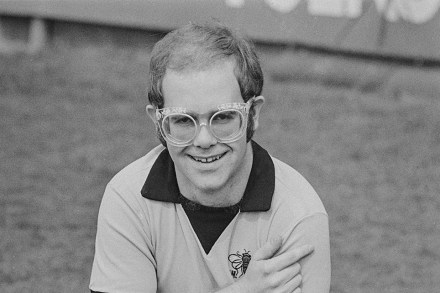
One Saturday in 1953, the six-year-old Reggie Dwight of 55 Pinner Hill Road went to his first football match with his perennially gloomy father, Stanley. ‘Emerging from the Tube station,’ writes John Preston, ‘Stanley reached down and took his son’s hand.’ Reggie was enchanted by Stanley’s sudden happiness. The only place the two would ever manage to connect was on the stands at their beloved Watford FC. Once Reggie became the rock star Elton John, he bought the club and took it, improbably, to the top. He did it with a manager who was both his opposite and his soulmate, Graham Taylor – better known for his later disastrous reign managing England. Their relationship carries Watford Forever, a wonderful, feel-good account of an ultimately English provincial story.

What, if anything, have dictators over the centuries had in common?

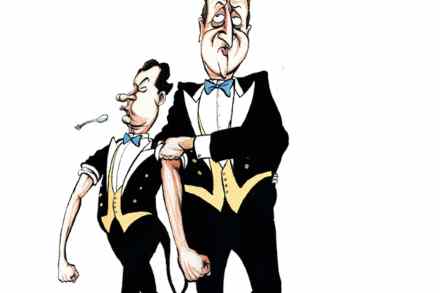
Big Caesars and Little Caesars is an entertaining jumble with no obvious beginning, middle, end, or indeed argument. But there is an intriguing book buried underneath it which asks more or less this: where does Boris Johnson stand in the historical procession of would-be strongmen or, as Ferdinand Mount calls them, ‘Caesars’? How successful was Johnson’s attempt – overshadowed by the Brexit noise, his personal scandals and his Bertie Wooster act – to turn Britain into a more authoritarian state? Even when Caesars are kicked out, they weaken a country’s institutions Mount, now 84, comes at this from a long Tory past that in recent years he has seemed to disown.

When violence was the norm: Britain in the 1980s

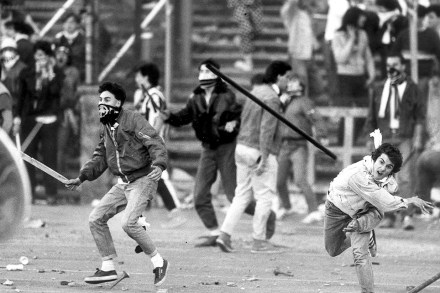
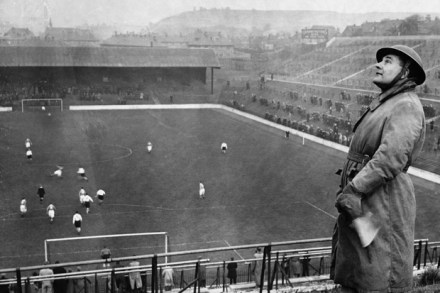
In middle age you’re supposed to feel nostalgia for your youth, but I finished this book marvelling at how dreadful the 1980s were. The decade hit rock bottom in May 1985 when, within 18 days, 56 football fans died in a fire at Bradford City and 39 in crushes before the Liverpool-Juventus match at the Heysel Stadium. All through, though, the 1980s lived up to one of Roger Domeneghetti’s chapter titles, named for The Barracudas’ song of 1981: ‘We’re living in violent times.’  The author, a journalist and academic, has an ambitious premise: sport is the key to understanding what really happened to Britain in the 1980s. The book doesn’t quite live up to that, but it does show how sporting and social dysfunction intertwined.

The new elite: the rise of the progressive aristocracy

40 min listen

On the podcast this week:  In his cover piece for The Spectator, Adrian Wooldridge argues that meritocracy is under attack. He says that the traditional societal pyramid – with the upper class at the top and the lower class at the base – has been inverted by a new culture which prizes virtue over meritocracy. He joins the podcast alongside journalist and author of Chums: How a tiny caste of Oxford Tories took over the UK, Simon Kuper, to debate (01:04).  Also this week:  In the magazine, ad-man Paul Burke suggests how the Tories should respond to Labour’s attack adverts. Released last week, the adverts have caused a stir for attacking the Conservative's recent record on curbing child abuse, and accuses Rishi Sunak directly of negligence on the issue.

What Macron wants

When Liz Truss said ‘the jury’s out’ on whether France was a ‘friend or foe’, Emmanuel Macron publicly corrected her: of course Britain was a friend, he told a TV camera, adding with a grin: ‘Whoever its leaders are, and sometimes despite and beyond its leaders.’ As a British journalist who has lived in Paris for 20 years, I’d call that mostly true. French leaders consider Britain a friend, albeit probably not top five. But Macron and Boris Johnson were often personal foes, and Macron’s relationship with Truss may play out equally badly, especially if French and British differences over Ukraine come to a head in the coming months. As Johnson noted, the two countries have got on pretty well since Napoleon departed.

The conspiracy against women’s football

The moment before the fall of women’s football can be precisely dated. On Boxing Day 1920, Dick, Kerr Ladies FC beat St Helens 4-0 at Everton’s Goodison Park in front of 53,000 paying spectators, a sellout crowd. That was too much for the men at the Football Association. Hysterical at the sight of women running about as they liked and scared of competition from the female game, they banned it a year later. ‘The game of football is quite unsuitable for females,’ its ruling explained. From then on, the FA barred men’s clubs from letting women use their fields. Female players were condemned to jumpers for goalposts in parks. In the following years, many of the world’s other leading football associations followed the FA’s ban.

Simon Kuper: How a Tiny Caste of Oxford Tories Took Over the UK

46 min listen

My guest in this week's Book Club podcast is the writer Simon Kuper, whose new book – Chums: How a Tiny Caste of Oxford Tories Took Over the UK – argues that to understand the social and psychological dynamics of our present government, you need to understand the Oxford University of the 1980s, where so many of those now in power first met. He argues that the PM's love of winging it was nurtured in the tutorial culture of his Balliol days, that the dynamics of Tory leadership contests are throwbacks to the Oxford Union, and that Brexit – the grand project of this generation – was at root a jobs-protection scheme for the old-fashioned ruling class. Can that be the whole story?

Bad sports, from the ancient Greeks to the present

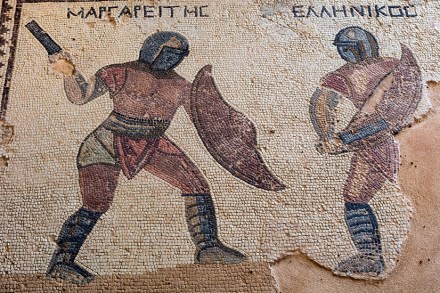
Sports history, writes Wray Vamplew, is sometimes ‘sentimental, reactionary and built on the implicit assumption that the sporting past was a better place in which to play games. It wasn’t.’ His own account — the fruit ofa career’s work — is so shapeless that it often reads like the encyclopaedia that he claims he didn’t want to write. The emeritus professor of sports history at the University of Stirling hasn’t managed to assemble his own narrative. But if there is one to be extracted from Games People Played, it’s this: contrary to popular opinion, we may be living in sport’s golden age. Perhaps the best bits of the book are about ancient sports. We learn that the Greeks had no concept of amateurism or fair play.

Sport and mind games

Years ago, a friend persuaded me that a reviewer should almost never give a book a bad review. Most books, he argued, are written with honest effort. Writers often devote years of their lives, whereas reviewers put in hours. Even a mediocre book that hardly anyone will ever read generally contains something worth passing on in a review. Savage reviews are usually just attempts to show off. Ed Hawkins, a respected investigative sports journalist, worked hard on The Men on Magic Carpets. But I struggle to find anything good to say about it. He starts from an interesting premise: during the Cold War, both the Soviet Union and the United States employed psychics to win sports matches and, potentially, wars.

A fine balance | 7 June 2018

Arguably, the statue in Trafalgar Square should not be of Nelson but of Henry Maudslay. He had started out as a 12-year-old powder monkey, fetching gunpowder on Navy ships, but soon revealed himself to be a brilliant engineer. In the early 1800s, Maudslay built ‘the first precision-made machines in the world’. They produced pulley blocks, ‘the essential parts of a sailing ship’s rigging’, which allowed the Royal Navy to ‘travel, police, and, for a while, rule the world’s oceans’, writes Simon Winchester. The machines outfitted the ships that defeated Maudslay’s hero, Napoleon.

Nazi gamesmanship

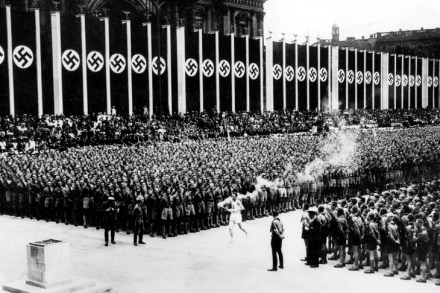
The British diplomat Robert Vansittart had been warning against Nazism for years, so it was a surprise when he and his wife showed up in Berlin for a two-week ‘holiday’ during the 1936 Olympics. ‘Van’ was impressed by German organisation. ‘These tense, intense people are going to make us look like a C nation,’ he wrote in a confidential report. The anti-appeaser had meetings with Hitler and the principal henchmen, and took a particular shine to Goebbels: ‘a limping, eloquent, slip of a Jacobin… My wife and I liked him and his wife at once.’ Van even came to think he might have misjudged the Nazis, though a lapse by the newly appointed ambassador to London, Von Ribbentrop, gave him pause.

The spy who stayed out in the cold

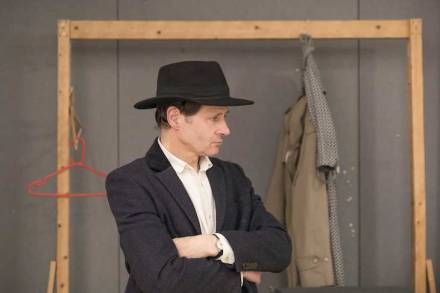
I suspect George Blake, the MI6 officer turned KGB double agent, would enjoy toddling over to the Hampstead Theatre to see himself in the new production of Simon Gray’s play Cell Mates. The problem is that the instant he landed at Heathrow, he’d be arrested and made to serve the remaining 37 years of his 42-year jail sentence, which was rudely interrupted by his escape from Wormwood Scrubs in 1966. When I met him at his dacha near Moscow in May 2012, I found a shrunken old man. He was then 89, with a straggly beard, false teeth, slippers and a cane. Only his deceiver’s charm remained intact. He stood waiting for me in the lane outside, then led me through a door into his vast garden.

Always the Superbrat

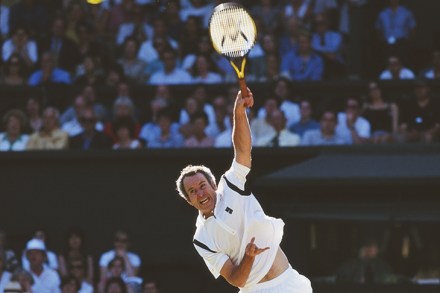
John McEnroe’s father calls. In fact, he calls McEnroe’s manager’s phone, presumably because dad doesn’t have a direct line to the great man himself. John Sr, who is tennis-mad, has a request: can he come with his son to a veterans’ tournament in Belgium? McEnroe is horrified. Having dad around is a major drag. ‘I was about to say absolutely not,’ he writes — when his old rival Björn Borg, who happens to be dining with him, interjects: ‘Let me speak to him.’ Borg, who had lost his own father three years earlier, tells McEnroe Sr: ‘Don’t worry, JP, if John doesn’t bring you to Knokke-Heist, I will.

Lessons and games

‘Kokkinakis banged your girlfriend. Sorry to tell you that, mate,’ the Australian tennis player Nick Kyrgios remarked to his opponent Stan Wawrinka during a match in Montreal in 2015. He was referring to Thanasi Kokkinakis, who had partnered Wawrinka’s girlfriend in mixed doubles. After Kyrgios’s remark, Wawrinka’s game went to pieces, and he soon retired from the match with a ‘back problem’. Was Kyrgios’ gambit unethical? That is the sort of problem that occupies David Papineau in this mixed bag of essays. Papineau, a philosophy professor at universities in London and New York, is obsessive even by the standards of sports obsessives.

Frontier territory

In Ali’s Café, just inside Turkey on the Bulgarian border, Iraqi and Syrian refugees spend their days drinking tea. Now and then, someone goes into the back room to give bundles of money to smugglers who have promised to get him into the European Union. Only when piano chords strike up on the radio does Kapka Kassabova realise what Ali’s reminds her of: Rick’s Bar in the movie Casablanca, a transit realm ‘where the homeless of the day come in search of passage’. The Syrian refugees literally walked into Kassabova’s book.

The consolations of sports geekery

When I come home from work and stick my key in the door, there is a pitter-patter of tiny feet as my eight-year-old twin boys run up to me and shout: ‘Paris St-Germain won 3-1! First he scored, then he missed, then…’ They are suffering from a harmless case of sports geekery. I had it myself as a child, and have gone on to hold down a job, albeit in the dying industry of journalism. The only difference is that as a child I wasn’t encouraged to bore my dad with my findings, because helicopter parenting hadn’t been invented yet. A complicating factor in our family is that we live in Paris, and when my sons recite sports statistics in strangely accented French children’s slang I often struggle to understand them, especially at breakfast.

Knowing the score

When I come home from work and stick my key in the door, there is a pitter-patter of tiny feet as my eight-year-old twin boys run up to me and shout: ‘Paris St-Germain won 3-1! First he scored, then he missed, then…’ They are suffering from a harmless case of sports geekery. I had it myself as a child, and have gone on to hold down a job, albeit in the dying industry of journalism. The only difference is that as a child I wasn’t encouraged to bore my dad with my findings, because helicopter parenting hadn’t been invented yet. A complicating factor in our family is that we live in Paris, and when my sons recite sports statistics in strangely accented French children’s slang I often struggle to understand them, especially at breakfast.