Simon Hunt

Simon Hunt is City editor for CityAM.

Is ChatGPT losing its shine?

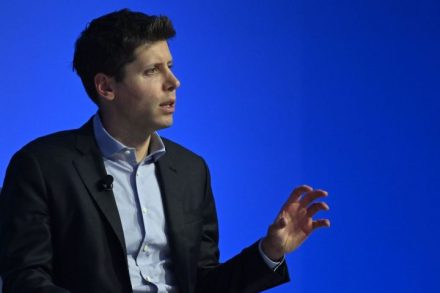
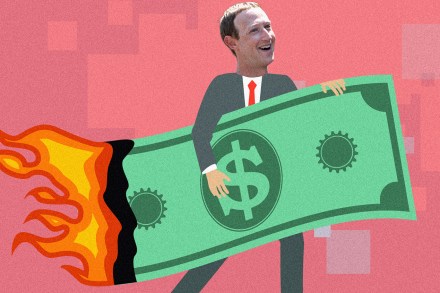
Sam Altman has always been a charmer. At school he revelled in the art of persuasion, joining a school debate team and taking part in national tournaments. After charming his teachers, Altman graduated into charming investors, launching a startup at just 19 before working his way up to become president of Silicon Valley’s premier startup incubator, Y Combinator. Few startups in history have burned through cash as fast as OpenAI, which last year managed to spend more on marketing and employee share options alone than it made in overall sales When he later joined OpenAI, the creator of ChatGPT, his charm was key to recruiting a team of some of the brightest coders and scientists in the world.

Why shouldn’t Nigel Farage invest in crypto?

The nation is – apparently – in shock. After giving endless speeches about how much he loves cryptocurrencies, Reform UK leader Nigel Farage has revealed that he himself has invested in a crypto firm called Stack. Despite being accused of 'grift', Farage is far from the first politician to hold stocks and shares that risk overlapping with his professional duties. Indeed, it is hardly an established convention that politicians must divest all their assets upon entering Parliament. There are, in fact, plenty of examples to the contrary. The Sunak family, comfortably the wealthiest-ever occupants of Downing Street, have a net worth of north of half a billion pounds thanks to their shares in a listed tech firm set up by Rishi’s father-in-law.

Why is Starmer ignoring Britain’s tech sector?

The government’s hotly-anticipated industrial strategy has at last arrived. In it are a handful of bold new announcements, and a lot of old recycled ones. There are some big shiny spending commitments – a couple of billion pledged here, a few hundred million spent there. But perhaps the most consequential element, especially for the tech sector, is a note right at the back of the document on page 152. It expresses an ambition for procurement rules to be consistent with the government’s wider industrial strategy to grow the economy – or as the document puts it in fluffy Whitehall-speak, contracts must 'set at least one social value key performance indicator'.

Starmer mustn’t let Trump kill the Digital Services Tax

Donald Trump has his eyes on Britain’s Digital Services Tax (DST). The tariff-touting US President insists that the tech firm tax must be scrapped if the UK is to have the 'deep' trade deal on technology it desires. So far the government has demurred, but, with Keir Starmer disclosing last week that there are 'ongoing discussions' about the tax, it may yet capitulate. I think it would be foolish to do so. Trump thinks the tax is a punitive one aimed directly at the US. It’s true that big US tech firms are the largest payers. But as the shock emergence of Chinese firm DeepSeek proved earlier this year, there’s no reason to assume the next trillion-dollar tech business will come from California, and the sources of income from the DST are likely to diversify over time.

Europe is ruling itself out of the AI race

I recently reported on a major partnership signed by a German tech startup. Or so I thought. Not long after publication, I got a message from the company: 'You have wrongly said we were founded in Germany. In fact, we were founded in California. Please correct this.'  That’s strange, I thought. Everyone I spoke to sounded pretty German – and indeed the person I emailed was based at the firm’s Berlin offices. But they were adamant: this was a California-based business. The perception is that America has strong innovation, and Europe has strong regulation I did some digging and discovered the company had been registered in Germany at least a year before it even opened an office in the US.

Starmer will need a miracle to boost his ‘AI growth zones’

The government has unveiled its new ‘AI Opportunities Action Plan’ – a ten-syllable, fifty-point proposal to grow the UK’s AI industry. Among the only memorable points of the fifty unveiled last month was the creation of ‘AI growth zones’, clusters of AI expertise dotted around the country. The only growth zone named in the plan was Culham, a sleepy village in Oxfordshire. I went to pay it a visit. Culham and its nearby sister village Harwell were among the top sites in the world for scientific research in the mid-20th century and were run by what’s now called the UK Atomic Energy Authority, which conducts nuclear experiments.

The fatal flaw in Starmer’s AI plan to save Britain

You’d be forgiven for thinking the government’s new AI Opportunities Action Plan lacks ambition. While frontier AI businesses in the US and China are developing dazzlingly powerful AI tools to cure diseases and solve mind-bending equations in physics, Sir Keir Starmer today promised that artificial intelligence would 'spot potholes more quickly'. Leaving this Starmerism aside, there is lots of detail in the plan to get tech companies excited. The creation of so-called ‘AI growth zones’ to build tech infrastructure faster and attract clusters of AI expertise in targeted locations brings huge promise. The history of technological advances, from social media to semiconductors, is often a story of bright, like-minded individuals firing off ideas in close proximity.

A crackdown on AI energy consumption would be a mistake

AI has an energy problem: it consumes an awful lot of it. Firms like ChatGPT creator OpenAI demand eye-watering levels of energy to develop their models. Training Chat GPT-3 used as much as 120 American homes over the course of a year, according to one study, while the training of GPT-4 used many multiples more. The International Energy Agency estimates that AI will cause the number of data centres, the warehouses in which their vast training datasets are stored, to double globally at some point in the next ten years. Inevitably, this will also lead to a doubling in the amount of electricity needed to run them.

Firing Sam Altman has thrown the AI race back open

Until this week, OpenAI seemed like an unstoppable force. In the space of little more than a year, the San Francisco-based organisation was transformed from a research unit on the fringes of the tech industry to the world’s number one dominant AI business.  Every newspaper on the planet seems to have covered the rapid rise of ChatGPT, its flagship AI product. Everyone from software engineers to the local cabbie seems to be using it, with the site attracting in the region of 1.5 billion visits per month.  Control of AI is now firmly concentrated back in the hands of a familiar group of tech behemoths Such was the might of OpenAI that Microsoft quickly wanted in, committing an eye-watering $10 billion (£8 billion) in funding for a stake in the business.

WhatsApp is right to be angry about the UK’s encryption mess

The world’s biggest tech firms have lined up to lambast the latest incarnation of the Online Safety Bill and Investigatory Powers Act. Many, including Apple and Meta, are threatening to withdraw products and services from the UK if the proposed rules become law. The Home Office could become the ‘de facto global arbiter of what level of data security and encryption are permissible’, Apple says. They have a point. The government wants to force companies to scan the content of its users’ encrypted messages for harmful content, as well as getting advanced notice to approve any future software updates that are security related.

Why Threads is failing to win over Twitter users

When Mark Zuckerberg's Meta released Threads earlier this month, it looked to be the biggest threat to Twitter in the app’s 17-year history. Over 100 million people signed up within days, a lightning-fast adoption rate that made ChatGPT’s four-week timescale to hit the same milestone seem sluggish. But that threat now appears to be rapidly tailing off. The number of daily active users on the text-based social media app has more than halved from 49 million to 23.6 million in a week, according to an analysis by Similarweb. Last Friday, the number of people using Threads dipped to around 22 per cent of Twitter’s audience, down from its peak a week before of 45 per cent. Is Zuck in danger of losing his fight with Twitter's owner Elon Musk already?

How Mark Zuckerberg’s metaverse gamble backfired

Less than two years ago, Facebook boss Mark Zuckerberg bet the house on the metaverse. Zuckerberg believed that his virtual reality world was the future. Now, with the rapid progress of Artificial Intelligence (AI), he appears to have made a calamitous mistake. The metaverse isn't yet dead – but it's future looks far from rosy. Having recently taken a trip to the metaverse, I can't say I'm surprised that Zuckerberg's pet project has failed to catch on. At Meta’s shiny new offices in London's King's Cross, large black headsets were strapped over our eyes. Before long, by the wonders of Meta’s technology, we were transported from our real meeting room to a virtual one. Our faces suddenly seemed unfamiliar and we no longer had legs.

Is Elon Musk a genius or a dud?

When he bought Twitter in October last year, Elon Musk set out a bold vision for the bird app. The billionaire said his acquisition was 'an accelerant' towards building 'X, the everything app,' emulating the functionality of China’s WeChat, with which users can transfer money, play video games, shop online and more. But so far, beyond registering a holding company called X Corp, there are few signs of progress towards this so-called everything app. Musk’s fiercer critics warn he may end up with a nothing app: after gutting most of the company’s workforce and redesignating blue ticks to denote paid subscription instead of notoriety, Twitter’s user experience is rapidly deteriorating. Many users may be tempted to leave if an alternative arrives on the scene.

The EU must tread carefully in its AI crackdown

Artificial Intelligence (AI) has surged in popularity in recent months. ChatGPT alone has swelled to more than 100 million users in a matter of weeks, capturing the imagination of the world for whom the technology had previously been consigned to the realm of science fiction. Scores of companies, from software businesses to manufacturers, are racing to find fresh ways to build its functionality into their operations.  But amidst the excitement, there is also a worry: are we going too far, too fast? Twitter's owner Elon Musk warned this week that AI could lead to 'civilisation destruction'. Regulators, alarmed at this explosion in activity, are scrambling to react.