Sean Thomas

Sean Thomas

Sean Thomas is a bestselling author. He tweets from @thomasknox.

What a greasy spoon in West London tells us about the threat of nuclear war

All-day diners feasting on the full English, the cheese omelette or the celebrated sausage sandwich (£3.80) at George’s Café, at 36 Blythe Road, Hammersmith, probably don’t realise they are dining at an address which is pivotal in global cultural history. So pivotal, in fact, that it might just tell us whether human civilisation is about to be extinguished in a nuclear holocaust. A claim like that needs fleshing out. Here it is.

What the live-streamed lying-in-state says to us

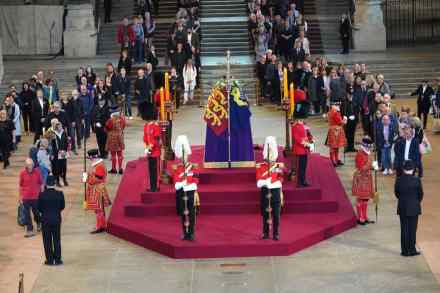
In 2002 I attended the lying-in-state of the Queen Mother. I did it as part of the grand old British tradition of faintly annoying all your left-wing friends. I also thought it might be an interesting dollop of history-in-the-making. How right I was. Along the South Bank, round midnight, I joined the queue – quite drunk, I admit, but I was hardly alone in this. For two hours the jolly, chatty queue: a BBC screenwriter’s ideal mix of creeds, ethnicities, ages, jobs, disabilities, achievements, motivations, politics. A surprising number were definitely socialists. We swapped jokes, advice, stories; we shared sweet royal anecdotes, filthy royal gossip, pleasant ham sandwiches. And a couple of hot toddies.

I’ve seen the future of AI art – and it’s terrifying

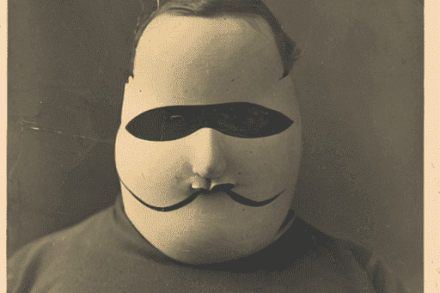
A few months back I wrote a Spectator piece about a phenomenal new ‘neural network’ – a subspecies of artificial intelligence – which promises to revolutionise art and how humans interact with art. The network is called Dall-e 2, and it remains a remarkable chunk of not-quite-sentient tech. However, such is the astonishing, accelerating speed of development in AI, Dall-e 2 has already been overtaken. And then some.  Just last week a British company called Stability AI launched an artificial intelligence model which has been richly fed, like a lean greyhound given fillet steak, on several billion images, equipping it to make brand new images when prompted by a linguistic message.

What I learnt on my grown-up gap year

Earlier this year, quite unexpectedly (and for personal reasons too tedious to share), I was forced to be outside the UK for ‘a while’. At the outset, I had no idea how long my exile might be: maybe weeks, maybe months. To add to the ambiguity, I had no particular place to go, except two already arranged travel writing trips of a week each (in the USA and Greece). So I decided: why not make a pleasing virtue of necessity? Why not, at the age of 58, do a geriatric version of a gap year, wandering freely about the globe? And that is exactly what I did. I packed my suitcase, headed out, and let whimsy and the weather dictate where I went next.

Why is The New York Times so obsessed with loathing Britain?

They’ve done it again in the grey building on 826 Eighth Avenue, New York City, NY, USA. They – the editors of the New York Times – have launched a tumultuous broadside against the most degraded, pathetic, hopeless, rancid, ugly, stupid, ridiculous, doomed and offensively anti-democratic country in the entire world. That is to say, the United Kingdom. This particular fusillade is quite something. Under the shouting headline The Fantasy of Brexit Britain Is Over, the author – Richard Seymour (and we shall come back to him) – serves up a grand, all-you-can-eat buffet of UK hatred. Britain, according to Mr Seymour, is ‘economically stagnant, socially fragmented, politically adrift’.

How Boris Johnson changed my life

Over the coming weeks we will be regaled with dozens of personal recollections, from around the world, of the man who has dominated British politics this last half decade. Some of them will paint him as a foolish clown, others as a flawed genius, others will see him as Leaver saint or Brexiteering Satan, but my Boris Johnson story might be the only one involving medically dangerous levels of masturbation. So it needs to be told. About eighteen years ago I got horribly addicted to internet porn – free online porn then being an innovation – to an extent that I went days without sleep, became perilously run down, and then got taken out with a suppurative form of tonsillitis. I actually ended up on a drip, badly dehydrated, in hospital.

After Boris

30 min listen

In this week’s episode:After Boris, who's next?On the day the Prime Minister resigns, Katy Balls and James Forsyth discuss the aftermath of Boris Johnson’s premiership. Who might be the next Tory leader? (0.51).Also this week:Who are the wealthy Russian émigrés ready to fight in the war?Sean Thomas talks with Moscow-based journalist, Gabriel Gavin about the Russian émigrés who hate the war, but know they have to win it (19.56).And finally: Are 20mph speed limits causing more trouble than Brexit?Ysenda Maxtone Graham makes this case in the magazine this week. She's joined by Cllr Johnny Thalassites from the Kensington and Chelsea borough. (22.26)Hosted by Lara Prendergast & William MooreProduced by Natasha Feroze.

An existential war: even wealthy émigrés are prepared to fight for Russia

If you’re wondering where all those urbane, clever, westernised Russian travellers have gone since the onset of the Ukrainian war – a war which has largely barred them from the West – I can tell you that at least two of them will be found in the tiny Armenian hamlet of Gnishik, high in the summery peaks of the Caucasus. I know this because I met them there last week. And what they told me – about Russia, the war, their lives since the war – was illuminating. This meeting wasn’t planned.

Is there a British version of America’s attachment to guns?

Now that the horror of the Uvalde school shooting in Texas has begun to ebb away, as it always does, it is easy to think that things have returned to normal. And in America, they certainly have returned to normal. That is to say, the mass shootings continue, at the rate of about 11 a week, with a total of around 300 so far this year. As things stand, America is on course for its deadliest year of gun violence ever (equalling last year). Here are a few details of just some of these slayings. At the beginning of this June, an angry patient in Tulsa, Oklahoma shot dead his surgeon, Preston Phillips, then shot dead another doctor, plus a receptionist and a bystander – after he blamed one of the physicians for causing him pain from a recent surgery.

How to have the archaeological adventure of a lifetime

Anyone with even a passing interest in history and archaeology has surely, at some point, asked themselves: what would it be like, to be an eye-witness to a world-shaking discovery? To walk down the Valley of the Kings, even as Howard Carter opened Tutankhamun’s Tomb. Or to visit Sutton Hoo in the week they unearthed the first glittering Anglo-Saxon treasures. Maybe you’d like to have been among the first to see marvellous walls of Troy as the great German archaeologist Heinrich Schliemann lifted away the veil of thirty centuries. Well, remarkably, you can do something like this today, by visiting the so-called Tas Tepeler ('the stone hills') in eastern Turkey.

Is an unknown, extraordinarily ancient civilisation buried under eastern Turkey?

I am staring at about a dozen, stiff, eight-foot high, orange-red penises, carved from living bedrock, and semi-enclosed in an open chamber. A strange carved head (of a man, a demon, a priest, a God?), also hewn from the living rock, gazes at the phallic totems – like a primitivist gargoyle. The expression of the stone head is doleful, to the point of grimacing, as if he, or she, or it, disapproves of all this: of everything being stripped naked under the heavens, and revealed to the world for the first time in 130 centuries. Yes, 130 centuries. Because these penises, this peculiar chamber, this entire perplexing place, known as Karahan Tepe (pronounced Kah-rah-hann Tepp-ay), which is now emerging from the dusty Plains of Harran, in eastern Turkey, is astoundingly ancient.

How much longer can Boris Johnson keep going?

41 min listen

In this episode: Is Boris going to limp on? In her cover piece this week, Katy Balls writes that although Boris Johnson believes he can survive the partygate scandal, he has some way to go until he is safe, while in his column, James Forsyth writes about why the Tories have a summer of discontent ahead of them. They both join the podcast to speculate on the Prime Minister’s future. (00:44)Also this week: Why is the Rwandan government taking our asylum seekers?We have heard the arguments behind the Home Office’s plan to send migrants to Rwanda. But why is Rwanda up for this arrangement?

Can you tell which of these artworks was created by a computer?

Take a look at the four paintings on this page. If you are acquainted with modern art, you will probably assume, at a quick glance, that it shows four works by the Russian artist Wassily Kandinsky (1866-1944). However, whatever your knowledge of modern art, I suggest you look again, because not all of these works are by that great pioneer of abstract painting. More than one of them is an original image created by a computer model, which was asked to do a digital artwork in the style of Kandinsky. Which are the fakes? I’ll give you the answer at the end of the article. Before we get there, you need to know how a computer can make such startlingly echoic images, and what it might mean for art.

Rebuild our cities

For an ancient city with an illustrious industrial history, Derby doesn’t get much attention. But it does boast at least one famous, possibly apocryphal story, known to scholars of urbanism. Sometime in the 80s or 90s (accounts differ), a party of visiting German VIPs was given a tour of the city’s sights: the humdrum housing schemes; the corners of concrete bleakness; the sad disjointed malls and random multi-storey car parks. Struck near-dumb by the ugliness, the Germans apologised profusely for the damage clearly wrought on poor Derby by the Luftwaffe: wiping away a venerable city centre, leaving behind such tragic hideousness.

James Dyson is right to urge us back to the office

I have almost no clue what office life is like. And I really mean ‘almost no clue’. Over several decades of professional work, my entire experience of office life consists of four hours working as a receptionist at a shipbroker’s in the City. I was so bad they sacked me by lunchtime: I didn’t even make it through the first day.  Chastened by this trauma, I thereafter vowed I would never do another hour of paid work in an ‘office’, and I have stuck to my principles. I have never been woken by a horrible alarm at 7am; instead, for all my life, I have heroically kept on sleeping until about 10.30.

John Keiger, Mary Wakefield and Sean Thomas

21 min listen

On this week's episode, we’ll hear from John Keiger on Emmanuel Macron’s brand of performative diplomacy. (00:53)Next, Mary Wakefield on the few pros and many cons of the lady carriage. (10:30)And finally, Sean Thomas on how learning to work from home opens the door to working in paradise. (16:17)Produced and presented by Sam HolmesSubscribe to The Spectator today and get a £20 Amazon gift voucher.

Why work from home when you can work from paradise?

 Colombo If I lift my eyes from my laptop, I can stare across my hotel’s rooftop infinity pool to the soft tropical blues of the Laccadive Sea. In a minute I might order another one of those excellent Sri Lankan crab curries. And another chilled Lion lager. Meanwhile the weather app on my phone tells me that London is shivering in a succession of bitter storms as the government ‘ends all Covid restrictions’, meaning everyone can go back to catching trains in the freezing fog.

What the Capitol riots and the plot to stop Brexit have in common

It's not often that browsing the genteel aisles of Waterstones reminds you of madmen storming the Capitol in buffalo-horn helmets, but that's the buzz I got as I briskly scanned the History shelves. I happened on a slender volume called How To Stop Brexit, written by Nick Clegg. I’d never heard of the book (a realisation that probably attaches to quite a lot of books by Lib Dem leaders) so I pulled it out, with curiosity. The text, I thought, must be a new thing, written since we finally Brexited and Clegg joined Facebook. But no: it was published in 2017. It seems I was holding a kind of revolutionary pamphlet, advising Remainers how they might ignore Britain’s largest ever democratic vote, and get it reversed, thus evading the will of the people.

What if wokeness really is the new Christianity?

Have you had a conversation about The Wokeness recently? If you’re anything like me, you’ll have had a few. And they generally go the same way. First someone leans close, with a kind of guilty expression, then they whisper something outrageously unwoke like “actually, I do believe only women have cervixes”, or “I’m not entirely sure they should have banned The Tiger Who Came To Tea”. ​Sometimes the conversation ends there, with sidelong glances, in case anyone has overheard, and you quickly move on to less contentious topics. Occasionally, however, it goes further, and someone says, with a pleading hint of uptalk in their voice: it’s going to end soon, isn’t it? The madness? Surely it has to end.