Scott Jordan-Harris

A laughing matter

Barry Cryer, defiantly old-fashioned in a dinner suit and red-velvet waistcoat, sits in a director’s chair and addresses his audience as if they are devoted friends. Most of them are: every joke he tells is met with affectionate laughter of a kind given only to national treasures. Butterfly Brain, which is currently touring, is structured around the alphabet, but each letter is simply a starting point for masterly flurries of unconnected comedy. Some of these, such as ‘My Old Man’s a Dustman’ sung to the tune of ‘Heartbreak Hotel’, come directly from I’m Sorry I Haven’t a Clue, on which Cryer has appeared ‘since before sound’. Others are anecdotes collected across a lifetime of listening to backstage stories.


The top ten iBooks of 2011

https://www.youtube.com/watch?v=DDwnHP-tUz0 While the Kindle continues to solve storage problems for the bibliophile on the go, it is the iPad that is actually changing what books are and stretching our definitions of reading. Here is my selection of the ten best iBooks released for it this year:  The Waste Land  To anyone unconvinced about the appeal of iBooks, I can only present this, the greatest edition of T.S. Eliot’s The Waste Land that has ever been published. You can use it to read the poem, with or without notes, or to have the poem read to you by the likes of Eliot and Alec Guinness.

A new kind of classic

The best discoveries in reading are not those we simply enjoy ourselves but those we can share with others whose pleasure we know will equal our own – and the best of these discoveries are those we can share with children whose passion for reading is just developing. The iPad app The Fantastic Flying Books of Mr Morris Lessmore by William Joyce is just such a discovery and, if it can be considered a book, it is the best book about books since Alberto Manguel’s The Library at Night. Joyce is both a brilliant children's author and a computer animator skilled enough to have worked on Pixar films, and here his two talents merge as exquisitely as Beatrix Potter’s gifts for illustration and storytelling in Peter Rabbit.

The Worst of All Words

In the factory where my grandfather worked for decades, there was one item more important than any piece of machinery or safety apparatus: the swear jar. Whenever someone uttered a curse word, he was bound to pay sixpence into it and, at the end of the month, the coins were collected and used to buy tea and biscuits for elevenses. My grandfather had been at the factory eight years before someone worked out that he was getting his tea and biscuits for free: he never paid a single sixpence into the swear jar because he simply never swore. He didn’t swear during conversation. He didn’t swear if he had a disagreement with a co-worker. And he didn’t even swear when a semi-melted splinter of copper shot out of a malfunctioning machine and into his eyeball.

Prime cut

The recent restoration of Fritz Lang’s Metropolis is now available for home viewing in three plush editions, in Eureka’s Masters of Cinema DVD series. The recent restoration of Fritz Lang’s Metropolis is now available for home viewing in three plush editions, in Eureka’s Masters of Cinema DVD series. Metropolis is the foundation of all subsequent science-fiction films. It is a movie of incalculable influence that deserves to be seen by all — and the chief attractions of this version are 25 minutes of footage unseen for 80 years, and long believed lost, as well as a recording of the original score. Premiered the year The Jazz Singer’s sound changed cinema, Metropolis was a peak of both silent film and German Expressionism.

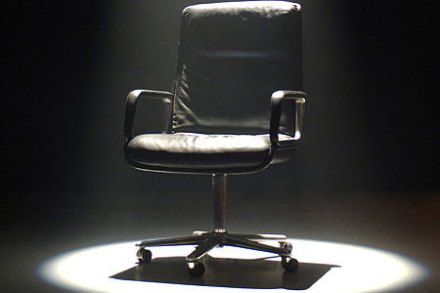
TV: Why I Love … Mastermind

I’m often told I should go on Mastermind. Although this isn’t a compliment (it’s actually a very polite, and very British, way of asking, ‘Can we talk about something else now?’), I still take it as one. Whenever someone mentions to me that I ought to audition for a spot in The Black Chair it tells me that, conversation skills aside, I’m at least on course to be the kind of person I’d like to be. If someone told me I should try out for The Weakest Link or, worse, The National Lottery: In It To Win It, I’d take it either as an insult or a suggestion that I really should engage in some sustained self-improvement.

COMEDY: The Little Waster

When I was 14, and wearing one of my father’s old shirts back to front in one of those secondary school Art lessons that facilitate conversation more than they facilitate artistic endeavour, I was in the middle of a monologue, when a friend interrupted me. ‘Scott,’ he said. ‘You sound just like Hugh Grant.’ I was pleased, until he added, ‘Too bad you don’t look like him – or you’d be pulling girls like crazy.’   My accent – a sort of sub-standard Hugh Grant-Henry Higgins mash-up, certain to enchant Americans but equally certain to mark me out as irrevocably middle class to anyone with even the most distant upper class origins – is not shared by my maternal grandmother.