Sarah Ditum

Women have never had it so good as now

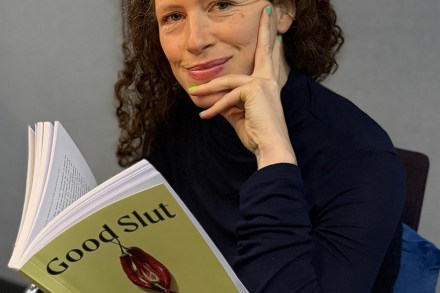
Unfortunately, Zoe Strimpel has a great point in Good Slut. Why unfortunately? Because as much as I sympathise with her basic argument, I cannot see many people being persuaded by this scattershot polemic with its myriad errors and alarming glibness. Team slut deserves a better advocate. Whether I want to count myself as one of team slut is a sensitive point. I’m 44: it feels embarrassing. I had my ‘reclaiming sexist slurs’ phase in the late 1990s when I was an aspiring Riot Grrrl and I realised pretty soon that wearing fishnets and calling myself names was not having the disruptive effect on misogyny that I’d hoped for. Strimpel is 43 and, like me, she’s noted the recent turn to conservatism in sexual politics with some alarm.

Margaret Atwood seems embarrassed by the sheer volume of her output

Margaret Atwood is among the major writers of English fiction of our time. This is a very boring way to start a review, but it is true. Atwood, now 82, is prize-winning, popular and prolific. She’s won two Bookers. Several of her books have attained totemic status with readers, most obviously the reproductive dystopia of The Handmaid’s Tale, but also Cat’s Eye, for its steely portrayal of girlhood cruelty, and The Blind Assassin, which combines feminist grit with genre-straddling swagger. And there are so many books.

How ‘bad’ does a mother have to be to lose custody of her children?

I’m lucky. I’ve only visited a family court once, and that was as a journalist rather than a party to a case. One detail stuck with me. On the wall in the waiting area was a poster preparing attendees for the layout of the courtroom: the judge goes here, the barristers go here, and you go here and wait for your fate – for your children’s fate – to be decided. It was a reminder that, however much family courts have become friendlier in recent years (notably, family court judges stopped wearing wigs in 2008), these are still places that confound and alienate those hoping for justice. That is, whatever ‘justice’ means when the issue at stake is the division of a child between warring parents.

Will the ‘bunny boiler’ tag continue to haunt single women?

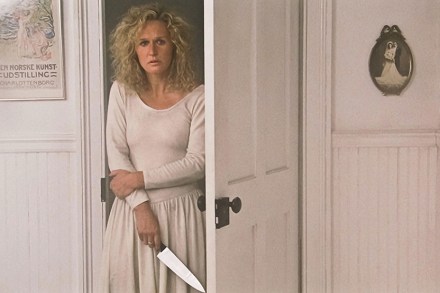
Even if you’ve never seen Adrian Lyne’s 1987 thriller Fatal Attraction, you’ll know what a ‘bunny boiler’ is. When Alex (Glenn Close) slaughters her lover Dan’s family pet and leaves it simmering on the stove, she invented a universal shorthand for the obsessive, unstable woman who can’t take romantic rejection. In the film, Alex is portrayed as the destroyer of domestic happiness: an embittered career woman on the wrong side of 35, who is made literally sick when she spies on the contentment shared by Dan (Michael Douglas), his wife and his daughter. Audiences loathed her. Susan Faludi, in her book Backlash, reported cries of ‘Kill the bitch!’ and ‘Punch the bitch’s face in!’ during the film’s violent climax.

Whatever happened to the stiff upper lip?

At some point in the past ten years, trauma became a joke in my household. Should any Ditum suffer a minor mishap, the correct reaction is to adopt a wounded expression, bob your head to the side and whimper: ‘My trauma!’ Not because trauma is funny, but because what Darren McGarvey refers to as the ‘trauma industrial complex’ has become so consuming, the only option is to laugh about it. By ‘trauma industrial complex’, McGarvey means the culture that treats trauma, and those who have been traumatised, as commodities. He’s a good person to write this book because he personally has been commodified in this way. His first book, 2017’s Poverty Safari, detailed his working-class background in Glasgow – a story of alcoholism, addiction, abuse and homelessness.

The enduring miracle of human birth – a history

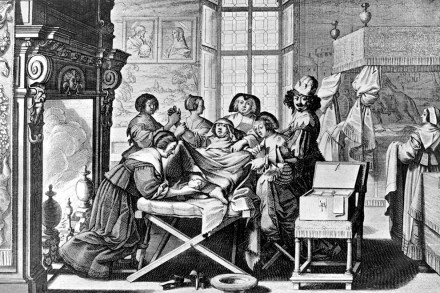
One of the most compelling artefacts described in this history of human birth is a stone carving discovered at an ancient temple site in what is now Turkey. The Gobekli Tepe totem pole, 11,500 years old, 6ft 3in tall and weighing 1,100lb, shows successive generations giving birth: a faceless figure at the top delivers a woman, who delivers another woman, who delivers a man, who is ‘proffering his phallus’. The exact meaning and function of this object is long lost, but it is clear that it has something to do with fertility. For as long as humans have had a culture, that culture has been – understandably – concerned with the mystery of reproduction and birth. The totem pole is a reminder of a very basic truth: everyone who has ever lived came out of a woman’s body.

First love: The Inseparables, by Simone de Beauvoir, reviewed

‘Newly discovered novel’ can be a discouraging phrase. Sure, some writers leave works of extraordinary calibre lurking among their effects — Flann O’Brien’s The Third Policeman, say. Other books, though, would have done as well to stay lost. Did the world really need to set eyes on Harper Lee’s first draft of To Kill a Mockingbird in the form of Go Set a Watchman? Probably not, although you can see why a publisher wouldn’t quibble with one more title from such a famous name. Unpublished in Simone de Beauvoir’s lifetime, The Inseparables was written in 1954.

What was millennial girl power really about?

The 1990s and the following decade were, it is widely agreed, a bad time to be a girl. Which is strange, because a girl seemed like the best thing you could be then. Certainly better than being a woman. Not as good as being a boy or a man, of course, but since those were out of the question (gender fluidity was still a nascent proposition), you might as well lean into girlhood. For millennial girls like me and Sophie Gilbert (a Pulitzer-nominated staff writer on the Atlantic), this was a confusing period. On the one hand, girls were everywhere. We became teenagers to chants of ‘girl power!’, and later we got our vision of young adulthood from the Lena Dunham series Girls. ‘Girl’ was an identity with potential.

Urban gothic: I Want to Go Home, But I’m Already There, by Roisin Lanigan, reviewed

A horror story in three words: London property market. That’s the starting point for Roisin Lanigan’s brilliantly creepy debut novel, set in the sheer hell of being a young renter. Because once you’ve run the gamut of carbon monoxide-leaking boilers, coked-up estate agents, absentee landlords and frosty housemates (and been gouged in rental costs for the privilege), maybe a haunting isn’t a deal-breaker. The main character, Aine, is adrift in her twenties with a vaguely online job and a prescription for unspecified mental health issues. She’s also pathologically passive: she ends up in London because Laura, her best friend from university, asks to flatshare and Aine can’t think of anything else to do. ‘So why not London?

Barbie’s world: the normalisation of cosmetic surgery

39 min listen

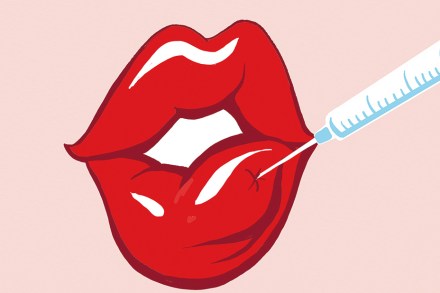
This week: Ahead of the release of the Barbie movie, Louise Perry writes in her cover piece about how social media is fuelling the cosmetic surgery industry. She argues that life in plastic is not, in fact, fantastic. She joins the podcast alongside the Times’s Sarah Ditum, author of the upcoming book: Toxic: Women, Fame and the Noughties, to discuss the normalisation of plastic surgery. (01:11) Also this week: In anticipation of the BBC Proms Philip Hensher writes in The Spectator that classical music has gone from being a supreme cultural statement, to just another curious musical genre.

How the war on Roe was won

When did it become certain that American women’s abortion rights would fall? The Supreme Court’s ruling that ‘Roe was egregiously wrong from the start’ was leaked almost two months ago, so the formal release of the judgment yesterday is bitter but hardly a surprise. Certainly, Donald Trump can take a lot of the credit. Somehow, an administration that gave every impression of being a blazing car crash from which hapless apparatchiks were ejected at speed managed to appoint three — three! — Supreme Court judges, every one of them a copper-bottomed social conservative.

Spectator Out Loud: Robert Hardman, Meirion Thomas and Sarah Ditum

23 min listen

On this week's episode, Robert Hardman reads his cover article on the quiet radicalism of Queen Elizabeth II (00:50); J. Meirion Thomas reads his article on the 'total triage' system that is leaving patients unable to see their GPs; and Sarah Ditum reads her review of Sandra Newman's new novel, The Men.Presented by Angus Colwell.Produced by Angus Colwell and Cindy Yu.

A flawed utopia: The Men, by Sandra Newman, reviewed

The problem for feminism is men. Not, specifically, in the sense that men are the source of women’s problems, although the statistics do tend to point in that direction. Feminism’s men problem is that, despite all this, women like men. Love men. One of the lessons of second-wave experiments in separatism is that the idealised man-free existence is always fighting against the gravity of affection. Sandra Newman’s novel The Men takes that quandary and does something clever with it. She imagines a world in which all the men and all the boys and all the trans women and all the male non-binaries and all the Y-chromosome-carrying foetuses are mysteriously spirited out of existence in one strange instant.

Who’s to blame if Britney Spears has been ‘devoured’ by celebrity?

All the questions around Britney Spears can be condensed into this one: who should we blame? For a long time, there was a comfortable narrative that the pop star’s decade-long descent — from virginal queen of teen in 1998, to junk-food scarfing, twice-divorced single mother, to broken woman being transported to hospital in restraints — was wholly her own doing. Britney was a train wreck, white trash, a hot mess and, all in all, no better than she ought to be. The fact that her career recovered dramatically after she was placed under a conservatorship arrangement in 2008 (giving her father ultimate control over her life and finances) seemed to prove that the under-lying problem had been her freedom.

Lucy Ellmann is angry about everything, especially men

Is Lucy Ellmann serious? On the one hand, yes, very. The novel she published before this collection of essays was the Booker-shortlisted Ducks, Newburyport, which relayed the internal life of an Ohioan mother of four via a single sentence across 1,000 pages. Her publisher tells me that between the proof and final publication of Things Are Against Us, Ellman made 1,700 changes. She is, in short, an undoubted paragon of highbrow meticulousness. Then again and on the other hand, no, Ellmann is not being serious at all here. Things consists mostly of pieces written before the pandemic but is nonetheless influenced by the plague world into which it emerges, reacting against solemnity with provocation. She supplies her own epigraph: In times of pestilence, my fancy turns to shticks.

The man who made Manhattan: The Great Mistake, by Jonathan Lee, reviewed

What makes a city? The collective labour of millions packed into its history; the constant forgetting of incomers who arrive to create their own version of a place, their own versions of themselves; the desires of great men, whose improvements are partly intended to secure a better life for their less fortunate fellows, and partly a plea for their own immortality. This is a novel about all three, disguised as one about Andrew Haswell Green. According to one of the few memorials to him still standing, he was the ‘Directing Genius of Central Park in its Formative Period’ and ‘Father of Greater New York’.

Joan Didion’s needle-sharp eye never fails

Most collections of journalism are bad. There are two reasons for this: one is that they are usually incoherent and the other is that they are, perversely, far too coherent. The pieces are pulled from their original contexts — newspapers, magazines — and thrown together with others they have no relation to beyond a common author. But (the too-coherent problem) most authors only have one or maybe two ideas to work through, so you end up doing the intellectual equivalent of walking a dozen rounds of the garden when you had hoped to be hiking off into a grand new landscape. I don’t know what Joan Didion’s one or maybe two ideas are, and I’m not sure she could even be boiled down to anything like that.

The banality of Matt Haig

It doesn't seem like a bad time to be Matt Haig. He’s written multiple bestselling books, including the reputation-making memoir Reasons to Stay Alive about his own experience of severe depression. His latest, The Midnight Library, is proving impossible for everyone but Richard Osman and JK Rowling to knock out of the bestseller charts. There’s a movie adaptation of one of his novels on the way. And we now know that his high-profile admirers run all the way to royalty (well, ex-royalty): Meghan and Harry chose him as one of the guests for their holiday edition of their podcast 'Archewell', to offer 'inspiration, perspective, and reflection' for these difficult Covid times. On the podcast, Haig talks affectingly about his own struggles with depression.

No, Ben Bradley: we don’t need a minister for men

Happy International Men’s Day! Sorry I’m late by one day, it’s just that I don’t really know what it’s for. I mean, yes, I’m grateful for its existence on International Women’s Day whenever someone says 'Ah, but when is International Men’s Day?', and I can reply: '19 November'. But even then, it basically spoils a much better answer, which is to say, 'Every other day of the year is International Men's Day.'  Anyway, it was International Men’s Day, and as usual the vast majority of men did not care. But one man who cared very much indeed was Conservative MP Ben Bradley, who gave a speech in Parliament about how men are neglected in politics. You know, men. The taller kind of human with fewer bumpy bits in front and back.

Claire Messud helps us see the familiar with new eyes

The title of this collection of journalism is a problem. Not the Kant’s Little Prussian Head bit, which, though opaque, is explained in the text. It’s from Thomas Bernhard’s novel The Loser and is quoted by Claire Messud in the title essay: ‘We study a monumental work, for example Kant’s work, and in time it shrivels down to Kant’s little East Prussian head.’ As a novelist, she explains, she strives to resist that shrivelling — to avoid being condensed into a ‘little American head’, to retain and convey all the detail of life. The problem is with the claim that this is an autobiography through essays. It isn’t.