Samuel Gregg

Samuel Gregg is Friedrich Hayek Chair in Economics and Economic History at the American Institute for Economic Research.

The welcome fall of Klaus Schwab

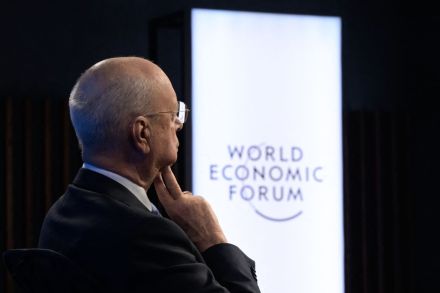
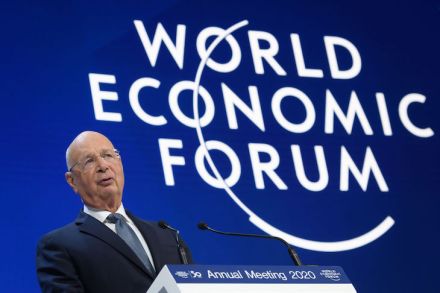
Hubris has a way of catching up to people. That was my first thought when I read that Klaus Schwab, founder and chair of the once-mighty World Economic Forum (WEF), had resigned his position in the wake of an anonymous whistleblower alleging financial and personal misconduct on the part of Schwab and his wife (the family has strongly denied all the claims). In early April, the 87-year-old Schwab had signaled he might step down. That process, however, rapidly accelerated on April 22 following these allegations.
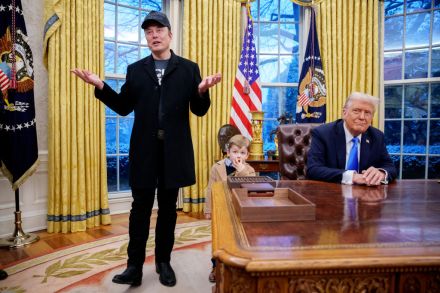
Elon wants Trump to understand how a pencil gets made

From our US edition

“I-Pencil,” the fable-like essay by the economist Leonard E. Reed, remains one of the best introductions to the free market. It shows the ways in which the mass production of even simple things – like the humble pencil – involves the work of numerous people, most of whom do not know each other and who are all motivated at some level by self-interest. Above all, Reed shows that this extremely complicated process occurs without someone planning it from the top-down. This is, in short, the classic argument for market liberalism. But Reed’s essay also illustrates the follies of central planning or imagining that humans can somehow live an entirely self-sufficient existence.

pencil free trade

Team Trump’s incoherent plan to change GDP measurements

From our US edition

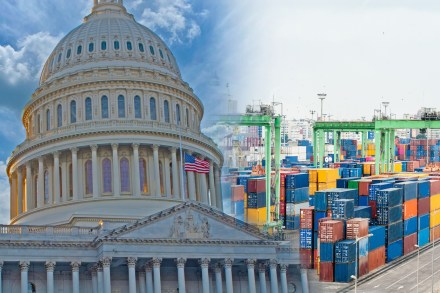
If there is anything that all governments watch carefully, it is GDP growth. Without substantive and ongoing increases in what GDP measures — the total monetary value of all final goods and services produced in the economy over a specific time period — societies are in big trouble. That’s one reason why recessions usually result in electoral death for whoever holds office at the time. To accurately estimate total growth in an economy, everything that contributes to GDP must be measured. That presently includes consumer spending, private domestic investment, net exports, and, lastly, government consumption and spending. Now, however, Trump officials ranging from Elon Musk to Howard Lutnick are stating that we should consider excluding the latter category.

Pope Francis’s immigration letter was seriously imprudent

From our US edition

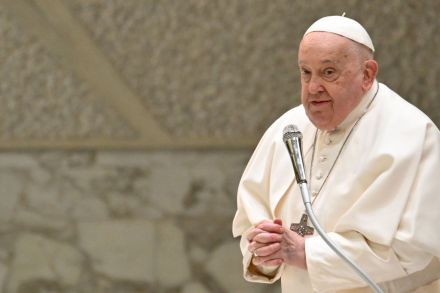
Everyone in the world, it seems, believes they’re entitled to an opinion on US immigration policy. That includes Pope Francis. The Supreme Pontiff made clear his displeasure with the administration’s resetting of America’s approach to immigration in a letter addressed to the US Catholic bishops, but clearly directed against the new Trump administration’s efforts to enforce existing US immigration laws — with a particular emphasis on deporting immigrants who are criminals or who have committed crimes as well as others judged not to have valid claims to refugee status.

pope

Why Davos only makes the world’s ‘polycrisis’ worse

‘Polycrisis’. If you haven’t heard of the word, it’s likely that you soon will, courtesy of the World Economic Forum, which is meeting this week in Davos, Switzerland, to discuss the theme ‘Cooperation in a Fragmented World’ The world, according to the just-released WEF Global Risks 2023 Report, has entered an era of ‘polycrisis’. Though the expression sounds like a buzzword designed by management consultants to persuade everyone that they are cleverest people in the room, the term was in fact coined by the French philosopher-sociologist Edgar Morin in the 1990s. It was Morin’s way of arguing that, instead of seeking monocausal explanations of major problems (capitalism, colonialism, etc.

Why it isn’t mad to oppose the World Economic Forum

The World Economic Forum (WEF) and its long-serving founder and Executive Chairman, Professor Klaus Schwab, are the subjects of many insane conspiracy theories. This NGO, which again this January will bring together politicians, business leaders, journalists, academics, and assorted celebrities in Davos, has been accused, among other things, of being a secret cabal of paedophiles who used the Covid-19 pandemic to harvest children’s blood so as to hasten in a Satanic New World Order. It isn’t mad, however, to regard the WEF as a dangerous force in global politics. The WEF is a dangerous force in global politics. To adapt Joseph Heller, just because you are paranoid, doesn’t mean the WEF isn’t after you.

Free markets are part of the American tradition

From our US edition

Election aftermaths are always an opportunity for taking stock. Since the 2022 midterms, we’ve heard prominent Republicans stressing the need to revisit questions ranging from electoral strategy to how to engage the culture wars. What desperately needs discussion on the American right, however, is conservatism’s approach to economic policy. Since 2015, American conservatives have been deeply divided over economics. Conservative skepticism about markets predates Donald Trump, but there’s little question that Trump shattered the favorable views of free markets that had prevailed since Ronald Reagan’s presidency.

We’re in dark days for market liberalism

If there is anything that the swift overturning of Prime Minister Liz Truss’s purported free market revolution has taught us, it is the utter lack of enthusiasm for economic liberalisation à la Reagan and Thatcher across the West right now. Yes, the lousy roll-out of the mini-budget by Truss’s now ex-Chancellor Kwasi Kwarteng played a role in the prime minister’s rapid and multiple U-turns. But bad-PR is only part of the story. Many Tory MPs are plainly comfortable with the economic arrangements prevailing in Britain that successive Conservative governments have not challenged since the Tories returned to power in 2010.

How the right fell out of love with markets

From our US edition

In December 2016 I was speaking at a conference in London. Much of the discussion, unsurprisingly, gravitated toward Donald Trump’s recent election as president. It meant, I noted, that an outspoken free-trade skeptic would be in the White House. At that point a bright young French economist turned to me and said, ‘Mon ami, I thought that free trade was a done deal on the right. Apparently, it isn’t.’ As it turns out, it wasn’t just free trade that much of the American right was on the brink of rejecting. A systematic questioning of the central place assumed by free markets in conservative thought and policies since the 1970s, in the United States and the broader Anglosphere, was well underway.

Free markets

The woke war on religion

From our US edition

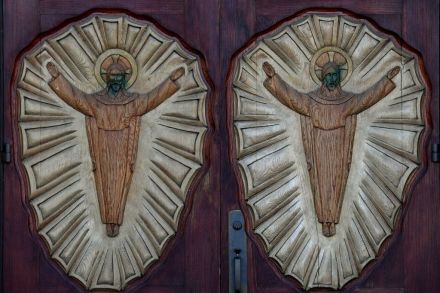
Though you wouldn’t know it from most American media outlets, the phenomenon of vandalizing and burning religious sites which is accelerating in Europe has, like a virus, jumped an ocean and is now among us. Over the past month, statues of Christ and the Virgin Mary have been damaged in states as far apart as Colorado, Missouri, New York, Tennessee, and Massachusetts. On July 11, a vehicle was driven into a Catholic church in Florida with the clear intent of burning the building to the ground while congregants were inside. But it’s not just Catholic symbols and edifices being targeted. America’s Jewish community has received similar treatment.

religion

Burning Christianity

From our US edition

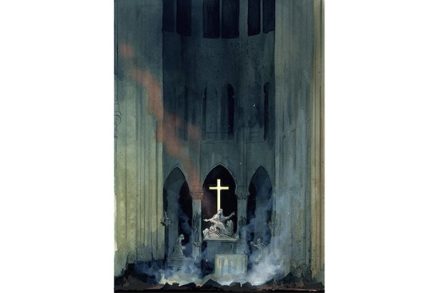
Conspiracy theories aren’t something I take seriously. But when flames engulfed Notre-Dame cathedral in Paris on the evening of April 15, 2019, my mind momentarily wandered down that path. After all, attempts to incinerate, vandalize and rob Christian churches and shrines have become so commonplace in France over the past three years that one could be forgiven for concluding that something even more sinister was afoot. In 2017 alone, according to France’s Interior Ministry, 878 acts of vandalism were committed against Christian places of worship, cemeteries and shrines. That’s an average of nearly two and a half sites being targeted every day. Government officials play down the problem.

christian