Sam Kriss

The art of conspiracy

If you lived anywhere near Kilburn half a decade ago, you might have noticed the messages one of our neighbours kept spray-painting over our walls and bridges. They’d appear overnight across a fairly wide swathe of north-west London, always in an immediately recognisable loopy handwriting, and the content was always recognisably loopy too. This person was trying to communicate something, but it was hard to tell exactly what. The messages said things like ‘STAND UP TO BLACK MASSES’ and ‘MERCY FROM DR HACK’ and ‘TAKE MERCY UNTO ME TAKE IT OUT OF IT’. Every few days for about a year, I would come across another one of these messages, and try to piece together exactly what the author was trying to tell me. There was something going on in the world, something bad.

There is little sadder than the death of a language

The last Yana-speaker in the world died in 1916. When Ishi was born, the Yana were still a small but healthy collection of tribes ranging the Sierra Nevada mountains of California, where they lived off what they could hunt and the salmon they caught in the rivers. But gold had been discovered in California and every year tens of thousands of settlers were arriving to stake out a claim. When Ishi was four years old, there was a massacre of Yana people near what’s now Mill Creek; Ishi’s father was one of the people killed. The last few survivors disappeared into the hills. The white settlers never encountered them again; as far as they knew the Yana had been wiped out.

The vicious genius of Adam Curtis

In an interview back in 2021, Adam Curtis explained that most political journalists couldn’t understand his films because they aren’t interested in music. Having known a fair few political journalists, I can say with some certainty that he was right. Most politically motivated types are – not to be unkind, but it’s true – total losers. This cuts across left and right, all ideologies and tendencies, from Toryism to anarchism to Islamism and back: whatever you believe, if you believe it too strongly you were probably a weirdo at school. The other kids went out clubbing; you stayed at home, drawing pictures of Lenin or von Mises on your satchel. The other kids were in bands, you were in a reading group.

How do you exhibit living deities?

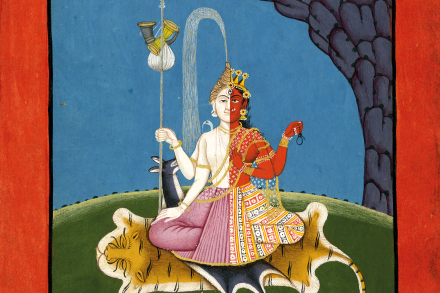
The most-watched TV programme in human history isn’t the Moon landings, and it isn’t M*A*S*H; chances are it’s Ramayan, a magnificently cheesy 1980s adaptation of India’s national epic. The show has a status in India that’s hard to overstate. Something like 80 per cent of the entire population watched its original run; in rural areas entire villages would crowd around a single television hooked up to a car battery. When the show ended, omitting the ‘Uttara Kanda’, the fairly controversial last book of the original poem, street sweepers across the country went on strike, demanding the government fund more episodes. The government caved. But while every country has its pieces of cult media, in India the cult is literal. Some viewers would take a ritual bath before tuning in.

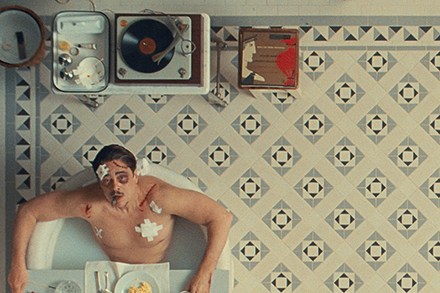
Wes Anderson’s latest is as hollow as anything AI could come up with

AI is coming for everyone’s jobs, but especially mine. There is absolutely no good reason for The Spectator to keep sending me to watch films with my wobbly biological eyes, not when they could just feed the latest releases into a computer, set the parameters to ‘contemptuous’, and watch a perfectly serviceable review assemble itself, for free, before their eyes. They’re losing money on every column. They may as well be paying a scriptorium full of monks to illuminate each copy of the magazine on vellum. I’m doomed, surplus to requirements, and the 21st century will replace me with a few lines of code. But it could be worse. At least I’m not Wes Anderson.

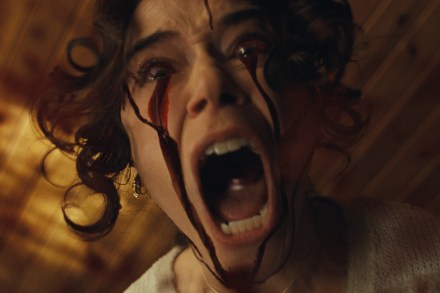
Proudly dumb – and all the better for it: The Monkey reviewed

The monkey is an organ-grinder’s monkey toy. Wind up the key jutting out of its back, and its lips will part to reveal two rows of yellow grimacing teeth. Then its clockwork arms will wheel up and down, banging a little drum as fairground music plays. And then someone nearby dies in an extremely gory freak accident. Maybe their head will be sliced off in a knife-twirling incident at a teppanyaki restaurant and slide gently on to the grill. Maybe they’ll fall through the stairs and into a box of fishhooks and then set their head on fire over a gas hob, and then run outside and impale themselves on a wooden spike. Maybe some huge Rube Goldberg arrangement of faulty wiring and loose roofing tiles will cause their body to explode in a shower of soft crimson globs.

Tarot isn’t very old or esoteric – but it does work

Among my many fake and useless skills, I’m a reasonably decent tarot reader. I can do one for you now if you like. A very simple three-card spread: your cards are the Seven of Wands, the Hierophant and the Six of Pentacles. There are lots of vaguely drippy ways of interpreting a three-card spread: past-present-future, or mind-body-spirit; I usually prefer to think of the cards as representing first, the mess you’re in; second, how you got there; and third, how you might plausibly manage to get your way out. And you, reader, are in a bit of a mess.

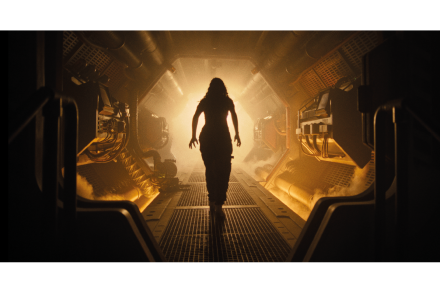
Please stop making Alien movies

In the Alien films, a xenomorph is a monstrous, all-consuming life form that exists only to make more and more copies of itself. Once the first xenomorph appears, it’s only a matter of time until all those gleaming chrome walls will be covered in creepy black goo and the humans suspended lifeless from the ceiling in webs of slime with their chests ripped open. The xenomorphs are not curious about the world. They don’t care that they’re in a spaceship in the middle of outer space. As far as they’re concerned, we’re all just warm bodies in which to incubate their young. The only thing they want to do is make more and more and more and more of themselves.

The new Mad Max film is a betrayal of everything that made Fury Road so good

Action films are boring. This isn’t really an opinion, it’s just demonstrably true. Try it for yourself: put on any high-octane, orange-and-teal action movie from the last 15 years and see how long it takes before you start automatically fiddling around with your phone. I can usually make it about five minutes. This is weird. I can deal with all the incredibly sedate cinematic vegetables just fine, but as soon as there are gunfights or chases involved I get distracted. I think I know why. The real betrayal of this Mad Max sequel is that it’s full of talking Action directors know that they’re competing with the sensory equivalent of a crackpipe in every pocket, so they do whatever they can to make their films as attention-grabbing as possible.

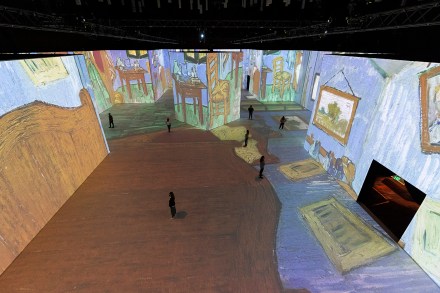
It’s time to free art from being ‘interactive’ and ‘immersive’

The American artist and critic Brad Troemel once pointed out that art galleries have all turned into a kind of adult daycare, and ever since then I haven’t been able to visit a gallery without noticing it. Nearly two decades ago, Carsten Höller installed a set of big aluminium slides in the Turbine Hall at Tate Modern, and they were undeniably good fun because going down slides is fun. It’s also fun, although maybe for a different type of person, to ask if going down slides counts as art. These days, though, you can hardly move for this stuff. The world is already interactive. You walk around in it. You can steal things from shops Last summer the Turbine Hall hosted a set of giant building blocks by Rasheed Araeen.

Grey, gloomy, and utterly joyless: Ripley reviewed

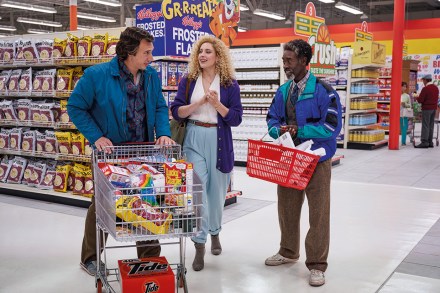
If you’ve spent any time gawping at Netflix over the past half-decade or so, you’ll already know that human culture has reached its final, perfect form. We made a good effort with cave paintings, epic poetry, theatre, literature and the rest of them, but the apex of culture is the bingeable, episodic rabbit-hole Netflix documentary about a sociopathic liar. Maybe we love con artists because they’re the only people still selling something new There have been so many of these now that it’s difficult to tell them apart. There was the one about the man who matched with women on dating websites by pretending to be the playboy scion to an Israeli diamond fortune – but who was really just spending the money he’d conned out of his previous girlfriend.

How depressing when people over-identify with their ethnicity

I am a Jew. I live in a council estate in London where considerably more than half of my neighbours are Muslims. These people aren’t my friends, but we get along fine: I pick up their parcels; we coordinate complaints to the council about the strange, blue-tinged fluid that sometimes drips from everyone’s ceilings, as if someone in the penthouse had decided to fill their flat with jelly. Elsewhere, our distant cousins are doing terrible things to each other. It’s increasingly hard to imagine a world in which these distant cousins can live together, intermingled but mostly minding their own business – but that’s exactly what we do every day in London. Over the past six months I’ve started feeling extremely grateful for that.

The problem with podcasts

A few months ago, a clip from a podcast went mildly viral online. A lightly dressed woman sits in front of a microphone, explaining her sex life in pedantic detail to an offscreen interviewer. It was strange and unpleasant, which was why people couldn’t stop looking at it. What kind of podcast is this, exactly? Who’s listening to it? The answer was nobody. The woman was a porn actress called Vicky Banxx, and the podcast didn’t exist. Across the world, thousands of people are doing the same thing: plonking themselves down in front of mics, setting up a camera and talking in a genial, conversational style to absolutely no one.

Why bother calling it White Noise when it’s just another Noah Baumbach film? White Noise reviewed

These days, everyone who was knocking around a few decades ago predicted the internet. Marshall McLuhan famously predicted the internet in 1962. Orson Scott Card predicted the internet in 1986. Even David Bowie is supposed to have seen it coming. But I think Don DeLillo really did prophesise our 21st-century technological reality in his 1985 novel White Noise. White Noise is about a lot of things (mostly, it’s one of the funniest novels ever written about death). But something weird keeps happening in the gaps. Characters are interrupted by the TV, by the radio, by a market researcher who keeps phoning them up to ask about the exact blend of fibres in their clothes. In every aspect of their lives, they’re constantly bombarded by invisible waves of data and messaging.

Why ASMR is evil

In 1954, the psychologist James Olds made a few ordinary rats the happiest rodents that had ever lived. He had directly wired an electrode into the rats’ brains, plugging into the septal area, which he believed might have something to do with the experience of pleasure. When he passed a small electric current through the electrode, the rats seemed to enjoy the experience. If he buzzed the rats only when they were in a particular place, they’d keep returning there, as if they were asking politely for him to do it again. So he tried handing over control of the experiment to the rats themselves. Olds gave them a lever: when pushed, it would turn on the electrode. The rats quickly learned how it worked, and they had a fantastic time with it.

War games do something seriously unpleasant to our brains

Three years ago, I killed several thousand people over the course of a single weekend. Late into the night, I ran around butchering everyone I saw, until by the end I didn’t even feel anything any more. Just methodically powering through it all, through the wet sounds of splattering heads, bodies crumpling, shiny slicks of blood. I thought I was past caring. But when I finally went to bed, I couldn’t sleep, and in my dreams I was haunted by all the men I’d killed. I saw their brains exploding, again and again and again. In my defence, I’d had a bad week. It was December: a grotty English winter, not particularly cold but still utterly grim. The kind of winter that seems to stick to everything, like a layer of congealed grease. I was worried about money.

Why I admire Saudi Arabia’s monstrous new city

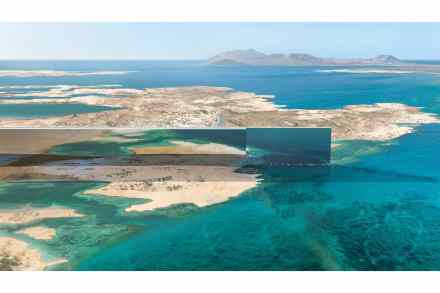
The Kingdom of Saudi Arabia wants me to know that it is building a new city. Its adverts follow me around the internet. ‘Imagine a traditional city and consolidating its footprint, designing to protect and enhance nature.’ I’m imagining. Their city ‘will be home to nine million residents, and will be built with a footprint of just 34 square kilometres. And we are designing it to provide a healthier, more sustainable quality of life’. According to its website, this new town ‘is a civilisational resource that puts humans first’. Which all sounds vaguely nice, if also nicely vague (although as I happen to be a human myself, I do appreciate the gesture). That is, until you see what they actually mean by this.

Promethean grandeur: Maurice Broomfield – Industrial Sublime, at the V&A, reviewed

When Maurice Broomfield left school at the age of 15, he took a job at the Rolls-Royce factory, bending copper pipes on a turret lathe. That was what you did in Derby in 1931: Rolls-Royce was the town’s biggest employer, and entire generations expected to pass the best part of their lives behind the walls of its 13-acre plant. But Broomfield didn’t stay. Not long into his new job, he saw a photo of an ageing employee being packed off into retirement with a handshake and a gold watch. This was a person who’d never had any real control over his own life; who’d worked when he was told to, and stopped when they told him it was time. Broomfield wanted something else. When he returned to the factories after the war, it was as a photographer.

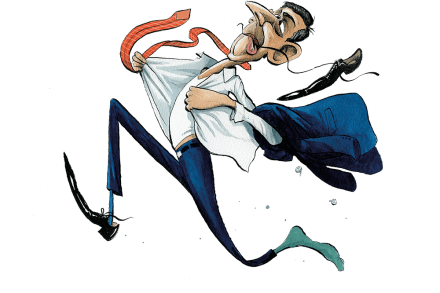
Rishi’s mad dash

47 min listen

In this week’s episode:Can Rishi catch up?Katy Balls and Kate Andrews discuss Rishi Sunak’s mad dash to catch up with his rival, Liz Truss in the polls (0.55)Also this week:Is it time the UK severed ties with Chinese-made tech?Charles Parton argues this in the magazine this week. He is joined by Dr Alexi Drew, a consultant in emerging technologies and international relations (13.33)And finally: What’s not to love about country-pop music?Sam Kriss writes about this in the magazine. Joining him for the podcast is Rod Liddle, the associate editor at The Spectator (31.01)Hosted by William Moore.Produced by Natasha Feroze.Subscribe to The Spectator today and get a £20 Amazon gift voucher: spectator.

In defence of country-pop

I am aware that the music I enjoy is widely considered to be the worst ever produced in human history. Worse than a roomful of children with recorders, cymbals and malice; worse than a poultry abattoir. Every so often, someone will ask me what I listen to, and I’m forced to tell them the truth. ‘These days,’ I’ll say, ‘it’s mostly country.’ Their nose will wrinkle, as if I’ve just let out a stealthy fart in their direction. ‘But old country, right?’ they’ll say, almost pleading. ‘Classic country?’ No, not classic country.