Ryan Bourne

Foreign governments have themselves to blame for Trump’s movie tariffs

From our US edition

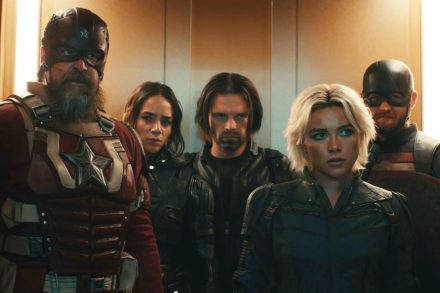
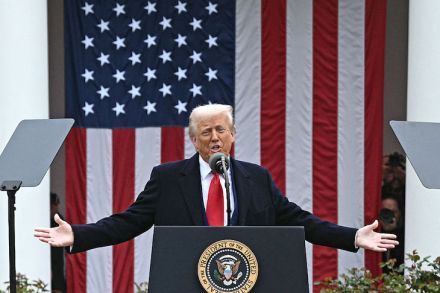
Donald Trump has thrown another trade grenade. His latest idea – a 100 percent tariff on all foreign-made films – is crude, impractical and potentially disastrous for his frenemies in the Hollywood industry that he has suddenly decided to champion. Announcing the tariffs via Truth Social, Trump tried to paint movies produced overseas as a danger: not just to America’s film production industry, but national security too. “WE WANT MOVIES MADE IN AMERICA, AGAIN!" he thundered. Invoking national security to justify these tariffs is legally shaky. Practically, it’s not clear how you even impose tariffs on a complex, multi-national production like a modern movie. Films shot in Croatia, edited in the UK and funded by America pose an administrative nightmare.
marvel movie

Will the markets make Trump see sense on tariffs?

This week Donald Trump declared 'Liberation Day,' unveiling a barrage of tariffs that had been trailed as correcting unfair trade practices overseas. In a theatrical Rose Garden ceremony, the US president presented a table, detailing a slew of new “reciprocal” tariffs targeting nations right across the globe. A sharp market reaction might lead to a change of heart in the White House Traditionally, trade reciprocity implies matching another country’s tariffs tit-for-tat. For instance, if the UK imposes a 10 per cent tax on US chicken, the US would impose the same import tax on British chicken.

At last, Biden’s cruel travel ban is ending

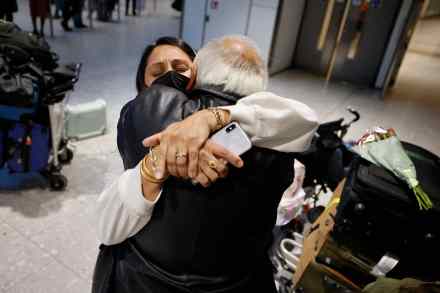
For many Brits and Europeans with ties to America, human relationships have been put on hold for an insufferably long time during the Covid-19 crisis. Today, at last, that changed. White House advisor Jeffrey Zients announced that anyone fully vaccinated from anywhere in the world will be able to enter the U.S. with a negative test result from November. To say this was a comfort to millions who felt trapped in or outside of the US seems to trivialise the consequences. Look at the Twitter hashtag #LoveIsNotTourism to see the real-world effects of enforced separation.  Upon hearing the possibility of the ban’s lifting, I booked a UK trip for November, almost two years since my last visit.

Under Oxfam’s dodgy maths, someone with 50p to his name is “richer” than bottom 2bn

Global capitalism has eradicated poverty and generated prosperity in the developing world at an unprecedented rate. You might imagine that a global anti-poverty charity, such as ‘Oxfam’, would celebrate this fact. But no – today Oxfam is making the headlines instead because it is worried about global wealth inequality. In particular, that ‘the wealthiest 1 per cent will soon own more than the rest of the world population combined’. Oxfam has been pushing this sort of meme for a while. Last year, it made the startling claim that ‘the world’s 85 richest people own the same wealth as the bottom 3.5 billion combined’. It was shown at the time, not least by Reuter’s Felix Salmon, that this statistic was bogus.

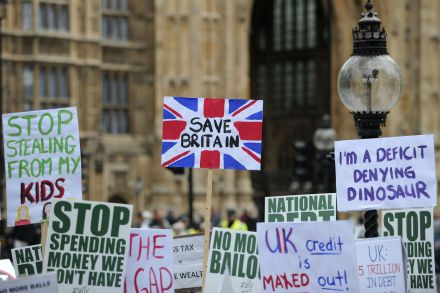
How to defuse Britain’s £1.45 trillion public-debt time-bomb

Last week’s public-finance statistics were truly dreadful. They showed that despite a year of fairly robust economic growth, UK government borrowing since the start of the financial year 2014 to 2015 was actually 10 per cent higher than in the same period in 2013 to 2014. Once again, it seems, our public finances will be in deficit by more than £100 billion this year. Running sustained deficits of this kind adds to the overall debt burden. According to the new ONS figures, public-sector net debt is currently £1.45 trillion (79.9 per cent of GDP) – meaning we are paying just over £50 billion per year in debt-interest payments.

Let’s have more work and lower costs to raise living standards – the Living Wage won’t help

In the latest in a long-line of Commissions or studies into the roll-out of a ‘Living Wage’, today the Archbishop of York Dr John Sentamu has called for the introduction of a wage rate of £7.65 per hour (or £8.80 in London) in sectors that ‘could afford it’. In reality this means the public sector and a host of other industries where there aren’t many low paid individuals, such as accountancy, consultancy, banking and construction. Though not as damaging as an economy wide roll-out, if adopted this could still have a host of unintended consequences.

Increasing the minimum wage will only harm the lowest paid

‘If you earn £6 an hour flipping burgers then Allegra might have good news for you,’ said Jeremy Paxman on Newsnight yesterday. Paxman was of course introducing the mooted Conservative Party policy idea to increase the minimum wage, a story reported by Allegra Stratton. Stratton responded: ‘We’ve learnt that the Prime Minister’s advisors are thinking of turning Tory policy on its head and raising the minimum wage - not yet, but some time before the next election.’ For me, this brief exchange and the rest of the Newsnight piece reflected the state of the debate on this issue in the UK. First, Jeremy Paxman assumed that those flipping burgers would be able to keep their jobs if the national minimum wage was increased ‘significantly’.

No, it is not a good idea for the Tories to raise the minimum wage

There’s so much to disagree with in Rupert Myers' piece arguing that the Tories should raise the minimum wage that it’s difficult to know where to begin. Raising the minimum wage will be bad for the most vulnerable in the workforce and will lead to less employment. The question of whether it would win support for the Conservative party is another matter. This is really basic economics. Raising the price of labour by dictat will reduce the demand for it, other things given. Or as Paul Krugman put it back in 1998:  'The higher wage reduces the quantity of labor demanded, and hence leads to unemployment.'  It might not necessarily lead to a fall in the actual number of people employed, because firms also have the option of cutting back the hours of workers as well.

Labour’s Valentine’s policy gimmick

At long last, Ed Miliband delivered us a Valentine's Day present that everyone in the political world has been waiting for: a new policy! And a tax policy at that! Not just content with maintaining support for a temporary VAT cut, reversing the Coalition's tax credit restraint and reversing the 50p tax rate cut (all of which would worsen the deficit), the Labour leader has nailed his colours to a new mast. He wants to bring back the 10p rate of income tax, which his former boss Gordon Brown abolished, paid for by a mansion tax on homes worth £2 million. Now, there are many observations which can made about this. First, this is a huge u-turn for Miliband personally.

‘Plan B’ is not the answer

Is George Osborne’s plan working? You can see why his enemies are circling. If you take his own definition – his ‘fiscal rule’ that the debt/GDP ratio should be falling by the end of the Parliament – then no. But this is mainly because Osborne has been flexible – some would argue too flexible - following the eurozone crisis and high commodity prices, which have hampered growth prospects through weaker-than-expected net trade and higher than expected inflation (see the OBR yesterday). Last autumn, the Chancellor had a choice between more cuts or more debt. He chose more debt, and stuck to his old spending plans knowing that the growth (and tax revenues) would not be as he had hoped.

A Paul Ryan reader

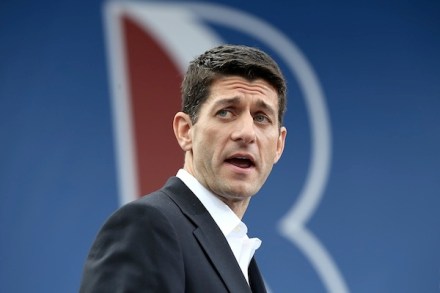
Ever since Mitt Romney named Paul Ryan as his running mate, the UK media has raced to portray him as a fiscal Sarah Palin and suggest that he advocates extremist policies. If anyone wants to find out for themselves, and learn about his policies and ideas, where do they start? Here is an introduction to one of the most interesting and intellectually substantial figures in American politics. Background Mitt Romney’s selection of Paul Ryan said a lot about the direction of the Presidential election campaign. It disappointed conservatives who wanted Romney to select a VP candidate based on identity politics, or to keep the campaign a referendum on Obama.

Would a wealth tax work?

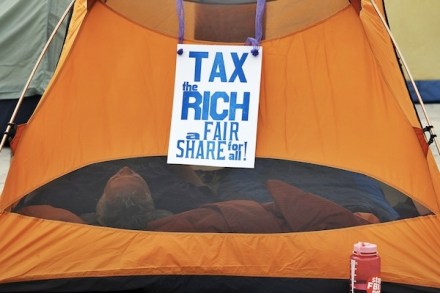
Roll up, roll up! The biannual Lib Dem half-baked tax policy circus is in town! Last time, the so-called ‘mansion tax’ show never lived up to its billing, as ringleader Clegg tried juggling too many ideas. We had the mansion tax, tycoon tax, new stamp duty bands and the more noble income tax threshold rise to watch. Now, it seems, the spectacle is back – with the big beasts of the Liberal Democrats prowling the airwaves to push for a new wealth tax to ensure the rich ‘pay their fair share'. Unlike the mansion tax, this policy suggestion would not, we are told, be a permanent feature - but rather a time-limited way to fight our ‘economic war’ and ensure ‘national cohesion’. It all sounds a very dramatic spectacle.

Economic lessons from Germany

The Eurozone crisis is teaching us plenty about how to recover from recessions. The nations that tried a debt-fuelled stimulus have found that their economies haven’t grown much, but they are saddled with the extra debt. The Swedes have cut taxes for the low paid, the Estonians took the fast route back to fiscal sanity — and both are now growing well, in spite of the turmoil that has engulfed their neighbours. But what’s less well-known is Germany’s record of reform, and how it has helped the country reach unemployment at a 20-year low.   Ten years ago, the German economy itself was pretty stagnant. When it first entered the euro, its low inflation meant that it faced the highest real interest rates in Europe.

There are economic reasons to cut the state, irrespective of the deficit

Treasury Select Committee Chairman Andrew Tyrie recently explained he would support cutting back the size of the state even if our public finances were in balance. I doubt whether the leadership of the Conservative party agrees. Cameron and Osborne seemed settled on the Brownite consensus until the financial crisis threw them a curved ball. This, in many ways, makes the so-called ‘austerity’ programme more difficult for them to implement. Without the argument that they genuinely believe in smaller government for economic or moral reasons, the party has had to adopt the ‘we wish we weren’t doing this but we have to’ line.