Rod Liddle

Rod Liddle

Rod Liddle is associate editor of The Spectator.

The public sector delusion

I wonder how much more money we will have to bung the teachers in order to inculcate within them an amenability towards doing a spot of teaching? They still seem terribly averse to the whole idea. During the first lockdown, 60 per cent of young children received no virtual lessons at all from teaching staff, and one in five pupils over 12 was given no work to do, according to the Children’s Commissioner. Virtual lessons shouldn’t have been terribly difficult to arrange, but most of the time there were none. My own daughter had no virtual lessons from March to July (which is why she’s no longer in the state sector). She did, however, complete five physics papers and, being scatty, sent them — one after the other — to the wrong email address. Nobody noticed.

The march of the fascist mushrooms

It has been too long coming. While conscientious and decent liberals have tried to explain why, to their horror, millions of people in Europe and the USA have embraced populist causes in recent years, none has really got near the nub of the issue, dug down to the very core. For example, I have long been of the opinion that the Brexit vote, along with the 2016 election of Donald Trump and the continued popularity of right-wing governments in Poland and Hungary, are almost entirely the consequences of the malign influence of fungi. I have attempted to advance this argument in political debates but am never taken seriously. Now at last I have some support.

Voters have lost their nerve

Elections teach us nothing. Instead, each tribe dredges succour from the minutiae, proving that they had been right all along. The moderate left — here and in the US — insists that tacking to the centre is the way to beat a populist right-winger, despite the fact that Joe Biden won by the skin of his teeth, through the votes of people who couldn’t be arsed to go to the polls on polling day and against a candidate of whom the most charitable description would be ‘fundamentally deranged’. The woke far left, meanwhile, argues the reverse, implying that the tightness of the vote was down to a lack of progressive zeal, much as was the Democrat failure to capture the Senate.

I’ve heard worse things — the death rattle of a close relative, for example: Kylie’s Disco reviewed

Grade: B– Uh-oh. Might have to be careful here, pull my punches a little bit. The editor is a big fan of the caterwauling Aussie. We have enormous editorial freedom at The Spectator, but one needs to exercise a little discretion. Last time I reviewed a Kylie album he was very kind about my writing, but I could see a deep sadness in his eyes. He also adores Mariah Carey. Conservatives are weird about music. Luckily — luckily, luckily, luckily — this is a lot better than her previous effort, Golden, which had been an attempt at a country album. She was about as believable a country singer as, I dunno, Sir Patrick Vallance or Fiona Bruce. This is back to the music she grew up with, as you might have guessed from the title.

Why I like right-wing fruit

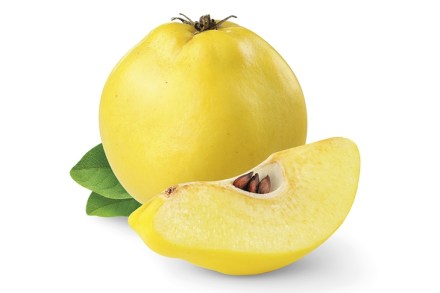
I recently bought some quinces in our local farmshop as part of my new policy of investing heavily in right-wing fruit, vegetables and legumes. This undertaking, born of principle, has meant a surfeit of cauliflower in our diet, the brassica having been identified by the Democratic party congresswoman Alexandria Ocasio-Cortez as a signifier of white colonialism. That the quince is decidedly right of centre is surely beyond dispute. It was first grown in England by Edward I, the ‘Hammer of the Scots’, a man who would have made short work of Nicola Sturgeon. In the 5th century BC the fruit cropped up in Aristophanes’s play The Acharnians, when the farmer Dicaeopolis remarks to a teenage sex-worker: ‘Oh! my gods! what bosoms! Hard as a quince!

The infantilism of locking down to ‘save Christmas’

It seems, then, that this latest lockdown has been instigated simply to protect two very questionable institutions — the National Health Service and Christmas. Both have a certain historicity about them and were widely liked. Both, too, have become bloated and hideous caricatures of what they once were. There is a certain infantilism about the repeated demands to ‘save Christmas’ which conjures up the image of serious adults — Chris Whitty, for example, or Sir Patrick Vallance — hanging up their stockings on Christmas Eve and jumping up and down on the bed in excitement at five o’clock the following morning. There is no Santa Claus, Patrick. There is no sleigh and the elves have been long ago furloughed. It all comes from Argos, mate. Hark!

The morality of free school meals

The main problem with the government giving in over free school meals during the holidays — other than that it is immoral and unconservative, neither of which have been bars to Conservative policy-making in the past — is that it is a hostage to fortune. What if, next week, another highly paid professional footballer — Tottenham’s Harry Winks, for example, or Liverpool’s Joe Gomez — decides that the nation’s children should also be given by the taxpayer elevenses and high tea? Such a campaign would generate enormous traction, especially among the affluent. Newspapers would feel unable to resist. Come on, Prime Minister, how can you deny a starving child his right to a scone with some cream and strawberries?

The BBC needs a reality check

One of my favourite moments of viewing in this strange and dark year was the outgoing director-general of the BBC, Tony Hall, explaining why the Corporation had decided to drop the singing of Rule Britannia and Land of Hope and Glory from the Last Night of the Proms. The BBC had already, needlessly, dug itself a capacious hole and Tony had turned up with a big spade to continue the work. 'The fact is we have come to the right conclusion, which is a creative and artistic conclusion,' his emollience announced, his nose growing fractionally longer with every second of the interview.

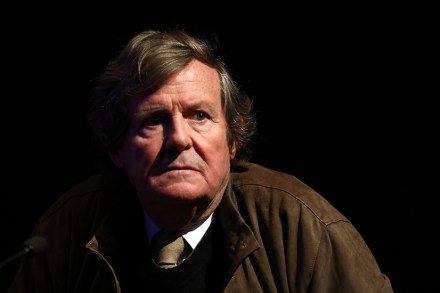
Spare us David Hare

Having not watched television for nine months and already growing bored of the 1,000-piece jigsaw of General Alfredo Stroessner (part of the ‘Vigorous Leaders’ range from Waddingtons), my wife suggested — for a novelty — that maybe we should take in the new political thriller starring Hugh Laurie, called Roadkill. We have fond memories of Laurie from previous dramas and are both mildly interested in politics, so it seemed an agreeable idea. ‘What side is it on?’ I asked, with a note of warning. ‘BBC One,’ replied the missus, and we looked at each other glumly and I said: ‘Oh Christ. It’ll be a woke BAME-athon.

What I got wrong about lockdown

The news that residents of Liverpool are not allowed to visit any other cities in the UK is a hammer blow not just for the Scousers themselves, but even more so for the rest of us, who will be forced for an indefinite period to abide without their famous cheeky wit. I am not sure how I will cope. Covid has impinged horribly on the lives of all of us, but this may be the most grievous development of all. Luckily we can still treat ourselves to the pleasures of hearing the Metro Mayor for the Liverpool City Region, Steve Rotheram, on the radio every five minutes or so demanding cash from the government.

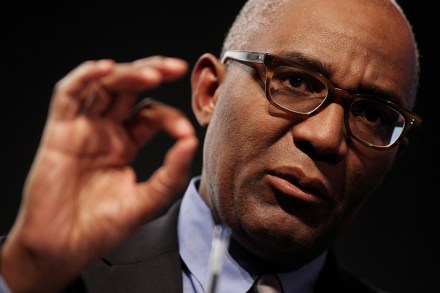
Who’s missing from that list of Great Black Britons

There are two striking things about the new book, 100 Great Black Britons, which was compiled to celebrate the achievements of British people from an African or Caribbean heritage. The first is the sheer number of people included who are ghastly or mediocre or both. The second is the number of truly brilliant black Britons who were left off the list — for reasons which are not, I think, terribly mysterious. Under the ‘both’ category we have, to name but a few, Diane Abbott, David Lammy and the reliably hilarious Dawn Butler. There is also Kehinde Andrews, of course, a lecturer at a former polytechnic who will be appearing on a TV programme in your front room very soon opining about how everything in the universe, from hydrogen to oganesson, is racist.

Britain clambers aboard the BLM bandwagon

From our US edition

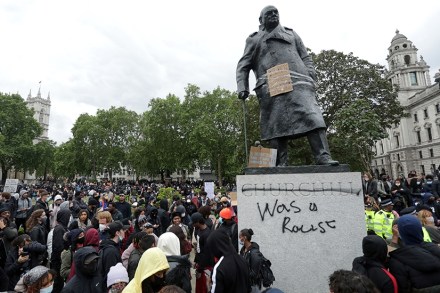
Middlesbrough, United Kingdom Gareth Southgate, the unctuous, horse-faced manager of the England soccer team, insisted that his players take the knee before their game against Denmark in the Nations League last month. They were at it before the match against Iceland, too, and the Icelanders joined in, bless them, despite the fact that there is only one black person in all of Iceland and he probably ended up there by mistake. It was important, Southgate ventured, to show support for Black Lives Matter. And so down they all went, as Portland burned and the looters, bullies, thugs and professional agitators ran amok across the US.

blm

The sound of pop eating itself and throwing up: A.G. Cook’s Apple reviewed

Grade: A The future, then. The sound of pop eating itself, throwing up into a bag and then getting a spoon and digging in. A mash-up of everything — largely very sickly EDM, but also trance, house, power ballads, industrial techno, soft rock, winsome acoustic guitar. Meticulous to the point of almost derangement, endlessly inventive both musically and rhythmically, full of arch puns. Such as the album’s title here — Apple. Mr Cook is the boss of the record label PC Music. Geddit? Sides splitting? That’s the other thing — the future also promises to be very irritating. What you cannot doubt is A.G.

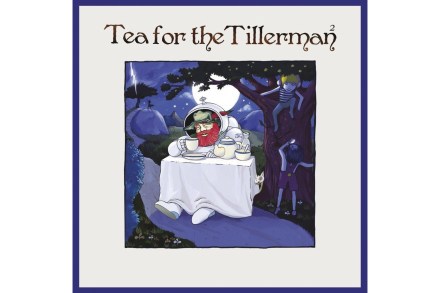
More mimsy soft rock from Cat Stevens: Tea for the Tillerman 2 reviewed

Grade: B– Time has been kind to Cat Stevens’s reputation — his estrangement from the music business and rad BAME credentials bestowing upon him an edginess which his mimsy fragile-voiced soft rock never really deserved. It’s the kind of retrospective benediction usually only death from some bad skag at the age of 27 can provide. Never mind anything else, I’d have barred him entry to the US just for calling an album Teaser and the Firecat. This one, meanwhile, is described as ‘his 1970 masterpiece’. Really? I don’t think so, although in its original incarnation it was pleasant enough on the ears, tinkling away on the turntable in the infant school staffroom. This is the album ‘reimagined’ by Yusuf.

Time for me to be more assertive

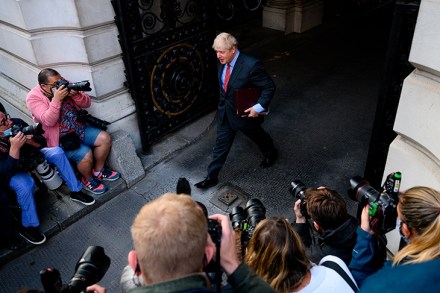
In the light of recent articles in The Spectator, I think it is vital I should point out here and now that I thought Boris Johnson was crap long before Toby Young and our editor, Fraser Nelson, did. I remember suggesting more than a year ago that the entire Johnson clan was a bit thick and borne aloft simply by depthless ambition and droit de seigneur. I felt a bit bad about it because Boris was a former boss of mine here and also a kind of mate. But you have to be ruthless in this job, get in quick with your bludgeon, even if it’s your own granny on the end of it.

JK Rowling’s fundamental mistake

I had my first doubts about Lord Hall, the former director-general of the BBC, when he addressed a group of us BBC editors back in about 1999 in his role then as head of news. A pleasant, emollient man, he revealed that he was thoroughly enjoying reading the second Harry Potter book, which had recently been published. Grow up, Tony, I thought to myself. Get yourself some Dostoyevsky for Christ’s sake. Snobbish it well may be, but I can’t take seriously an adult displaying such infantile predilections (and this goes for those grown-up admirers of Philip Pullman). Harry Potter was a big sensation at the time.

Virtuosic but slight – always prog’s problem: The Pineapple Thief’s latest reviewed

Grade: B– Of all the various subdivisions in that wheezing and crippled phenomenon that we call rock music, prog has fared better than most, spawning its own devilish offspring in math rock and post-rock. Why? Maybe we are more amenable to bombast and pretension these days. Or perhaps new studio technology lends itself to the genre — hell, you can hear prog time signatures in top ten hits. Maybe more to the point, prog offers a broader avenue than, say, heavy metal or punk. Prog is often what bands end up doing even if that’s not what they think they’re doing: Radiohead, Muse — even Arcade Fire or the National. This is the 14th album from Somerset band the Pineapple Thief (prog is very much a West Country thing).

The BBC’s ‘stuff the elderly’ campaign continues

Why does the BBC do it? Needlessly antagonise that rapidly diminishing section of the population which still has a vaguely nice memory of the organisation? The latest move in their 'stuff the elderly' campaign is to drop Sue Barker from A Question of Sport – an enormously admired presenter and easily the best host the programme has had. Why? 'The BBC want to take the show in a new direction,' according to Barker. I bet they do. As far away from their audience as possible. The new presenter will tick at least one diversity box, and people will assume, perhaps rightly, that that is why they were hired. Barker should sue on grounds of ageism and sexism. Meanwhile, Tim Davie’s first act as Director General was to restore singing to the Last Night of the Proms.

Falsehoods are running amok

I don’t know how much of a shock this will come to you as — perhaps none, because you are deeply prejudiced people, subconsciously guided by your inner fascist. So, an ‘activist’ called Vicky Osterweil has caused a bit of a stir in the USA with a book advocating the looting of private property as a means of redistributing wealth and dismantling capitalism. Violence and pillaging enables well-informed, politically aware activists like Vicky to acquire worldly possessions without recourse to the reactionary and frankly tiresome notion of working for a living. No shock or surprise in any of that to me: you can probably do a degree in Radical Looting these days.

How a lie becomes truth

Teachers were told to exclude children who made ‘inappropriate’ jokes about Covid when they returned to school this week. These days every joke is inappropriate in one way or another: someone, somewhere will find it transgressive. I cannot imagine being a schoolchild and not making a joke about Covid, and a sense of humour is about the only thing these kids have got left. But for the officials who dreamed up these edicts, humour is the last refuge of the bourgeois, as Herbert Marcuse or one of those Frankfurt School monkeys put it. (I forget exactly which one. Maybe it was Jürgen Habermas. What a fun night you’d have out on the town with those boys.