Rod Liddle

Rod Liddle

Rod Liddle is associate editor of The Spectator.

Is this where world war three starts?

Daugavpils You can tell quite a bit about a place by the number of national flags on display. One or two on public buildings here and there is a healthy genuflection to a moderate and comfortable patriotism. But groups of the same national flag every five paces, on every building and festooning the parks and boulevards – well, there’s something going on, isn’t there? You’re in a place where trouble is surely just around the corner, a place where the national authorities may not feel entirely secure. What sort of trouble? Well, one wouldn’t want to be over-dramatic, obvs, but in this particular case, world war three.

What Hamas promised to its electorate

Things you do not hear very often, number one: a pro-Palestinian protestor denouncing Hamas for the barbarity of its incursion into Israel on 7 October, appalled at the savagery of those attacks upon children, grandmothers, etc. It may seem as if, in saying this, I am stating the obvious – because support for that pogrom was, I would suggest, strong among some of those carrying Palestinian flags on marches through London and elsewhere. Six Arab language journalists were suspended by the BBC when it was discovered that they retweeted messages glorifying in that day’s murder. They were not members of Hamas. Ordinary Palestinians interviewed, cowering in the rubble of Gaza, were not quoted condemning the attacks which led directly to their present misery.

Facebook’s not-so-secret police

I was greatly tempted by Sam Leith’s suggestion in a column on The Spectator’s website this week that we should all shut up about Israel and Palestine because we don’t know what we’re talking about. Certainly the crisis there has made London dinner parties almost unendurable – and it is true that as soon as anyone brings up Sykes-Picot, which they always do, I begin to choke on my baba ganoush and start demanding that the host open another bottle of Fairtrade Palestinian pinot noir. But then I thought that if in future I wrote about only those things of which I have a perfect understanding, pace Wittgenstein, I’d be well and truly buggered as a columnist.

I stand with Israel

I had a brief exchange of messages with a British Muslim bloke on social media who had asked me, very politely, why I had posted a picture of the Star of David with the words ‘I Stand With Israel’ underneath. A good question, really – I more usually think this kind of keyboard-warrior grandstanding embarrassing and self-promoting, all that light-a-candle-we-are-the-world- Je-Suis-Charlie cant. I succumbed this time because there was nothing much else I could do to express my horror at Saturday’s savagery and barbarism, other than maybe join the Israel Defense Forces. When they refer to ‘Hamas militants’ do they imply there is a fringe within the otherwise excellent organisation?

What ‘populist’ really means

Two months ago, in these pages, I predicted that Robert Fico’s Smer-SD party would win the Slovakian elections and everybody would start worrying about what this meant for Ukraine. Why do I mention this now? Because what I predicted happened – and while you may think it rather bad form of me to remind you of my extraordinary insight, the thing is I feel a little embittered that I am not given the respect I am due as an oracle. Perhaps only an oracle on Slovakian politics, but still. It is only a week since the Financial Times predicted, with great confidence, that Michal Simecka’s ‘Progressive Slovakia’ would win the poll. Whoever wrote that piece clearly hadn’t read my analysis, or perhaps had and didn’t take it seriously. This is what annoys me.

The rise of the groupthink podcast

A long tradition in the Liddle household on a Saturday morning is to read aloud sections from the Guardian Weekend magazine and fall about laughing. It is of course the sole reason we buy the paper. Two regular features in particular create a quite enormous amount of merriment. The first, Blind Date, is where two of the paper’s readers are brought together to see if they fancy copping off with each other (they almost never do, for good reason). It’s not a bad idea, to be honest – but, oh, Christ help us… the people. Epicene smirking hipsters; growling diesel dykes; ingenuous gayers with multiple piercings; ugly, embittered, hummus-breathed third-sector workers; rancid, angry, middle-aged harridans of either gender; smug, dim-witted perpetual students.

The real reason you shouldn’t buy Roisin Murphy’s new album

Grade: B The rather wonderful, liberating thing about being a sentient human being, rather than a moron, is that one can agree with Roisin Murphy that giving kids puberty blockers is a kind of child abuse, while at the same time not liking her new album very much. Just as a sentient human being can enjoy watching Michael Sheen pretending to be other people quite well in films, while thinking him an egregious tit. The cancellation of Murphy was, of course, as obscene as it was predictable – but I do not quite swallow the idea that we are required, as a consequence, to buy Hit Parade. The title is a bit of a misnomer: three or four decent songs does not, to my mind, constitute much of a parade.

The inequality of sex

As we all shroud ourselves in grief at being unable to watch Russell Brand any more on terrestrial television stations, a few thoughts occur. The first and most obvious is (once again) the presumption of guilt on the part of the entertainment industry, a business entirely devoid of morals and managed largely by coked-up hypocrites. Obviously, for most human beings our repulsion at the immediacy with which Brand has been cancelled by these dreadful people is challenged by our collective detestation of the man himself – yet another of those ‘comedians’ who never ever said anything funny and whose shtick was simply to reflect the zeitgeist of the age by showing off. But still.

Bombshell: Why aren’t we giving Ukraine what it needs?

36 min listen

On the podcast this week: Boris Johnson writes The Spectator’s cover piece, urging the West to supply more military assistance to Ukraine, in order to bring a swift end to the war. Former commander of the joint forces Sir Richard Barrons and The Spectator’s Svitlana Morenets join the podcast to ask why aren't we giving Ukraine what it needs? (01:21) Also on the podcast:  Charlie Taylor, His Majesty’s chief prisons inspector, writes in the magazine about the state of crisis in British prisons. This is in light of Daniel Khalife's escape from Wandsworth prison last week. Charlie is joined by David Shipley, commentator and former inmate at Wandsworth to discuss the state of crisis in British prisons.

Covid’s back. Don’t panic!

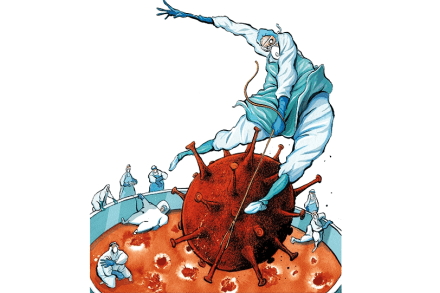
How terrified should we be of the new Covid variant nicknamed (on Twitter) ‘Pirola’? Out of our wits? Or should we be more worried that BA.2.86, to give it its official name, is acting as a stalking horse for those who want our country locked down once again and a clamp placed securely over our jaws? The government has brought forward its booster-jab rollout for the over-65s in response to this new variant, which has so far afflicted slightly more than 100 people worldwide and caused no deaths. This action was not enough for many, though.

Mildly pleasant 1980s hard rock: ‘Angry’, by the Rolling Stones, reviewed

The new Rolling Stones single, supposedly their best in many a decade, is called ‘Angry’. And while on the surface it seems to be about the millionth anguished plea from Mick Jagger to some unseen woman to give him a shag, it reportedly stems from Mick’s mystification as to why everybody is angry these days. I suppose he is forgetting that youth has always been in a more or less perpetual state of pre-rational, pettish fury – a fury which, back in the day Mick was canny enough to take advantage of. You may remember his incandescence at being unable to attain any satisfaction, for example, or at the unwanted ingression of an unidentified person on to the cloud he was occupying.

Right-on Kew

We must all hurry down to the Temperate House at Kew Gardens next month to enjoy Queer Nature After Hours, an evening of drama, music, comedy, drag acts and ‘a sprinkling of queer joy’. If, like me, you have never previously been sprinkled with queer joy, here’s your chance to find out what it’s like. There will be a performance by Trans Voices as well as a chap, or maybe not a chap, called Bi-Curious George. Here’s what George will be doing: ‘Within the splendour of the Temperate House, Bi-Curious George (he/him) will broadcast immersive parody-monologues, set to soaring classical scores. The audience becomes George’s parade of beautifully queer creatures and George becomes some of the animals too. Expect cabaret, parody songs, lip syncs, dancing, and sparkly costumes.

The best new album I’ve heard this year: Being Dead’s When Horses Would Run reviewed

Grade: A– The point of a sudden, abrupt change in the time signature and instrumentation of a song is to surprise the listener and undermine his or her expectations. If, however, you do it in every song, then the point is lost, and the listener finds himself actually waiting for the weirdnessto begin. So it is with Being Dead – and it’s about the only thing I have to carp about, because overall When Horses Would Run is a lovely album, full of often complex but always catchy melodies and imbued with an agreeably surreal sense of humour. The band is comprised of Falcon Bitch, Gumball and Ricky Moto and they come from Austin, Texas. Their shtick is punky surf guitar on top of which those clever tunes are sung as if by a cathedral choir in falsetto.

It shouldn’t be a crime to sniff a goshawk

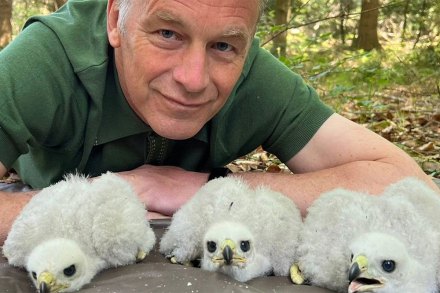
I notice that the naturalist Chris Packham has been reported to the police for the ‘crime’ of sniffing a goshawk. I had not known that this was an offence – if I had known, I would not do it quite so often, or at worst, made sure nobody was watching me as I approached the birds, tumescent, in my anorak. Goshawks are diurnal, so night-time does offer the opportunity for a good sniff when they are asleep in their nests. The problem is they are also quite rare, largely due to persecution from gamekeepers and, no matter how you dress it up, snorting the scent of a more widespread raptor, such as a kestrel, does not provide quite the same thrill. Packham sniffed his goshawk live on television, and someone who hates him for his politics reported him to the filth.

What a joke

The award for the funniest joke at this year’s Edinburgh Fringe was won by Lorna Rose Treen, with this: ‘I started dating a zookeeper, but it turned out he was a cheetah.’ There you go. It’s hard to know where to begin, isn’t it? Maybe with the fact that the joke doesn’t really work. Why would a zookeeper be a cheetah? Just because his work may involve looking after them? There’s no sense to it: the bloke just works in a zoo. If she’d said ‘I started dating a big cat – turned out he was a cheetah’, then that still wouldn’t be terribly funny but it would at least have semantic integrity.

The great sociology con

My default mood at the moment is bleak despair, although it can sometimes be triggered into nihilistic loathing, which I think I mildly prefer. The most recent occasion this happened was last Monday when I drove through torrential rain to three retail parks in search of an item which – as I found out later – didn’t actually exist. While turning the car around to drive home I switched on the radio and Stephen Fry was bashfully admitting to some fawning sap of an interviewer how bloody brilliant he was. Triggered, right there, at the roundabout where you enter the old coal-mining village of Pity Me. It took ages for the bleak despair to re-establish itself.

Why ‘affirmative action’ doesn’t work

This week’s truism: all top-down attempts at leftie social engineering end up causing rather more misery and injustice than the misery and injustice they were designed to alleviate. This is chiefly because they come up against that most un-leftie of things, reality – but also because liberals are incapable of looking at actual outcomes and are able only to wring their hands in despair and wish for stuff. The world is not an ideal place and attempts to pretend they can make it so are always misbegotten. When you politicise a crime, all kinds of problems occur The most obvious example of this is in that most explicitly iniquitous of things, affirmative action – or, as we call it over here, ‘positive discrimination’.

You think British trains are bad? Try German ones

I found Jean-Pierre standing at a half-open window gulping down lungfuls of stale Dutch air as our night train chuntered, unseeing, through an expectoration of towns: Zutphen, Eefde, Gorssell. He was 79 years old, he told me, and returning to Berlin for the first time in 61 years for a meeting with an old friend. Our steward made it absolutely clear he couldn’t give a stuff that there was no buffet car Back in 1962, Jean-Pierre had been a very young Belgian Jesuit employed in smuggling hard currency from West to East Berlin, which he did by stuffing the notes inside a plaster cast which covered his right leg. There was nothing wrong with his leg, of course.

The doctrine of intersectionality is a dud

The almost complete absence of anything remotely resembling an intersection in the progressive doctrine of intersectionality poses a problem for those on the left who adhere to its idiotic credo. Put crassly, intersectionality implies that anyone who is not straight, white and male shares an equal burden of oppression and should thus put aside footling differences of opinion and unite against the ghastly and brutal hegemony. If Malaysians were in favour of gay relationships then they’ve had 60-odd years to repeal the laws There are no greater agents of oppression than imperialism and colonialism and indeed these twin behemoths of wickedness are solely responsible for the misery inflicted upon the gay, non-white groups of today.

The BBC’s biggest problem

As I write this, the director-general of the BBC is being quizzed on the corporation’s future by people who were around when Sir John Reith kind of set the whole thing up. A cheap crack, I know – and I have nothing against the House of Lords. Anything which mediates our dangerous experiment with democracy is to be welcomed – the peers, the royals, the judges etc. I have been dipping in and out of the event and have yet to hear Tim Davie asked if he plans to bring back It’s That Man Again or whether or not the injunction ‘sod off’ is suitable for post-watershed viewing. If only they would ask this kind of thing, in a way – the crisis is rather more existential today.