Robert Tombs

Robert Tombs

Robert Tombs is an emeritus professor in history at the University of Cambridge and the author of This Sovereign Isle: Britain in and out of Europe (Allen Lane, 2021). He also edits the History Reclaimed website

Royal treatment, neurodiverse history & is everyone on Ozempic?

45 min listen

First: a look ahead to President Trump’s state visit next week Transatlantic tensions are growing as the row over Peter Mandelson’s role provides an ominous overture to Donald Trump’s state visit next week. Political editor Tim Shipman has the inside scoop on how No. 10 is preparing. Keir Starmer’s aides are braced for turbulence. ‘The one thing about Trump which is entirely predictable is his unpredictability,’ one ventures. And government figures fear he may go off message on broadcast – he is scheduled to be interviewed by GB News. It is rare for leaders to receive a second visit, especially those in their second term. But, as Tim says, ‘Britishness is fashionable in Washington’ and no-one likes ‘royal treatment’ more than Trump.

Is France succumbing to the British disease?

Sometimes one can almost get away from today’s worries. I spent the other weekend at a big family get-together in a village overlooking a famous cathedral city – the great church was visible on the horizon. There were people from all walks of life, all ages, and from many parts of the country. People smiled at strangers. The sun shone. And yet a familiar gloom kept breaking through in conversation. Nothing was working. It was almost impossible to get a GP appointment, so A&E departments were overwhelmed and people even died on trolleys. Accommodation, especially for the young, was non-existent or too expensive, as rents and house prices rocketed. Infrastructure was worn out. Crime was out of control, with the police seeming unable or unwilling to get a grip.

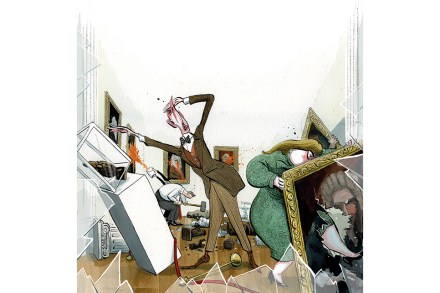
If ‘wokeness’ is over, can someone tell the Fitzwilliam Museum?

Optimists believe that the tide of ‘wokeness’ is now ebbing. If so, the message has not yet reached Cambridge, whose wonderful university museum has its classical façade covered in sententious phrases in neon, and which has recently opened a new exhibition in agit-prop style: Rise Up: Resistance, Revolution, Abolition. Such activism is fully in step with the Museums Association, the curators’ club that instructs its members to turn their institutions into activist cells. If all this makes its founding benefactor Viscount Fitzwilliam turn in his grave, all the better: he is stigmatised as a profiteer from the slave trade, even before one reaches the cloakroom.

Macron’s disastrous legacy of failure

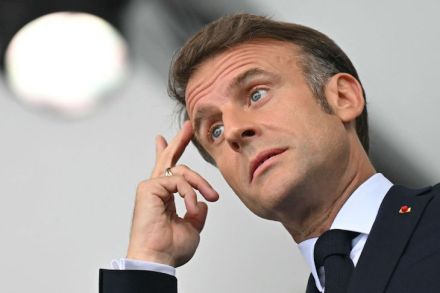
Robert Tombs joined John Keiger and Will Kingston on Spectator TV to discuss the political turmoil in France and what this means for Emmanuel Macron's presidency. Here is an extract of what Robert had to say. Emmanuel Macron's legacy is very likely to be disastrous. He's a very intelligent man, a man of great qualities. I once saw him when he was newly elected when he came to England and he attended a meeting, a sort of reception, with Theresa May at the time. Poor Theresa May was standing in a corner on her own, and Macron was surrounded by admirers. Macron gave a rather brilliant improvised speech in English and Mrs. May was able to, with great difficulty, say a few, read a few French sentences off a piece of paper, and I thought this man is very clever and very able.

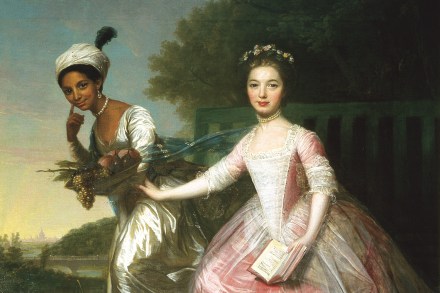
Should Britain pay reparations to Commonwealth countries?

16 min listen

This week, Keir Starmer has been in Samoa for a summit with delegations of the 56 nations which make up the Commonwealth. Between having to answer questions on Donald Trump and the budget, he has also been pressed on the issue of slavery reparations, with the leaders of some Caribbean countries insisting it is ‘only a matter of time’ until Britain bows to demands of handing over billions of pounds in compensation. Speaking today, Starmer addressed the issue. He said, ‘I understand the strength of feeling’ but insisted that he would be ‘looking forward, not back’. So what are the arguments for and against reparations? And why is this debate relevant now, in 2024? James Heale speaks to historian Robert Tombs. Produced by Oscar Edmondson.

Why talk of civil war is overblown

Are we really on the brink of civil war in Britain? Is it ‘inevitable’ in the foreseeable future? So thinks Elon Musk. It would be easy to dismiss this as absurd. Indeed it is absurd. But those of a nervous disposition might point to certain circumstances in 1642 – the start of what most English people think of as the Civil War – that might cause us worry today. In 1642 hardly anyone wanted civil war. Hardly anyone expected one. Most people didn’t want to get involved. And yet it happened: what one Parliamentary officer called poignantly ‘this war without an enemy’ was to be England’s worst internal conflict. It was not, in fact, the United Kingdom’s last civil war. This took place in Ireland just over a century ago.

The Olympics can’t mask Macron’s troubles

Politics and sport have always been cynical and self-interested bedfellows. Rulers since the Caesars have been eager to spend vast sums of taxpayers’ money on circuses to distract the plebs. In more recent times, Louis XIV (a ghostly presence in Friday’s Paris Olympics ceremony) made self-glorification through spectacle a pillar of his reign. Emmanuel Macron made no secret of his desire to follow in the Sun King’s footsteps. Friday night was to be his apotheosis. It would have been absurdly optimistic to think this could rebuild his popularity at home, but he must have relished cutting a great global figure.

How the Tories changed Britain

The late Roger Scruton (whose wrongful sacking as a housing adviser by a Tory minister in 2019 was a sign that things were badly wrong) defined the fundamental issue: ‘There can be no democracy without a demos, a “we” united by a shared sense of belonging.’ How has the demos changed over 14 years of Conservative government? The ‘we’ is weaker than when David Cameron and Nick Clegg were promoting a Big Society. We are in a pessimistic mood in which saying that ‘nothing works’ has become a catchphrase. Politicians are despised. The party that has governed for so long cannot avoid responsibility.  The government seemed scared to defend their only truly historic achievement Nevertheless, our basic problems are common to the western world.

The astonishing achievement of D-Day

Today we are commemorating the 80th anniversary of D-Day – ‘Operation OVERLORD’ – with fitting ceremony and reverence, though, some polls suggest, without much understanding. Some confusion in the public mind about the precise meaning and importance of the Normandy landings is surely understandable. D-Day itself, 6 June, however vital, was the culmination of a long process, and the beginning, not the end, of a bloody and grinding struggle. Historical anniversaries, especially a round figure such as 80, are a good opportunity for education, and school children and television viewers will certainly emerge more knowledgeable, and often moved and impressed after this week.

Has the C of E got its reparations bill all wrong?

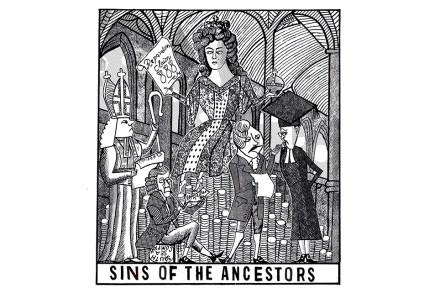
Reparations have a troubled history, and rightly. The word itself, in its familiar sense, seems to have been a euphemism thought up by lawyers after the first world war. President Woodrow Wilson had promised a peace ‘without indemnities’. So no indemnities: ‘reparations’ instead. It sounded less objectionable. It was further agreed that liability should cover only demonstrable damage, not be punishment for the act of war itself – a remarkable and perhaps unprecedented concession by the victors to the vanquished (who had themselves recently imposed heavy indemnities on Russia, and before that on France). Yet reparations – relatively modest in total and largely unpaid – still became probably the most divisive and damaging aspect of the post-war Treaty of Versailles.

What Kemi Badenoch gets right about colonialism

Kemi Badenoch has developed a habit of truth telling. This is risky in our climate of rigid cultural orthodoxy, for whose guardians ‘Truth is what you and people like you believe, and can compel others to accept,’ as the philosopher John Gray puts it. Those who tell truths that ‘you and people like you’ deny become targets. Ms Badenoch’s most recent foray into robust common sense occurred in a speech in the City, in which she said, among other things, that the changes that followed the Glorious Revolution of 1688, including the rule of law, led to a great expansion in financial services. She rejected the new orthodoxy that Britain’s ‘wealth and success’ were due to ‘colonialism’, ‘white imperialism’, ‘exploitation’ and ‘oppression.

The endless myth of British decline

The former governor of the Bank of England, Mark Carney, recently compared the British economy with that of Argentina. This was typical of those Remainers who cannot imagine that a country ignoring them could possibly succeed, and who often seem to will it to fail. That Carney’s sneer did not merely provoke laughter is because far from being a random remark, it stems from generations of negativity about Britain. This hangs albatross-like round our collective neck. So deeply has it penetrated our culture that I suggest it accounts for much of the failure to profit from the Leave vote. Over and over again, British policy has been marked by apology, concession, timidity and lack of ambition.

The rise of conspiracy history

Readers would doubtless find it hard to believe that the late Queen and the Duke of Edinburgh kidnapped and killed indigenous children while on a state visit to Canada in 1964. Yet this story circulated for years in Canada along with other horror stories of the rape, torture and murder of indigenous children at the hands of depraved priests and nuns. The bodies, it was said, were thrown into furnaces or secretly buried at dead of night. These accusations were linked to boarding schools run by various religious bodies first established in the 19th century and finally closed in the 1990s. A Truth and Reconciliation Commission was set up in 2008, and millions of dollars were given by the government to search for clandestine mass graves. None was found.

Harry’s crusade: the Prince vs the press

31 min listen

This week:  Prince Harry has taken the stand to give evidence in the Mirror Group phone hacking trial which The Spectator’s deputy editor Freddy Gray talks about in his cover piece for the magazine. He is joined by Patrick Jephson, former private secretary to Princess Diana, to discuss whether Harry's 'suicide mission' against the press is ill-advised. (01:22) Also this week:  In The Spectator professor Robert Tombs details the trouble with returning the Benin Bronzes back to Nigeria, arguing that their restitution is more complicated than some claim.

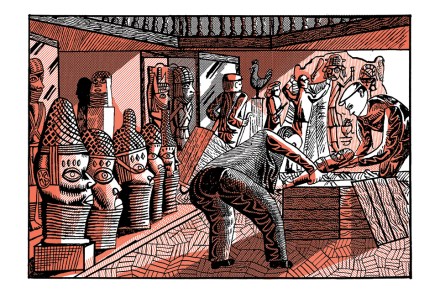
The trouble with returning the Benin Bronzes

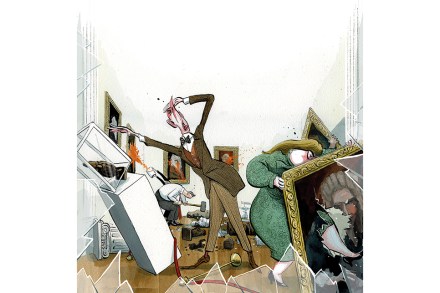
Once, museum curators saw their job as collecting, conserving and displaying to the public works of art or humbler objects that were beautiful, interesting and representative of a time and a place. Now many of them want to get rid of, or at least hide away, objects that they pronounce shameful. Cambridge University, under its present administrators, has been following the fashion. The Fitzwilliam Museum has taken down a painting by Stanley Spencer – ‘Love among the Nations’ – on the grounds that ‘Raised on the moral rightness of British imperial rule, Spencer imagines civilisation firmly in the West and savagery in its colonies’. So that’s you dealt with, Spencer.

The mystical power of the coronation spoon

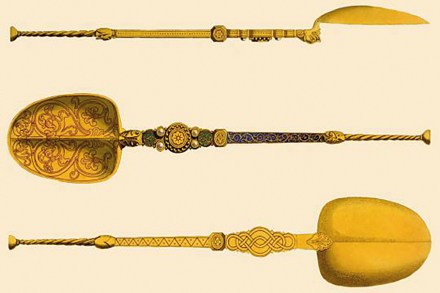
A spoon may seem too homely for grand ceremony. It might even, in this sceptical and utilitarian age, seem slightly ridiculous. This prompts the question of how, or whether, we value ancient traditions and ceremonies whose original meanings and power are largely lost to us. And if we do value them, why? This particular spoon, undeniably, is a very special one: doubtless the world’s most important spoon, and certainly one of the most beautiful examples of that humble genus: silver-gilt, finely engraved with acanthus scrolls, decorated with pearls, and with its bowl strangely divided into two. It dates from the 12th century, and may have been used ever since Richard the Lionheart. It is the oldest piece of the coronation regalia.

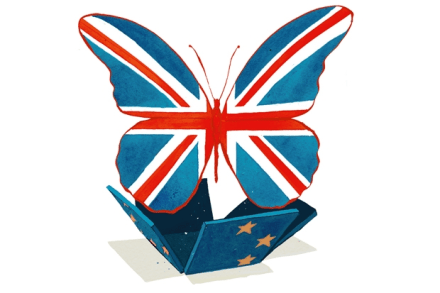
Remainers should be honest about the costs of Brexit

Those opposed to leaving the European Union repeatedly accuse Brexit of being based on ignorance fed by lies. The ‘lie’ they invariably refer to is the £350 million on the side of the Boris bus. In reality, it was the Remain campaign, and its interminable Rejoiner sequel, that was and is based on systematic distortions and gross misunderstandings. One might shrug one’s shoulders if the distortions came only from business lobbies, EU-funded think tanks, the subsidised European media and the like. But some of the most damaging originate within the British state and its associated bodies. No one denies that the Civil Service has been and remains overwhelmingly opposed to Brexit. The ardent Remainer Lord Adonis said that the 2016 vote caused ‘a nervous breakdown’ in Whitehall.

Did the Suffragettes really win women the vote?

I suppose most people regard the Suffragettes as the exemplary vindication of the right to carry out illegal direct action in a righteous cause. Speaking in support of Extinction Rebellion, Helen Pankhurst, a descendant of the Suffragette leader, said that both movements were equally ‘socially marginalised, made fun of, considered to be extremists, and legally silenced, and yet they stand up for justice in the way the Suffragettes did.’ Rather than pushing on a slowly opening door, they preferred to throw a brick through the window The Suffragette campaign was the first deliberately violent English political campaign since the 1840s, and this is part of its myth. Thankfully no one was killed during its campaign, other than the unfortunate Emily Davison.

Christmas Special

65 min listen

Welcome to the special Christmas episode of The Edition! Up first: What a year in politics it has been. 2022 has seen five education secretaries, four chancellors, three prime ministers and two monarchs. But there is only one political team that can make sense of it all. The Spectator's editor Fraser Nelson, deputy political editor Katy Balls and assistant editor Isabel Hardman discuss what has surely been one of the most dramatic years in British political history (01:13). Then: Christmas is a time to spare a thought for our neighbours. While in the UK we have our own hardships, families in Ukraine are facing a Christmas under siege.