Robert Gore-Langton

The curious rise of Kamala Harris

48 min listen

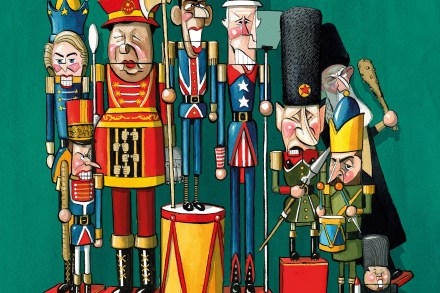
This week: Kamala takes charge. Our cover piece discusses the rise of Kamala Harris, who has only one man standing in her way to the most powerful position in the world. Her's is certainly an unexpected ascent, given Harris’ generally poor public-speaking performances and mixed bag of radical left and right-wing politics. Does she really have what it takes to defeat Trump? Kate Andrews, author of the piece and economics editor at The Spectator, joins the podcast with deputy editor Freddy Gray to discuss. (02:34) Next: Will and Lara go through some of their favourite pieces from the magazine including Damian Thompson's article on how the upcoming Hollywood film Conclave may be mirroring real-life events at the Vatican. Then: Olympics on steroids.

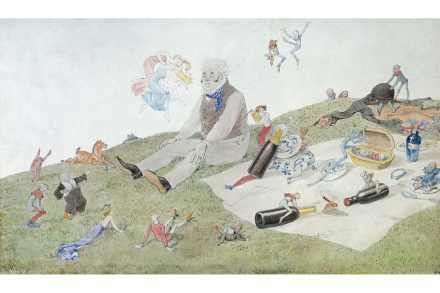
Why Sir Arthur Conan Doyle believed in fairies

Sherlock Holmes fans will be delighted to know that there is a new play featuring the great man. In it Holmes, 72, bored silly by retirement and bee-keeping in the Sussex Downs, is back living at his old haunt of 221B Baker Street and  reunited with the widowed Watson. The case that lands in Holmes’s lap concerns a reported outbreak of fairies in the Bradford area. Thus we are plunged into the Cottingley saga, a mystery that fascinated the public in the 1920s. The play is by Fiona Maher, a fairy-lore expert, organiser of the Legendary Llangollen Faery Festival (she’s known as Tink) and author of a very well-researched book on the Cottingley affair that sheds much new light on the hoax. In the play, the great detective’s sleuthing mirrors her own detective work.

‘I couldn’t afford loo roll’: Bruce Robinson on being skint, Zeffirelli’s advances and Withnail’s return

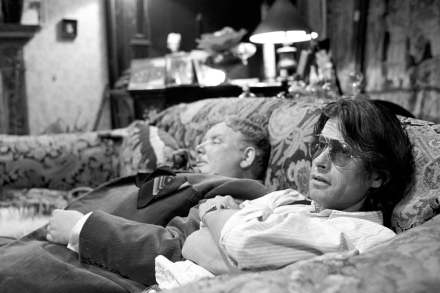
Bruce Robinson is ramming a huge log into the grate of his ancient fireplace in mud-clogged Herefordshire. He’s 77 and the film for which he is famous, Withnail and I, is about to open as a play. Isn’t it curious it hasn’t happened before, given that the comedy is about two thirsty, unemployed actors and is a sort of love-hate letter to the theatre? ‘I was living on 30 bob a week – I could either afford fish and chips or ten gold leaf’ ‘I wasn’t fond of the idea of staging it,’ says Robinson, who wrote and directed the 1987 film based on his own boozy life as an actor in the 1960s. ‘I’d done it, you know; it’s decades ago and it’s over. There was a time when Withnail was stuck to me like a colostomy bag. I just wanted to move on.

John Gielgud and Richard Burton’s fraught, botched, triumphant Hamlet

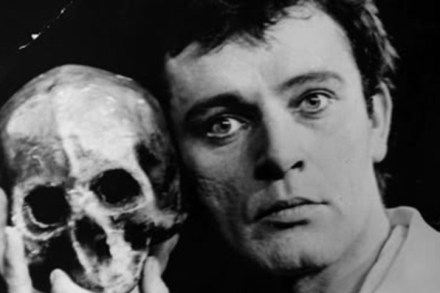
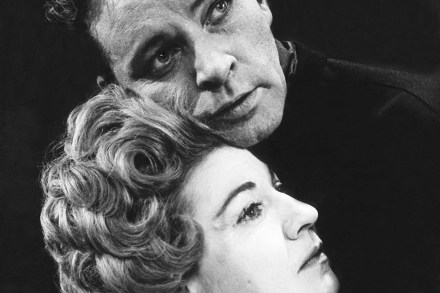
In 1963 two Hamlets went into production: one directed by Laurence Olivier, the other by John Gielgud. The situation had been engineered by Richard Burton and Peter O’Toole. The story goes that while shooting the film Becket, Burton and O’Toole had decided they should each play the Prince under either Olivier or Gielgud and they tossed a coin over who would get which director. O’Toole got Olivier; Burton got Gielgud. Both productions – booze-drenched affairs – went ahead, but the Hamlet that became a showbiz legend was Burton’s doomed Dane. The production made a fortune; it was probably the most profitable Shakespeare ever staged Burton looked up to Gielgud.

Christmas Special

65 min listen

Welcome to the special Christmas episode of The Edition! Up first: What a year in politics it has been. 2022 has seen five education secretaries, four chancellors, three prime ministers and two monarchs. But there is only one political team that can make sense of it all. The Spectator's editor Fraser Nelson, deputy political editor Katy Balls and assistant editor Isabel Hardman discuss what has surely been one of the most dramatic years in British political history (01:13). Then: Christmas is a time to spare a thought for our neighbours. While in the UK we have our own hardships, families in Ukraine are facing a Christmas under siege.

The art of the panto dame

There is nothing more panto than a dame. The grandmother of today’s dames is Dan Leno (1860–1904), a champion clog dancer and music-hall performer, not much taller than Ronnie Corbett. He was preceded by others, notably James Rogers, who in 1861, in Aladdin,played a character called Widow Twankey, named after a cheap and revolting tea. But Leno was the first modern prototype dame – a befuddled genius in a frock with a fantastic line in patter. He created the role of Mother Goose in a play written for him by J. Hickory Wood and starred in a legendary run of 16 pantos at Drury Lane that finished him. He died insane and an alcoholic at the age of 43 – a warning to his artistic descendants. Fast forward to Theatre Royal Plymouth, 1992.

The rise and fall of Tammy Faye

Tammy Faye Bakker was a chirpy, perky televangelist noted for her lavish mascara and her barrel-stave eyelashes. She once conducted an interview on her PTL (Praise the Lord) chat show for which she remains revered among gays. It was in 1985 and she was talking to Steve Pieters, a soft-spoken church pastor with a soup-strainer moustache. He had Aids, a disease that killed Rock Hudson that year and was scything through Reagan’s America. Tammy wanted to know all about Steve’s faith, his health and his orientation. ‘Have you given women a fair try?’, she asked rather naively. The pastor told his story and the interview deepened into an extraordinary confessional.

Why I donated a kidney to a stranger

One year ago I walked into an operating theatre, dressed in a tiny surgical nightie. Over the next three hours, through various keyhole incisions in my belly, my left kidney was cut from its pillow of protective suet and extracted from below the belt line. The kidney was rinsed through, put on ice and boxed up. It was then zoomed by car from my Bristol hospital to Birmingham, where a surgical team was waiting with a prepped male patient. Over the next few hours, the kidney was plumbed into the groin of a man whose name I still don’t know. He was in his forties and extremely ill. That evening I was told by my transplant nurse that my kidney had begun its new life.

Why Merseyside is the natural home for a Shakespearean theatre

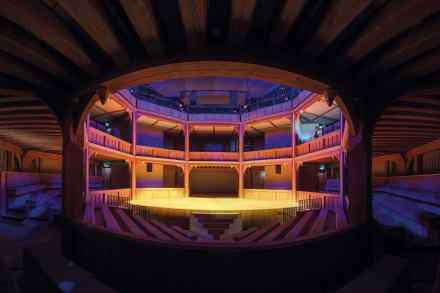
Prescot is a neglected little town in Merseyside noted for having Britain’s second narrowest street and for its Brazilian waxing salon. It’s now also home to Shakespeare North, a game-changing new theatre. This handsome, modern brick building overlooking a Jacobean church has a light, airy, unfussy interior – a stairway to heaven. You leave the modern world and enter an octagonal cocoon, modelled on a 1630 playhouse, built of slowly splitting green oak, the limbs all pegged together, not a nail in sight. The seats (two tiers) accommodate between 320 and 470 people, depending on the configuration of the stage. Its acoustic is spot-on and it feels cosy but not claustrophobic. The sound and lighting technology is modern but it can be candlelit if need be.

The scourge of Britain’s seagulls

What’s happened to seagulls? They used to be rather charming. The plaintive cawing of gulls used to be the nostalgic soundtrack to any seaside holiday. In the banal, best-selling book Jonathan Livingston Seagull, the eponymous bird flies for the spiritual joy of it and learns great truth and wisdom. The one thing it doesn’t do is nick your chips. How times have changed. Today, if you go to a harbour town in Cornwall, say, and buy an edible treat, there’s an even chance you’ll see out of the corner of your eye a white flash and — whoosh! — the top half of your pasty has gone. 'Bastard!' you shout vainly at the culprit. The other gulls all yak with mocking laughter. Local news outlets are full of gull attack stories in the summer months.

The history of the Theatre Royal Drury Lane is the theatrical history of England

Andrew Lloyd Webber has not been in the best of moods lately, largely thanks to all the Covid delays to his new musical Cinderella, now finally about to open — for the umpteenth announced time — at the Gillian Lynne Theatre. The bigger news, however, is that his theatre at the other end of Drury Lane, the grand old Theatre Royal, is finally finished after massive renovations. Lloyd Webber has spent an awesome £60 million on the rebirth of his Grade I-listed theatre, known to show folk as ‘the Lane’, with his wife Madeleine heavily involved and in cahoots with the heritage expert Simon Thurley and the great theatre architect Steve Tompkins. The result? Oh my goodness! The sheer elegance of its 1812 Greek revival design by Benjamin Wyatt is drop-dead.

The death of lawn mowing

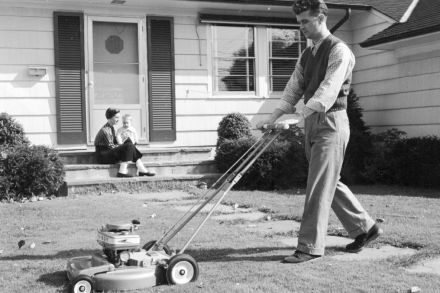
Are we witnessing the slow death of manly gardening? A new government initiative urges us that for the sake of bees and pollinators we should leave the mower in the shed and let our lawns turn into savannahs. Some thirty councils are signed up. King’s College Cambridge has turned its lawn into a wild flower meadow. Monty Don approves. He has piously decreed that mowing is 'about the most injurious thing you can do to wildlife' and a 'male' obsession. Get this, Monty. Mowing in my garden is only a male activity because my wife won’t do it. So I have to, while she watches your bloody programmes! I can't really complain, mind you. I have a lawn tractor, a pleasure to ride, and generally speaking tasks in our garden are equally divided.

What is it with Bristol and rioting?

'Bristol riots' has a lengthy section of its own on Wikipedia. In the wake of the ugly scenes that erupted in the city at the weekend, the list of disturbances is now even longer. Police were injured, a few badly. Vans were set alight and the mindless joy of all that breaking glass became infectious — one young woman found time to skateboard during the mayhem as tires burnt, fireworks flew and bobbies bled. The riot is now being described romantically as the 'the Battle of Bridewell Street' after the street where the police station sits now daubed in graffiti. But in reality it was vicious.

Does Rada seriously believe George Bernard Shaw was an Irish Mengele?

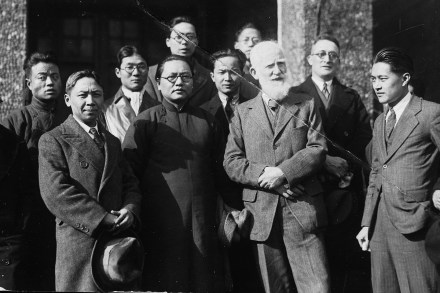
What has happened to Rada? The Royal Academy of Dramatic Art is the latest arts establishment to have gone mad. In the summer, it issued a self-flagellating public statement that it was institutionally racist and would ‘decolonise the curriculum and end racism’. The ‘actor-vists’ are clearly unhappy with the place. They should all be busy learning how to be heard at the back of the stalls. But these days, the enunciation course has a ‘d’ in front of it. The student body — or a noisy part of it — is now calling for a purge of the school’s illustrious benefactor, George Bernard Shaw, after whom one of the school’s theatres and a special fund are named. Why? He is accused of being a racist and a eugenicist.

How much did Churchill owe to Shakespeare?

From our US edition

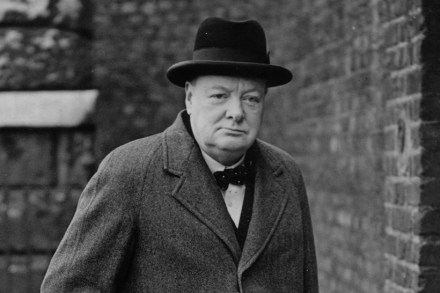
Did Shakespeare win the war? He was certainly Churchill’s greatest literary ally in 1940 when he sent the English language into battle. In fact it comes as a surprise to realize — at a fascinating exhibition in Washington D.C.’s magnificent Folger library  — just how much Churchill saw England and its history through the eyes of Shakespeare. For a period in 1940 he became the lion-hearted Henry V — albeit Henry V with a cigar and dressed in a velvet onesie. Shakespeare and the theatre runs through Churchill’s life. He bought a Webb’s toy cut-out theatre as a little boy. He studied hard for (but twice just missed getting) the Shakespeare Prize at Harrow.

winston churchill